LAHORE: The livestock sector remains the backbone of rural Pakistan, significantly contributing to the economy. It now comprises around 61.9 per cent of agricultural GDP and 14 per cent of national GDP, sustaining millions of families through income and food security.
Despite challenges, livestock is the main source of protein consumption for Pakistan’s citizens particularly its rural population. Supply and consumption of animal meat and milk has substantially increased in the past 15 years. Though the Food and Agriculture Organisation’s (FAO) 2007 data traced per capita meat consumption from 14.5kg in 1995 to 12.2kg in 2007, but more recent figures suggest a substantial rise. A 2016 NIH paper noted that Pakistan’s per capita meat intake jumped nearly threefold — from 11.7kg in 2000 to 32kg in 2016.
This upward trajectory likely continues today, driven by rising incomes and urbanization. For specific meat types, FAOSTAT data shows cattle meat consumption at approximately 9.83 kg per capita in 2020. Poultry meat reached around 6.42 kg per capita in 2021. Combined with other meat sources — goat, sheep, buffalo — the total aligns with the earlier projection of ~32 kg by 2016.
In protein consumption China remains far ahead, likely exceeding 48kg per capita — ahead even of Argentina, as per an OECD report citing 48.8kg for China. Other South Asian neighbours, Bangladesh, India, Nepal, Sri Lanka, likely still trail well behind Pakistan, with meat consumption remaining in single digits to low teens (Bangladesh ~3, India ~5, etc.).
While earlier stats covered production up to 2007, recent insights show domestic meat production growing, with Pakistan producing overall around five million tonnes annually. Exports remain modest — less than 2.0 per cent of total production, largely offal and value-added items. Nonetheless, export volumes are rising: 69,072 tonnes ($302 million) in the first nine months of FY2023 — a rise of over 20 per cent year-on-year.
Global per capita meat consumption remains high (~41 kg/year). Pakistan’s consumption, now above 30kg, still falls short of Western standards but far above its South Asian peers.
As of 2025, Pakistan ranks as the world’s fifth-largest milk producer, with an annual output of around 65 million tonne. A 2020 report estimated per capita milk consumption at 231kg (litres) — a significant increase from earlier levels (158kg in 2007).
The dairy sector now contributes around 60-62 percent to agricultural GDP and about 11-14 per cent to national GDP, underpinning rural livelihoods for over eight million households, supplying 35-40 per cent of their income. However, challenges persist: 97 per cent of Pakistan’s milk is sold raw, leading to high post-harvest losses of 15-20 per cent due to poor handling and cold chain infrastructure. Productivity lags behind global standards — a buffalo yields approximately 10 litres/day and a cow about 14 litres/day, compared to 50-60 litres in Western herds.
Still, milk consumption in Pakistan (~231 kg) is nearly triple the global average (~82 kg) and still among the highest in Asia, though countries like Uzbekistan (~339 kg) and Turkey (~281 kg) outpace Pakistan
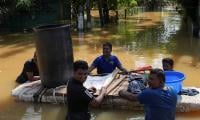
Disaster resilience efforts by the FAO, especially post-2022 floods, have reinforced this role. Millions of animals and households have been supported through feed, husbandry, vaccination, and asset-restoration programmes. The same programme must be replicated now also.
Livestock continues as a critical income and nutrition source; however, improving productivity, reducing waste and expanding rural infrastructure (eg, cold chains) remain essential for future gains. Largely driven by small-scale rural farmers, livestock continues to be a lifeline for millions, sustaining incomes, nutrition and resilience amid mounting climate pressures and economic upheavals.