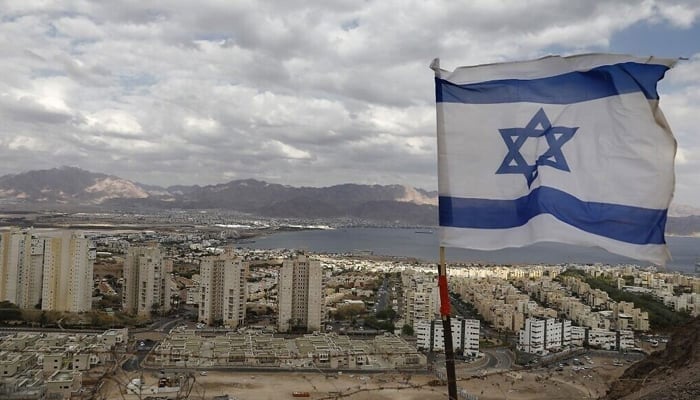
Israeli and American air strikes against Iran’s nuclear facilities have further aggravated the turmoil which has been the characteristic feature of the Middle Eastern political landscape for a long time.
There is no denying the fact that the Palestine issue dating back to the Balfour Declaration of 1917, which expressed the support of the British government for the establishment in Palestine of a national home for the Jewish people, has been at the centre of many of the problems which have afflicted the region.
The project for the establishment of Israel in Palestine has been the cause of at least three major wars between the Arabs and Israel, several other regional conflicts, and the continued denial of the legitimate national rights of the Palestinian people in violation of UN Security Council and General Assembly resolutions.
It is not difficult to discern the main factors responsible for the unquestioned support of the West, especially the US, to Israel despite its continued occupation of the Palestinian territories, the brutal persecution of Palestinian people, the genocide in Gaza, and its expansionist designs. To begin with, the establishment of Israel in the heart of the Arab world enabled Europe, which for centuries had tolerated anti-Semitism in its midst, to export the Jewish problem to the Middle East, thus, consigning that region to recurring conflicts.
The resultant perennial divisions and instability in the Middle East have also fit well into the divide and rule policy of the US-led West, enabling it to dominate the region, maintain its stranglehold over its vast oil and gas resources, and control east-west trade routes passing through the Middle East. Israel, thus, is serving as the military outpost of the West, especially the US, in pursuance of the latter’s exploitative and hegemonic agenda in the Middle East.
Because of the military superiority of Israel and the overwhelming military and economic power of the US, some Arab countries are resigned to peace with Israel without a prior resolution of the Palestine issue. The process was set in motion by the Camp David Peace Accords of 1978 under which Egypt signed a Peace Treaty with Israel in 1979. Jordan followed suit in October 1994.
The Abraham Accords, which normalised Israel’s relations with UAE, Bahrain, Morocco, and Sudan starting from September 2020, carried the process further.
Meanwhile, the US-led West took steps to weaken other regional countries which possibly could resist Israel’s expansionist agenda by encouraging Iraq to attack Iran in 1980 leading to the eight-year war, destroying substantially the economic and military power of both. The Iran-Iraq war was followed by the 1991 direct attack of the US-led coalition forces on Iraq to liberate Kuwait.
The job was finished in 2003 when the US launched an attack on Iraq under false pretences and in violation of the UN Charter to topple Saddam Hussein’s Ba’athist regime and occupy the country militarily.
The subsequent instability and destruction in Iraq weakened it so much that it has ceased to remain a cause of any concern to Israel or its Western patrons. More recently, the regime change has tamed Syria, which historically was aligned with forces resisting Israel’s illegal occupation of the Palestinian territories and its expansionist designs. Little wonder that the US under President Trump lifted all sanctions on Syria a few days ago.
The ground had thus been well prepared for a decisive blow by Israel and the US against the nuclear programme of Iran, the only remaining major resisting power in the region. Israel’s attack on Iran’s nuclear facilities, scientists and military commanders on June 13 with American blessing, two days before the American and Iranian negotiators were due to meet in Muscat, was an act of bad faith on the part of the US and a blatant violation of the UN Charter, international law and the Nuclear Non-proliferation Treaty (NPT).
When it became clear that Israel alone was unable to deliver a knock-out blow to Iran’s uranium enrichment programme, the US got directly involved in air strikes on Iran to destroy its uranium enrichment facilities at Fordow, Natanz and Isfahan without any sanction by the UN Security Council.
Besides destroying Iran’s nuclear facilities, the long-term goal of the Israeli and American air strikes on Iran was to bring about a regime change to replace the existing Islamic Republic with a regime which is friendly towards the US and Israel as was the case during the rule of the Shah of Iran till 1979. If that happens, the American stranglehold on the oil and gas reserves of the Middle East would be tightened further, paving the way for the consolidation of American hegemony in the region.
However, the long-term possibility of resistance in different forms on the part of the people of the region against the Israeli expansionism and the America hegemony cannot be totally ruled out. This possibility
is likely to keep the Middle East in turmoil in the foreseeable future.
Like most of the Muslim world, the Middle Eastern countries also must overcome the challenges of modernity by developing viable systems of governance rooted in the consent of the ruled, putting their people on the fast track to economic progress, improving educational and health facilities, bringing about scientific and technological advancement and mitigating the vast inequalities of income and wealth. The failure of the rulers of Middle Eastern countries to overcome these challenges will only aggravate the turmoil through which the region is passing.
Unfortunately, the latest developments portend growing intensity of the turmoil in the Middle East if urgent corrective measures are not taken by the regional countries. Internally, there is a dire need for urgent measures within each country to overcome the challenges of modernity. Externally, the regional countries must establish a forum to discuss and resolve peacefully security issues afflicting the region.
The absence of such a forum and the climate of mutual suspicions and distrust among the regional countries have been exploited by non-regional powers in the past to exacerbate tensions in the region by playing one country against the other in pursuance of the classic imperial policy of
divide and rule. Arabs and Muslims need to unite for a just solution of the Palesti-nian problem.
The lesson of the recent air strikes on Iran is that in the ultimate analysis the guarantor of a country’s security is its own national power, especially its economic and technological strength and military prowess. While it is always useful to have powerful friends and allies, it would be a huge mistake to rely exclusively on the promised support of other countries in the emerging disorderly world marked by swift policy changes and shifting alliances.
The writer is a retired ambassador and author of ‘Pakistan and a World in
Disorder – A Grand Strategy for the Twenty-First Century’. He can be reached at: [email protected]