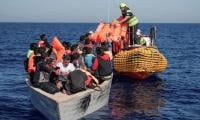
Even in the years leading up to the Holocaust, little was done to protect Jewish people fleeing persecution. Following the Nazi rise to power in 1933, Jews in Germany were subjected to a growing number of laws stripping them of their rights, along with organised pogroms. Well before the outbreak of the second world war, many German Jews had already begun to flee. Yet while many host countries were well aware of the rise of antisemitism under Adolf Hitler’s regime, they maintained highly restrictive immigration policies.
In the United Kingdom, a rising tide of anti-Semitism shaped government policies. Authorities enforced strict immigration controls and declined to dedicate significant resources to provide shelter or humanitarian aid for Jewish refugees. The United States similarly maintained restrictive quotas and systematically denied visa applications from German Jews, citing what contemporaneous officials described as an “anti-alien climate” in Congress and “popular opposition to the prospect of a flood of Jewish newcomers”.
Today, apartheid in South Africa evokes near-universal condemnation. But this was not always the case.
The UK’s relationship with apartheid South Africa is revealing. Historians have shown that successive Labour and Conservative governments between 1960 and 1994 – prioritising colonial ties in Southern Africa and economic interests – repeatedly refused to impose economic sanctions on the apartheid regime. History casts an equally harsh light on President Ronald Reagan and Henry Kissinger.
Reagan’s policies of “constructive engagement” and opposition to sanctions were driven by the desire to undermine the African National Congress (ANC), which his administration viewed as aligned with communism. After receiving the 1984 Nobel Peace Prize, Archbishop Desmond Tutu described Reagan’s approach as “immoral, evil and totally un-Christian”.
Kissinger, as US secretary of state under President Gerald Ford, gave prestige and legitimacy to the apartheid regime with a visit to South Africa in 1976 – just three months after the Soweto massacre, when security forces gunned down unarmed students protesting against the forced use of Afrikaans as a medium of instruction. Reportedly, neither apartheid nor the massacre were discussed during his visit.
In 1994, more than 800,000 Tutsis and moderate Hutus were slaughtered in Rwanda over 100 days. Sexual violence was systematically used as a weapon of war, with an estimated 250,000 women raped. Hutu militias reportedly released AIDS patients from hospitals to form “rape squads” to infect Tutsi women.
Despite warnings from human rights groups, United Nations staff, and diplomats that genocide was imminent, the world did nothing. UN peacekeepers withdrew. France and Belgium sent troops – not to protect Rwandans, but to evacuate their own nationals. US officials even avoided using the word “genocide”. It was only in 1998 that US President Bill Clinton issued a formal apology during a visit to Kigali: “We did not act quickly enough after the killing began … We did not immediately call these crimes by their rightful name: genocide.”
Given this history, it is hard to feel hopeful about the situation in Gaza. But as with other crimes against humanity, a day of reckoning may come.
What Israel has carried out in Gaza is a genocide in real time – one that is being livestreamed, documented, and archived in unprecedented detail.
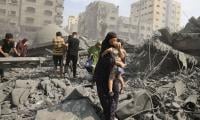
Sniper fire killing Palestinian children. The assassination of poets. The bombing of hospitals and schools. The destruction of universities. The targeted killing of journalists. Each act has been captured and catalogued.
Israeli politicians have made public statements indicating that the campaign’s goal is ethnic cleansing. Videos show Israeli soldiers looting Palestinian homes and boasting of the destruction.
Human rights groups have meticulously documented these crimes. And a growing number of governments are taking action, from diplomatic rebukes to the imposition of sanctions. There is a saying in Hindi and Urdu: Der aaye, durust aaye.
It is often translated as, “Better late than never.” But as a colleague explained, the phrase originates from Persian, and a more accurate translation would be: “That which comes late is just and righteous.” Justice for Palestine may come late. But when it does, let it be correct. And let it be righteous.
Excerpted: ‘History says the genocide in Gaza will be recognised – eventually’. Courtesy: Aljazeera.com