LAHORE:The demographic experts and media professionals demanded the government prioritise the protection and preservation of country’s future potential through child-focused interventions.
These include improving child survival, enhancing cognitive development through nutritional support, ensuring equal educational opportunities, and promoting child-responsive budgeting. ‘A key strategy for achieving these outcomes is enabling parents to plan their families in line with their resources and aspirations—avoiding unwanted, mistimed, and closely spaced pregnancies through enhanced access to family planning services,’ say the participants of a media coalition meeting organised by the Population Council in collaboration with UNFPA.
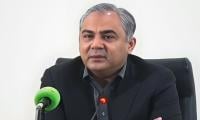
In his welcome remarks, Dr Ali Mir, Senior Director, Population Council, emphasised the media's indispensable role as shapers of public narrative and combatants of misinformation, stating, ‘Media professionals are today’s frontline defenders in the battle for sustainable development.’
Highlighting the transformative potential of strategic investment, Dr Mir stated, ‘Population planning is fundamentally about ensuring that every child not only survives but thrives. Our planning must begin with child survival and extend to equity, dignity, and opportunity for all,’ adding that ‘Accurate data and strategic investment in people, particularly women and children, are our strongest tools.’ He stated that the moot on Population and Development (ICPD) in 1994, and its reaffirmation at ICPD+25, emphasised the importance of reproductive health through a life-cycle approach that prioritises individual well-being from womb to tomb. Child survival is a critical component of reproductive health.
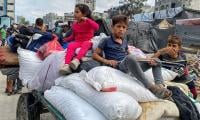
The meeting discussed Pakistan's severe human capital crisis with data and evidence, presented by Ikram ul Ahad, Deputy Manager, Population Council. The data showed how Pakistan’s future was being compromised through high child mortality and low investment in education. He said according to the World Health Organisation (WHO), approximately 1,350 newborns die every day, which is equivalent to crashing of nearly two passenger planes, but the former rarely makes a news as opposed to the latter. Around 26 million children out of school; chronic malnutrition plagues the young, with 40% of children under five stunted, severely limiting their cognitive potential – Pakistani children achieve only 41% of their potential compared to 78% in the UK. Stark regional disparities compound the crisis: Sindh suffers a 50% stunting rate, Balochistan sees only 22% primary school attendance, and Punjab's under-five mortality reaches 80 per 1,000 live births.
This crisis is fueled by chronic underfunding. Pakistan’s budget allocations for health and education are far below global benchmarks of 6% and 7%, respectively, and lag behind regional neighbours like India and Iran. The participants unequivocally stressed that family planning is a catalyst for progress across all development indicators.