Across decades, child marriage in Pakistan has remained less a cultural relic and more a system sustained by poverty, silence, weak enforcement and unequal power structures. This week You! sheds light on this ongoing gap between law and lived reality…
Cultural memory carries what policy debates refuse to touch. Growing up, I often heard my Nani hum verses attributed to Hazrat Amir Khusro. At the time, I assumed she was simply singing while doing chores, wedding songs popularised in 1976 by Bilqees Khanum and Ishrat Jehan on Pakistan Television and later revived on Coke Studio, “Apne mahalwa maan guriya khelat thi… saiyaan ke aaye kahaar re” (A girl still playing with her dolls is suddenly lifted into a palanquin and carried to her husband’s home).
Back then, it was simply melody, inheritance, something softly passed down between generations of women. Much later, as I began to connect more closely with questions of gender and justice, it bore something else: a child, interrupted; a transition not chosen, but imposed. I also came to recognise my Nani as a child bride and that she was far from alone.
The song does not name it. Neither, often, do we.
“Child marriage,” the phrase softens what is, in many cases, a crime. It clothes coercion as custom, makes cruelty sound like culture. When a child is placed into a binding union without preparedness, we are witnessing a tragic failure of protection and everyone who watches, documents, funds or governs is implicated in that failure.
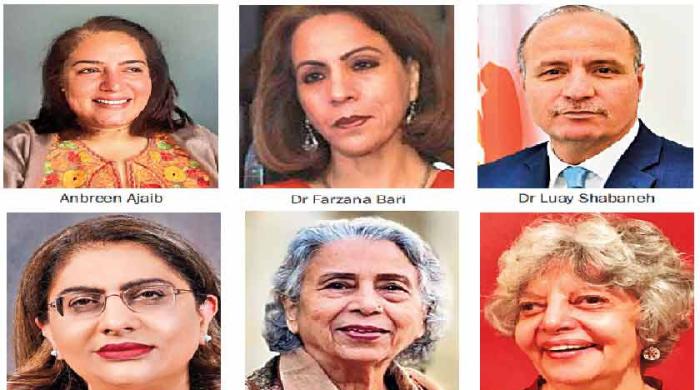
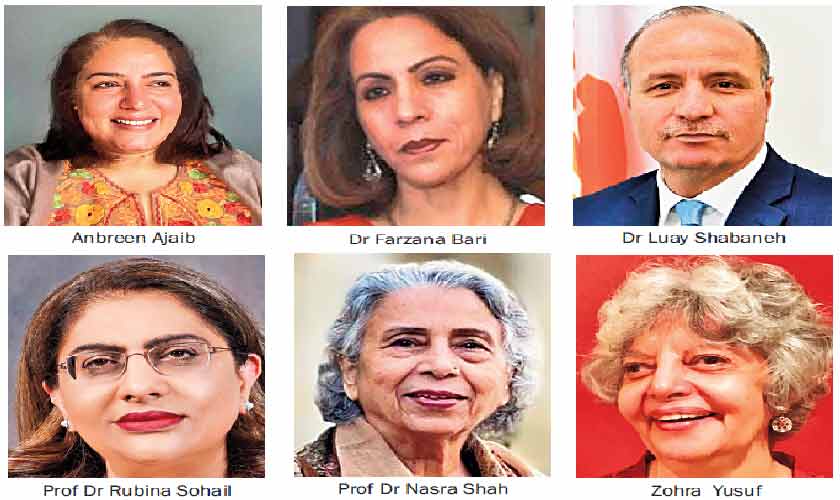
I first challenged the term formally in 2003, arguing in an advocacy paper that it functioned as a misnomer, one that obscured what was, in effect, abuse. A few years later, in 2007, I returned to the issue in these pages of You! Magazine, examining the legal landscape, NGO responses and the reproductive health consequences already unfolding. Almost twenty years on, the question is not whether we understood the challenge. The question is what that understanding was worth, given what has and has not changed. “Child marriage shatters potential and suppresses girls on a path of lifelong suffering. In Pakistan, when an adolescent girl is married, her education is interrupted, her health is placed at risk and her future contribution to society and the economy is diminished. Ending child marriage is not only a moral, human rights and public health imperative, it is critical for economic progress and long-term fiscal stability,” shares Dr Luay Shabaneh, UNFPA Representative in Pakistan.
The stories repeat
In southern Punjab, I met 13-year-old *Yasmin Bibi, though her papers would later claim otherwise. Floods had stripped her family of crops and livestock and whatever fragile stability they had managed. A proposal arrived from a man willing to waive most dowry expectations. That detail mattered enormously. The logic was quick: a proposal is here now; later, there may not be one. She was ‘married’ within weeks, the decision framed as necessity rather than choice.
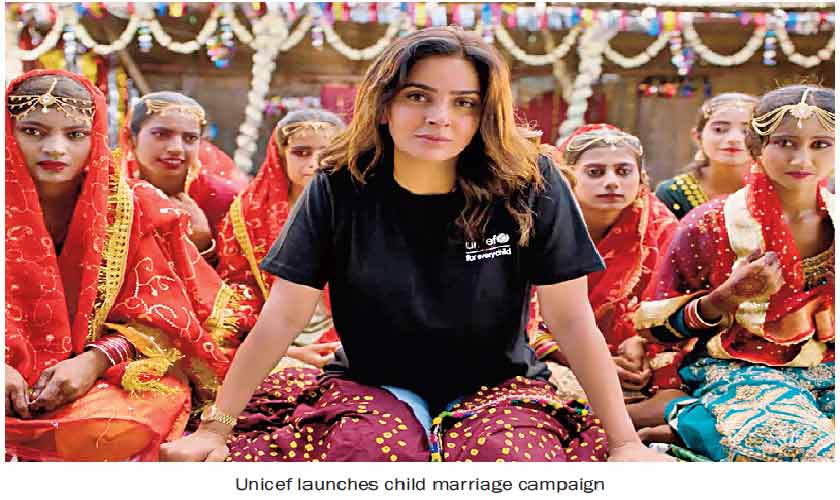
In Balochistan, during flood displacement, a 14-year-old, *Shah Taj, let’s call her, was exchanged to a truck driver in return for transporting her family to safety. Nobody recorded it as a transaction. Everyone understood that it was one. In the informal settlements of Islamabad, the same phrase surfaces across Christian and Muslim households alike, “rishta mil raha hai” (A proposal is here).
Pakistan ranks sixth globally by absolute numbers of child brides, according to the Girls Not Brides 2024 report, approximately 1.9 million girls currently in such unions. A Unicef report puts the longer picture in starker terms: nearly 18 per cent of women aged 20-24 were married before 18, totalling roughly 20.5 million. Around 4 per cent were married before 15. These are patterns of abuse, not isolated tragedies.
To understand why this persists, simplified explanations won’t do. Economics sits at the centre. Younger girls mean lower dowry expectations, a brutal calculation, but a real one for families already under pressure. “The 2017-18 Demographic and Health Survey (DHS) survey showed that 8 per cent girls were married before age 15 and 35 per cent before reaching 18. Poverty and low education levels are significant risk factors for early marriage. Legislative steps to ban wedlock before age 18 have been taken. To become effective, these steps must be accompanied by socioeconomic development and a shift in cultural norms encouraging later marriage,” elucidates Prof Dr Nasra M. Shah, Social Demographer.
Then there’s the silence around sexuality. Premarital relationships are prohibited, yet young people navigate them quietly, without guidance or honest conversation. Marriage becomes the socially acceptable resolution to a discussion nobody is willing to have.
Meanwhile, digital rishta platforms have made a woman’s age more visible and more punishing. Early marriage is not celebrated because it is right; it is treated as safe because delay is penalised. Underneath all of it runs something more durable: the management of female autonomy.
“Rooted in patriarchy, child marriage reflects the devaluation of girls, seen as economic burdens and confined to reproductive roles. Ending child marriage requires more than legislation; it demands a transformation of the patriarchal norms that sustain it,” laments Prof Dr Farzana Bari, Feminist Scholar Activist.
Boys rarely appear in this conversation and they should, though not only as victims. A boy from an ordinary family married at 16 or 17 faces real harm: education interrupted, income made urgent, adulthood imposed before he has any conditions to grow into it.
There is another version nobody examines. In feudal and politically connected households, and Pakistan has no shortage of either, a boy married young grows into a man with wealth, options and the freedom to remarry. The first wife, the woman who shaped her entire life around that union, who built her identity around a husband who was still becoming himself, gets left behind.
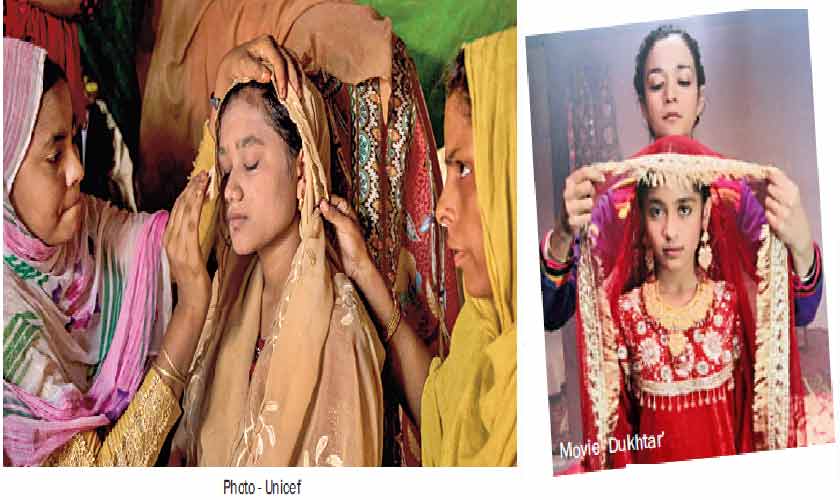
Her years, her labour, her psychological reality, none of it enters the public record. Nobody asks.
This is why feminists keep returning to patriarchy as a system rather than a complaint. It does not shield the men it appears to favour. It serves itself. Nobody wins except the structure.
The legal picture
is a study in
uneven progress
The Child Marriage Restraint Act of 1929 set the minimum legal age of marriage at 16 for girls and 18 for boys, a framework that remained in place across most of Pakistan for decades.
Sindh became the first province to depart from it through the Sindh Child Marriage Restraint Act 2013, raising the minimum marriage age to 18 for both sexes and making violations cognisable offences.
The Islamabad Capital Territory followed in 2025, with the National Assembly passing the Child Marriage Restraint Bill on 16 May 2025 and the Senate approving it on 19 May 2025.
The Balochistan Assembly passed the Child Marriages Restraint Act 2025 on 14 November 2025, later assented to by the governor.
Punjab followed with a major shift in 2026, raising the minimum legal age for girls from 16 to 18, aligning it with boys and replacing the century-old provision inherited from 1929.
That leaves Khyber Pakhtunkhwa, where a draft bill was approved by cabinet and referred to the Council of Islamic Ideology, a familiar mechanism for shelving what is politically inconvenient. And Gilgit-Baltistan, where nothing has moved at all.
What changes on
paper doesn’t always change lives
No single intervention fixes this. Anyone claiming otherwise is not taking the problem seriously. “Despite resistance from conservative religious groups, recent legislative progress is commendable. Lasting change demands strong laws, effective implementation and sustained awareness to challenge deeply entrenched norms that seek to control girls’ lives,” asserts Ms Anbreen Ajaib, Executive Director Bedari.
Enforcement still often falls on the wrong shoulders, the Nikah Khawan, while families with money and influence remain untouched. Weak birth registration systems mean ages can be adjusted to suit whatever a family needs them to say. Jurisdictional lines get crossed. And if a union is later annulled, the girl does not simply return to childhood. She re-enters it carrying the label of divorcee imposed by the same system that permitted the union in the first place. “Every child marriage is a missed opportunity for health, education and autonomy, driving early pregnancies, obstetric complications and intergenerational cycles of poor health. Ending child marriage is essential to safeguarding women’s reproductive rights, improving maternal outcomes and building a healthier, more equitable society,” states Prof Dr Rubina Suhail, Gynaecologist and Obstetrician.
“In 1997, Pakistan withdrew its reservations on the definition of a child under the UN Convention on the Rights of the Child. Yet, customary practices and religious interpretations continue to complicate enforcement. Institutional gaps, customary practices and weak adjudication continue to undermine legal protections,” reveals Ms Zohra Yusuf, Journalist and Activist.
I have watched, with mixed feelings, the jubilations that follow the passage of any pro-women law, the same familiar faces from civil society, former civil servants now reinvented as consultants, the qasidas composed in real time for current patrons. I understand the relief. I do not share the celebration.
With this many years behind me, what I feel most is frustration. It is quiet, stubborn and by now very old. No serious voice has ever said it clearly enough for it to stay in people’s minds.
“Over the past decade, UNFPA has partnered with Pakistan to advance reforms and shift norms, narrative and laws. Now is the time for decisive, accelerated action,” imparts Dr Luay Shabaneh.
A uniform minimum age of 18 across every province is needed. Birth registration that works for all citizens regardless of faith. Enforcement that doesn’t punish only the poor Nikah Khawan while those who arrange marriages with money and influence go untouched. Girls in school, because education is still the most consistent protection, we have evidence for. Economic support for families under pressure. And honest conversations we keep avoiding: sexuality, puberty, contraception, the lives young people are already living.
All of these measures are being discussed in policy spaces, yet bypassing these realities has not safeguarded anyone. It has only made everything more precarious.
If a child is ‘married’ because a proposal is available and dowry is manageable, what exactly are we calling that? If she carries the word divorcee into adolescence, what have we protected?
Legislation built on top of patriarchy, apathy and elite capture, without disturbing them, will be eventually forgotten, as it has been before. his is the pattern we have seen repeatedly: laws exist on paper but the structures that resist them remain intact.
Language matters because it shapes what we tolerate. The phrase “child marriage” keeps reality at a comfortable distance. Beneath it are systems of poverty, patriarchy and institutional failure that persist because confronting them requires more than policy optics. It requires sustained moral courage, political will and accountability. The language of law changes nothing if the language of culture, commerce, courtrooms, commercials and classrooms keeps pointing the other way.
No child should be pushed into adulthood to solve problems adults have refused to solve. That is not a complicated moral code. We know what this is. We have always known. The question now is whether we are finally willing to act as if we do.
*Names have been changed to retain privacy
Dr Rakhshinda Perveen is a published author and a gender justice expert.She can be reached at [email protected]