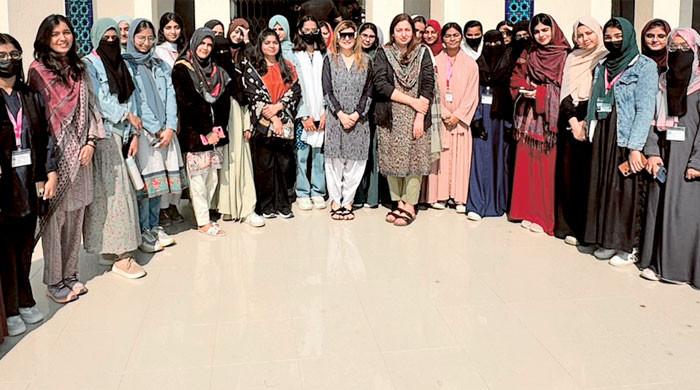
Pakistan’s government schools form the largest education network in the country, with over 150,000 public schools. However, these schools operate under highly unfavourable conditions. Improving them is essential for national progress. One solution lies in collaboration between the government and the corporate sector through the adoption of public schools. You! takes a look…

Education is one of the most powerful tools for national development. It shapes individuals, builds nations and strengthens societies. A strong education system creates skilled human capital, promotes economic growth and develops a sense of equality and social justice. In Pakistan, however, education has been a subject of endless debate and disappointment. Politicians, analysts and citizens frequently express frustration over the poor state of schools and the lack of opportunities for millions of children. This concern is valid, as Pakistan has consistently spent a smaller share of its national income on education compared with other developing countries. Yet, rather than continuing a cycle of criticism, it is time to explore practical, result-oriented solutions that can bring real change. One such solution lies in collaboration between the government and the corporate sector through the adoption of public schools, a model that has already shown remarkable success in many regions.
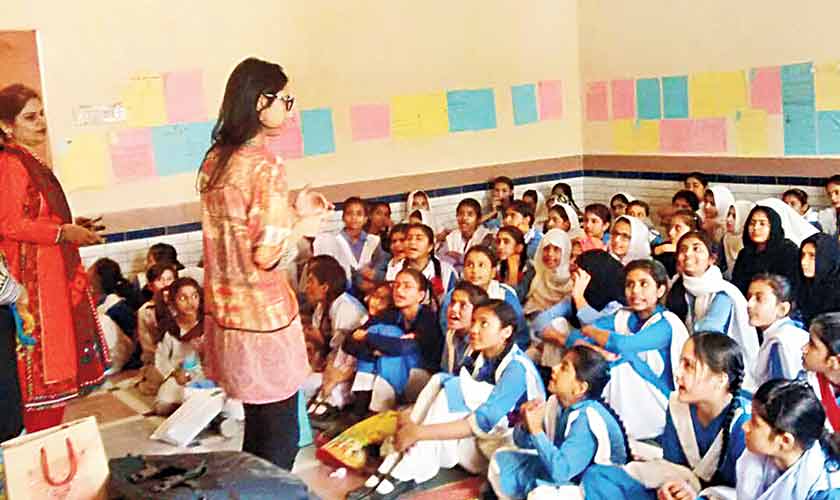
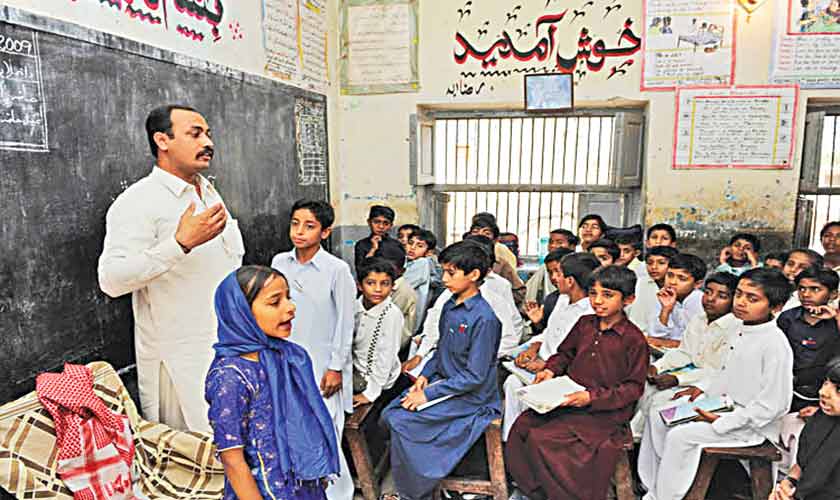
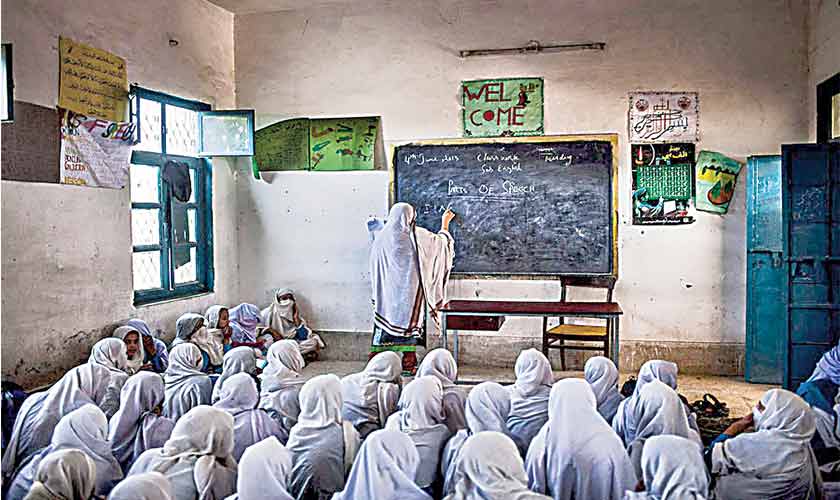
Pakistan’s public education system is vast but troubled. According to recent reports, around 23 million children between the ages of 5 and 16 are out of school, giving Pakistan one of the largest populations of out-of-school children in the world. This is not merely a statistic; it represents millions of untapped minds and denied futures. Many government schools operate with crumbling buildings, broken furniture and a lack of clean drinking water or functioning toilets. In several rural areas, children attend classes under open skies, while in urban centres, overcrowded classrooms and outdated curricula hinder learning. The shortage of trained teachers, weak monitoring systems and irregular attendance further add to the crisis. Teachers themselves often struggle without proper training or motivation and management systems remain ineffective due to bureaucratic inefficiency and poor accountability.
Despite these challenges, Pakistan’s government schools form the largest education network in the country, with over 150,000 public schools and hundreds of thousands of teachers serving millions of children every day. Although this network is underperforming, it holds massive potential. If improved, it could become the backbone of Pakistan’s education system and a catalyst for national transformation. However, unlocking this potential requires a collaborative approach. The government alone cannot solve the problem; it needs support from businesses, non-profit organisations and the wider community.
Every year, when the national and provincial budgets are announced, there is a predictable wave of disappointment. Pakistan spends around 2 per cent of its GDP on education - far below the international benchmark of 4 to 6 per cent recommended by UNESCO. Even when allocations increase slightly, the problem of inefficient use of funds and poor governance remain. Money alone cannot fix the system; it is the way funds are managed and utilised that determines success. This is where the corporate sector can make a meaningful and lasting impact. Businesses in Pakistan have both the financial strength and managerial expertise to help reform the public education system. Rather than limiting their corporate social responsibility (CSR) to donations or one-time projects, they can adopt schools, improve facilities and introduce modern management systems that drive real progress.
Adopt-a-school programme – a brilliant initiative
The idea of school adoption is simple but powerful. It allows a private company, non-governmental organisation (NGO), or even an individual to take the responsibility for improving a government school, while keeping it under government control. The partnership does not privatise the school; rather, it strengthens it. The corporate partner helps improve infrastructure, provides teacher training, supplies learning materials, upgrades sanitation facilities or supports administrative reforms. This approach combines public accountability with private efficiency. Over time, adopted schools can become models of success that inspire other institutions and communities.
For corporations, school adoption is also a strategic investment. Every year, companies in Pakistan spend billions of rupees on CSR initiatives. Unfortunately, many of these projects are short-term or charity-based - such as donations, food drives or relief campaigns - which, while important, do not create systemic change. By adopting schools, corporations can ensure their funds are used in ways that deliver measurable and sustainable results. Supporting education not only improves social wellbeing but also strengthens a company’s relationship with communities, enhances its brand reputation and contributes to building a more skilled and employable future workforce. In the long run, an educated population benefits businesses by expanding markets, driving innovation and improving economic stability.
Commendable work by cooperative sector
Several successful examples already exist in Pakistan. The Engro Foundation, the social investment arm of Engro Corporation, has adopted multiple government schools in Sindh. Their initiatives include renovating classrooms, providing clean drinking water and offering training to teachers. In many of these schools, student attendance and performance have improved significantly. Engro’s model shows that when corporate involvement is structured, consistent, and long-term, the results can be transformative.
Similarly, The Citizens Foundation (TCF) has set a gold standard in non-governmental education efforts. While TCF is best known for its network of over 1,800 purpose-built schools across Pakistan, it has also partnered with the provincial governments to take over and manage underperforming public schools. In Sindh and Punjab, for example, TCF has transformed neglected government schools into vibrant centres of learning. By applying its well-tested management systems, focusing on teacher training and maintaining high standards of accountability, TCF has demonstrated that even the most neglected schools can flourish with the right attention and management. TCF’s community engagement model ensures that parents and local leaders remain involved, which increases accountability and reduces dropout rates. Its success has not only benefited thousands of students but has also shown policymakers and corporations how structured collaboration can create scalable change.
Another initiative comes from Sukkur IBA University, which has adopted dozens of government schools in rural Sindh. Through this programme, the university provides teacher training, sets academic benchmarks, and monitors student performance. This intervention has yielded impressive results, including improved attendance, better exam performance and a growing number of students pursuing higher education. These achievements show that even in resource-limited rural settings, partnerships between educational institutions and the public sector can yield visible outcomes.
In addition, the Sindh Education Foundation (SEF) and the Adopt-a-School Programme launched by the Sindh government have created a structured platform for such collaborations. Through this programme, corporations, NGOs and even individual citizens can adopt public schools. Major companies such as K-Electric and Indus Motor Company have participated, investing in infrastructure upgrades, digital learning tools and teacher capacity building. The model is transparent, provincial departments maintain official lists of schools available for adoption and partnerships are formalised through memoranda of understanding (MoUs). Once a school is adopted, the partner organisation develops an improvement plan and monitors its implementation in coordination with education officials and the local community.
Providing spaces for learning
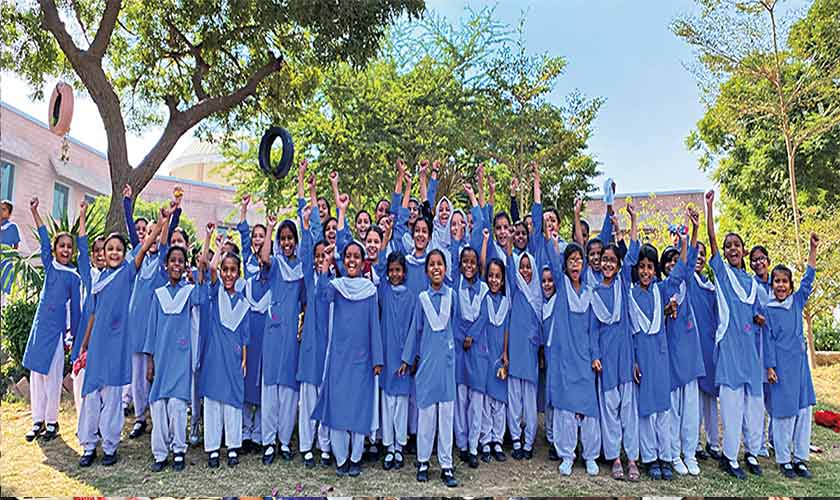
While corporate adoption is a significant step forward, the role of community-driven organisations must also be acknowledged. One such organisation is the Imkaan Welfare Organisation, which works to improve child education and welfare, particularly in the underprivileged areas of Karachi. Imkaan was founded with the aim of providing protection, education and healthcare to street children and children from extremely poor families. It runs the Khel School in Machar Colony, one of Karachi’s largest informal settlements, offering free education and meals to hundreds of children who would otherwise remain out of school. Imkaan’s work highlights the importance of addressing the root causes of educational deprivation: poverty, neglect, and lack of access. By providing safe spaces for learning, nutritional support and community engagement, the organisation has created a model that complements formal education reform efforts. The organisation’s work reminds us that improving education is not only about buildings and books but also about compassion, inclusion and equity.
The examples of TCF and Imkaan show that non-profit and corporate actors can fill the gaps that the governments often struggle to address. They also illustrate different yet complementary approaches: TCF focuses on large-scale systemic reform and management excellence, while Imkaan works at the grassroots level, directly addressing social and economic barriers that keep children out of school. Together, they demonstrate that education reform in Pakistan must be a shared responsibility that combines policy-level collaboration with community engagement.
To make school adoption a nationwide movement, a clear and transparent framework is needed. Provincial education departments should simplify the adoption process, ensure legal protection for partnerships and provide regular oversight to maintain standards. Public recognition can also motivate companies to participate. Business associations, chambers of commerce and corporate networks should encourage their members to invest in education as a long-term national priority. The media can play an important role by showcasing successful partnerships and highlighting stories of transformation. These efforts would not only encourage others to join but also create a culture where supporting education becomes a symbol of civic pride.
It is equally important to focus on sustainability. A one-time renovation or donation may temporarily improve a school’s appearance but long-term progress depends on continuous investment in teacher training, learning materials and monitoring. Technology can also be a game changer. Corporations in the tech sector can help introduce digital classrooms, e-learning tools and data systems to track attendance and performance. Similarly, mentorship programmes connecting professionals with teachers and students can encourage motivation and skills development. By integrating innovation with compassion, Pakistan can create a modern education ecosystem rooted in local realities.
For a better tomorrow
Education is too important to be left to the government alone. In a country like Pakistan, where public schools reach millions of children, improving these schools is essential for progress. Criticising low budget allocations may raise awareness, but real change happens when people act. The corporate sector, with its resources, expertise and influence, can play a transformative role by adopting government schools and working with education authorities
The private sector has shown innovation in areas such as telecommunications, banking and manufacturing. If that same energy and sense of responsibility were channelled towards education, Pakistan could see dramatic improvement within a decade. Every school adopted, every child educated and every teacher trained contributes to breaking the cycle of poverty and ignorance that holds the country back. Public-private partnerships can bridge gaps that neither side can fill alone. The future of Pakistan depends not only on how much the government spends on education but also on how willing its citizens and businesses are to step forward and share the responsibility.
By shifting the focus from criticism to collaboration, Pakistan can make meaningful progress towards ensuring that every child has access to quality education. Adoption of schools by corporate organisations is not just an act of charity; it is an investment in the country’s future and long-term prosperity.
The writer is a seasoned journalist and a communications professional. He can be reached at [email protected]