The rejection of the bill, proposed by MNA Dr Sharmila Faruqui against dowry, has not dampened the spirit of human rights activists who have been fighting for decades against this social evil, writes Dr Rakshanda Perveen…
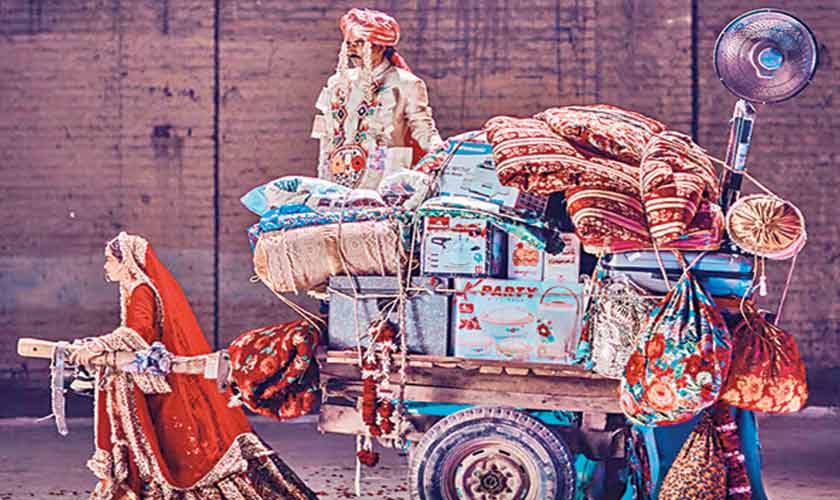
The renewed dialogue in the media following the rejection of a private member’s bill by MNA Dr Sharmila Faruqui, seeking to ban the demand and display of dowry, has paradoxically reopened space for hope among long-time activists like myself. Those of us who have worked for decades - unpaid, uncelebrated and grounded in lived realities - have consistently tried to demystify gender and feminism in Pakistani terms and contexts, seeking home-grown pathways to dignity and equality.
Last month, during a meeting of the National Assembly Standing Committee on Interior, a bill tabled by MNA Sharmila Faruqui was turned down, with members terming the draft “impractical” - dismissing it as unworkable despite growing concern over the practice’s impact on women. Faruqui’s bill aimed to criminalise dowry and set out punishments for those demanding or giving it under pressure, while still allowing parents to present voluntary gifts to their daughters.
Following the meeting, Faruqui took to X to express her disappointment over the tone of the discussion, saying the arguments made, appeared to encourage dowry rather than dismiss it. She stressed that dowry was not a benign cultural tradition but a form of coercion that reduces women to objects.
I am particularly delighted to note that Dr Faruqui’s bill seeks to move beyond the existing Dowry and Bridal Gifts (Restriction) Act, a law that merely places monetary limits on dowry and so-called bridal gifts rather than confronting the coercion and inequality embedded in the practice itself. Replacing a framework that regulates excess with one that questions the legitimacy of dowry altogether is a necessary and long-overdue shift.
I recall vividly that during my pioneering consultation on legislative advocacy around this law in 2003, I was personally taken aback to discover that the draft available on the Law and Justice Commission’s website did not question dowry as a practice at all, but instead placed a monetary ceiling on it, effectively institutionalising dowry in rupees. Equally troubling was the absence of any provision treating dowry-related harm as a cognisable offence, leaving enforcement weak and survivors without meaningful recourse. In this context, Dr Sharmila Faruqui’s bill is markedly stronger. It moves away from regulating excess toward challenging coercion itself and it is far more consistent with Islamic teachings on mehr or dower – a distinction I have repeatedly highlighted in my research and public discourse, including television programmes - where dignity and financial responsibility lie with the groom, not the bride’s family.
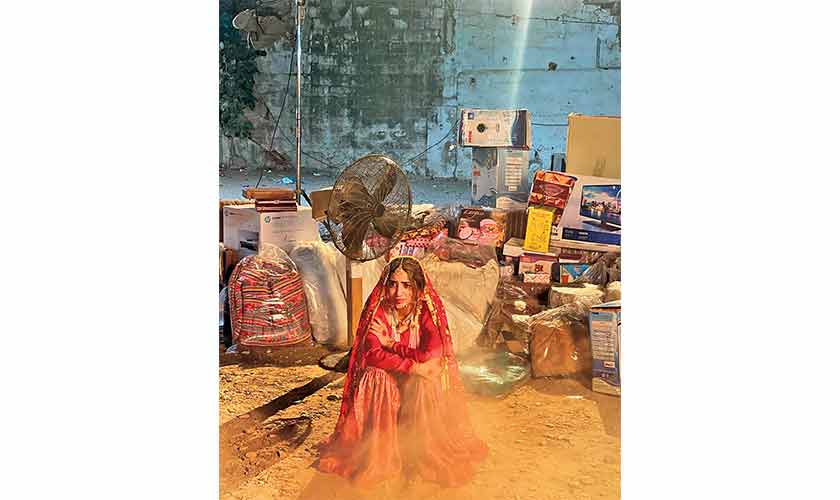
The prolonged, deep reluctance to dismantle an elitist and patriarchal consensus that neatly protects toxic customs such as lavish weddings, barri and jahez, sustained through social approval and legal silence is demoralising. This moment, therefore, demands candid contemplation on why Pakistan needs a ban on dowry that is incontestable, enforceable and rooted in moral clarity and economic sense.
Dowry in Pakistan is not a charismatic custom to be quietly tolerated; it is an abuse embedded in patriarchy, privilege and power. Those of us who have spent decades challenging dowry as violence - not only against women and girls but men and boys too - have examined, time and again, as legislative efforts falter, not because the cost is insignificant, but because the state hesitates to call coercion what it is.
The mental health toll of dowry pressure is profound and rarely acknowledged. Families bear the burden of debt, humiliation and endless negotiation. Young women, often before they are adults, absorb anxiety and fear as they anticipate marriage negotiations that reduce their worth to material transactions. This chronic psychological burden is violence: it shapes self-esteem, relationships and lifelong mental well-being. A dowry ban that recognises these harms expands the reach of justice beyond the physical into the emotional and economic dimensions of dignity.
Dowry also irreparably shapes the status of girls in society. It signals that daughters are liabilities their families must pay for their marriage, regardless of the girl’s own education, skills or contribution. This undermines inheritance law, economic autonomy and the very notion of citizenship. A legal ban on dowry reinforces that girls are not burdens to be settled, but citizens with equal rights under inheritance and family law. It complements efforts to curb child and early marriage, which are often driven by dowry economics and social pressure.
Media plays a powerful role in either normalising or challenging dowry culture. Lavish weddings, designer dowries and endless social-media displays have turned coercion into spectacle and excess into aspiration. When the state remains legally ambivalent, media narratives follow suit. A comprehensive ban on dowry, tied to clear regulatory guidance, would enable institutions such as PEMRA to move beyond cosmetic advisories and actively discourage the glorification of dowry and material excess in wedding-related content.
Law gives regulators a mandate; without it, harmful norms continue to circulate unchecked, shaping expectations, fuelling anxiety and reinforcing inequality. When legislation names dowry as violence rather than ‘tradition’, the media too can shift from celebration to accountability.
In Muslim societies, the religion itself does not authorise dowry; it mandates mehr (dower), a gift from

the husband to the wife as a marker of respect, security and dignity. The ‘harassing’ transfer of material wealth from the bride’s family to the groom’s household has no religious sanction and has been condemned by scholars precisely because it commodifies women.
The initial anti-dowry law in Bangladesh, the Dowry Prohibition Act, 1980, was enacted to prohibit the giving or taking of dowry in marriage and was later essentially replaced by updated legislation, the Dowry Prohibition Act, 2018. This law distinguishes mehr from prohibited dowry, reinforcing that religion and exploitation are not the same.
In India, the Dowry Prohibition Act has existed for decades and the law remains a vital reference point in courts and police records - not because it alone ended dowry, but because it sets a national standard against which behaviour is judged.
Strangely, many Pakistani women rights leaders, law makers and feminists do not show much enthusiasm about anti dowry legislation. Many argue that banning dowry will not eliminate dowry deaths or violence. This is true: law alone cannot instantly remake minds. But law is more than punishment; it is a statement of values. It signals societal disapproval and provides tools for enforcement, deterrence and accountability. Without naming dowry as violence, the state leaves survivors voiceless and institutions without a clear mandate to act. Law provides language; without it, police, courts and media default to treating coercive practices as private negotiations or cultural quirks. A strong ban signals that oppression is neither a tradition nor love. It affirms that equality before the law and the rule of law matter more than excuses that normalise harm.
Finally, Pakistan’s international commitments demand action. As a state party to CEDAW and a signatory of the Beijing Platform for Action and Sustainable Development Goal 5 on gender equality, Pakistan is obligated to eliminate harmful practices that discriminate against women and girls. A ban on dowry aligns with these commitments, advancing gender justice, dignity and equality under the law.
In this light, the rejection of a dowry ban is not merely a legislative hiccup; it reflects how violence becomes normalised when power, privilege and silence align. I greatly appreciate Dr Sharmila Faruqui for placing this forgotten issue once again on the legislative agenda - a necessary first step. But this battle must be owned by all political parties as well as by rights-based advocacy groups and coalitions in civil society.
We need collective political will to translate moral clarity into legal action. Change is difficult, but it is inevitable if we wish to uphold equality before the law and the rule of law itself.
The writer is a leading women’s rights leader and one of the pioneering voices on gender equality and social issues. She can be reached at [email protected]