In a candid conversation, eight female filmmakers talk about their passion for making films on subjects close to their hearts. Read on…
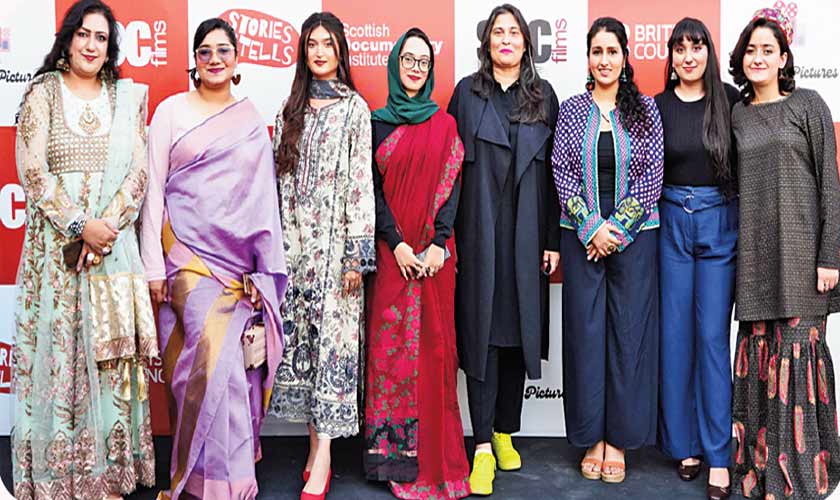
Across journalism and filmmaking, women are rising as leaders, redefining storytelling and championing a new wave of female empowerment. At the same time, the entertainment industry is opening its doors wider, encouraging more women filmmakers to step forward and make their mark.
‘Patakha Pictures’, launched by Sharmeen Obaid-Chinoy Films in 2022, is a funding and mentorship programme nurturing the next generation of female filmmakers in Pakistan. To date, Patakha Pictures has supported 69 filmmakers, whose work has earned over 25 awards and screened at more than 70 festivals worldwide.
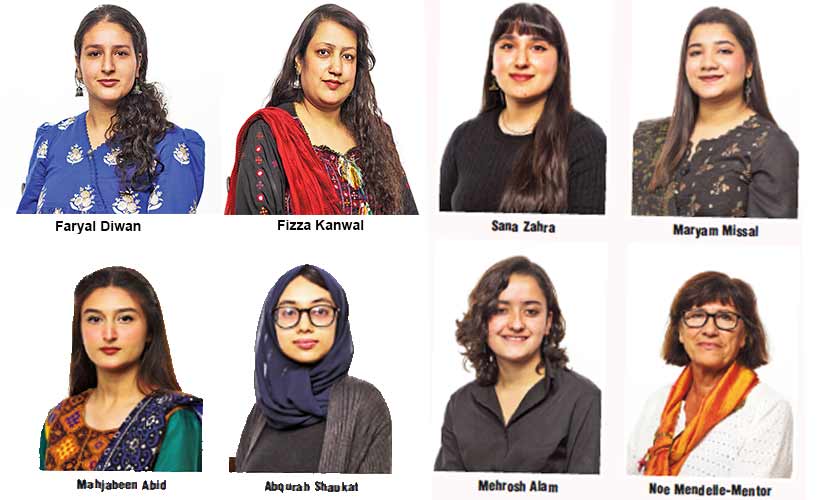
The seventh edition of the program, ‘Stories She Tells’, brings together eight female filmmakers in four creative pairs, crafting films on resilience that centre women’s empowerment, music, art and culture, further strengthening women-led storytelling across Pakistan.
In a candid conversation with this scribe, these eight talented film makers talk about their passion for making films on subjects close to their hearts. Read on…
“Malangi has changed our views about the theatre world” - Mahjabeen Abid and Maryam Missal
Mahjabeen Abid is an independent journalist based in Multan, South Punjab. She focuses on telling stories of marginalised communities. Her co-filmmaker Maryam Missal is a documentary filmmaker and media practitioner. She has produced films and multimedia content spotlighting under represented voices across Pakistan.
Their film ‘Malangi’ follows the life of 44-year-old Aasiya, Saraiki theatre performer who has spent decades captivating audiences with her dances and performances. Once celebrated, she now grapples with the fading spotlight, longing for the same warmth of applause that once defined her world.
“About three months into the production process, we began to realise that ‘Malangi’ was no longer just the story of a single performer; it was a window into a much larger reality. We saw that these women are not only discarded once they no longer fit a narrow ideal of youth, but they also endure lifelong consequences: stigma, social exclusion, the fear of choosing a life partner and the constant anxiety that comes with an uncertain future and an empty hope,” share Mahjabeen and Maryam.
Talking about their experience they say, “During the first month of production, we were simply trying to understand the world behind the stage, but once we stepped into it, it hit us how deeply society’s class divides and gendered expectations shape the lives of female stage artists. These moments stayed with us. The vulnerability of our subject - her fears, her spiritual side, her isolation - often lingered long after we had left the theatre, making us sit with the uncomfortable truths and stigmas she lives with every day.”
When asked looking beyond ‘Malangi’, how they see the impact of this mentorship program on their long-term career as a filmmaker, they reply, “This mentorship has opened the door to a new circle of women filmmakers - an empowering community we can look up to and continually learn from.”
“This programme has encouraged me to formally study filmmaking and to integrate those skills into my journalistic work as well. It has also given me the opportunity and the much-needed freedom to pursue something I had always wanted to do: the creative liberty in my ideas and storytelling that I could never fully explore within mainstream TV media,” adds Mahjabeen.
“Our film is a story of longing, belonging and the sound that refuses to stay silent” - Syeda Abqurah Shaukat and Faryal Diwan
Syeda Abqurah Shaukat is a Karachi-based filmmaker and photographer exploring memory, culture and resistance through a feminist lens. Her co-filmmaker Faryal Diwan is a multimedia artist, researcher and social urban planner with a background in environmental management, film theory as well as traditional arts.
Their film ‘Saaz, Dhi, Azadi’ revolves around Raheela, who lives in two different worlds. In the city of Karachi, she teaches, chases deadlines and endures. In Bhit Shah, she breathes, listens and becomes herself. The film is a beautiful balance between Karachi’s relentless rush and Bhit Shah’s peaceful hum, where raag rises before dawn and the tamburo vibrates through the courtyard. Raheela has learned this sacred instrument, yet at the shrine only men are allowed to play tamburo. This film is a story of longing, belonging and the sound that refuses to stay silent.
“For Raheela, Karachi is noisy and rushed. We wanted the viewer to feel it in the way we framed her - moving and cramming. Bhit Shah moves slower. Light sits differently. The haze in the morning, pigeons circling, water in the river, the tamburo echoing in the courtyard. We wanted the film to portal people into that quiet and not explain it, but let them sit in it. In Karachi she teaches, works and answers calls. In Bhit Shah she listens. She breathes. That contrast - chaos versus stillness, pressure versus devotion - is less about city and shrine and more about what each place allows her to be. So instead of explaining why she keeps returning, we let Bhit Shah speak in pigeons flying, shrines humming and the slow way tamburo sound drifts into silence,” explain Syeda and Faryal.
“The mentorship programme pushed us to stay curious instead of conclusive, to let the contradictions stay alive. Raheela wants to play at the dargah with her whole heart, but she also respects the very space that restricts her. That tension isn’t something we needed to fix in the edit. We just had to witness it honestly, without forcing an ending or a moral,” they elaborate.
“Our film Muntazir touches on a complex and deep subject” - Mehrosh Alam and Sana Hussain
Mehrosh Alam is a filmmaker and cultural curator from Chitral, with a background in Cultural Studies from the National College of Arts, Lahore. Her work explores the intersections of gender, music and memory, using visual storytelling to shed light on marginalized narratives within Chitrali Khow culture. Sana Hussain is a multidisciplinary artist and filmmaker with a BFA in Sculpture Design from NCA and an MA in Filmmaking from the University for the Creative Arts, UK.
Their film ‘Muntazir’ follows Sundari Khan, a trans-woman who devotes her life to Nohakhwani (poetic lamenting of grief and longing), guiding communities through grief with her powerful voice. While celebrated for her religious contribution, she is simultaneously shunned for her identity and the way that she chooses to live. ‘Muntazir’ captures this tension, portraying her struggle to find respect and a sense of belonging in society, as well as her unwavering commitment to devotion.
“During our filmmaking, we tried to truly understand the character of Sundari Khan on a much deeper, more human level. Asking her more intimate, everyday questions opened up an entirely new perspective. We began to see her not just as a subject, but as a complex individual with emotions, contradictions and simple human desires. This shift enriched the film in a profound way. It brought deeper emotional resonance to her story and allowed us to portray her with a nuance and sensitivity that we hadn’t accessed before,” explain Mehrosh and Sana.
Reflecting on their experience they say, “This film has been one of the most challenging projects we’ve worked on because it moves across three deeply sensitive terrains in Pakistan: religion, gender and performance. Our character, Sundari Khan, embodies this complexity. She is both a devoted Noha Khwan and a professional singer–dancer. Navigating her story required not just creative sensitivity, but also real awareness of the social and security risks involved, both for her and for us as filmmakers.”
“The Stories She Tells mentorship programme played a crucial role in helping us stay honest without being reckless. Through continuous conversations and sessions with the program mentors, we were constantly guided on the ethical and moral responsibilities we carry as storytellers. It allowed us to create a film that is honest, respectful, and ethically grounded,” they add.
“Pehla Qadam is a story of courage and broken systems” - Sumbal Khokhar and Fizza Kanwal
Sumbul Khokhar, from Quetta, Balochistan, is a writer and social justice advocate committed to amplifying marginalised voices through storytelling and critical dialogue. Fizza Kanwal, also from Quetta, is a journalist, activist, writer and paralegal with a deep commitment to telling real, impactful stories. Her work focuses on the struggles and resilience of individuals across diverse cultures, aiming to challenge conservative mindsets and inspire empowerment.
Their film ‘Pehla Qadam’ follows Hameeda, a fearless activist from Balochistan, as she leads an unrelenting fight for the implementation of Article 16, Pakistan’s Anti-Rape Ordinance intended to protect survivors and fast-track justice. Her battle becomes urgent when she takes up the case of a 10-year-old rape survivor, a child caught in a corrupt justice system.
‘Pehla Qadam’ exposes the brutal realities of confronting power structures in Balochistan while highlighting the resilience of a woman who refuses to let a child be denied justice. It is a story of courage, broken systems and the first step toward a future where survivors are heard.
Talking about the challenges they faced during the shoot, Sumbal and Fizza share, “Documenting Hameeda’s activism in Balochistan involved serious challenges for both her and us as filmmakers. We faced several logistical hurdles. There were no reliable mobile networks and frequent strikes which affected our documentation process. Filming in the Jaffarabad district required careful route planning and at times we had to cancel shoots altogether because of security concerns while crossing areas like Sibi and Mach.”
“This entire journey has been a learning experience. The challenging situations we faced taught us to adapt to different circumstances while on the ground. It’s important to move forward with the alternatives available,” they conclude.
Erum Noor Muzaffar is the editor of You! Magazine. She can be reached at [email protected]