festival

In 2019, the first Adab Festival was held in Karachi in a bid to create a platform for established and emerging authors and artists to talk about their work. Since then Adab Festival has been instrumental in providing a platform for diverse Pakistani voices and encourages dialogue and creativity. Over the years, the festival has become a regular literary and cultural event in Pakistan that showcases literature, art and music through panel discussions, book launches, poetry sessions and performances. Held recently in Karachi, the 10th edition of the festival was a vibrant showcase of literature, cultural expression and artistic heritage - drawing writers, thinkers, students and book lovers for stimulating sessions and performances. Here’s the rundown of the two-day festival:
DAY ONE:
The Festival commenced with an official inauguration ceremony presided over by Zehra Nigah, followed by opening remarks from Adab Fest Founder and Director Ameena Saiyid and Munis Abdullah. The ceremony included the announcement of the 2025 Infaq Foundation -Adab Festival Literary Awards in Sindhi, Urdu, and English, celebrating outstanding literary contributions from across Pakistan. This was followed by insightful speeches by Kishwar Naheed, Dr Ishrat Husain, and Shandana Minhas.
A moving segment titled ‘Tum Yaad Aaye: In Memoriam (2020–2025)’ honoured the late distinguished Pakistani intellectuals and artists including Arfa Sayeda Zehra, Nuzhat Kidvai, Zubeida Mustafa and others, with a song by Shayma Saiyid, who performed Nayyara Noor’s rendition of Nasir Kazmi’s poetry, accompanied by Samreen Harrison on cello/violin.
The day unfolded a range of thought-provoking simultaneous sessions covering subjects ranging from Urdu literature, progressive politics and cultural heritage to art, history and education.
For children especially, there was a lot to offer - from a Book & Craft Fair, to a bustling Children’s Literature Strand featuring a talent show, storytelling by Yasmin Motasim, puppet theatre by Mehreen Kamran, bookmaking sessions with Ameena Saiyid, and theatre activities led by Atif Badar. A dedicated Creative Writing Workshop entitled ‘The Storymakers Studio’ for teenagers, conducted by Taha Kehar was also part of the activities.
A popular session was a critical discussion on ‘Connecting Art, the City and its People’ featuring Noor Ahmed, Amin Gulgee, and Bushra Hussain, moderated by Syed Hasnain Nawab.
The Festival continued with multiple book-focused conversations: a warm book launch for Amber Zaffar Khan’s ‘My Friend Maya’ featured the author in discussion with Khurram Koraishy. This was followed by a book talk on Shabbar Zaidi’s ‘32 Onkar Road’ which featured Salim Raza in conversation with the author, unpacking Pakistan’s political and economic complexities. Simultaneously, a compelling book talk session on Syed Muhammad Taqi’s ‘The Future of Civilization’, translated into English by Sumera Naqvi, brought Zafar Masud and Kazim Saeed together for an engaging dialogue moderated by Lubna Jerar Naqvi.
The evening sessions offered stimulating reflections on the future of communication and learning. A notable discussion titled ‘Truth, Trust and Tenacity: The New Media Paradigm’ brought together leading journalists Fazil Jamili, Amber Rahim Shamsi, Azhar Abbas and Azaz Syed, moderated by Nadia Naqi, addressing the challenges facing public trust in digital media.
The day concluded with Usman Israr Ahmed’s ‘Tribute in Tarannum to Tina Sani & Nayyara Noor & the Great Poetry they have sung’. Simultaneously, a mushairah was presided over by Zehra Nigah, attended by chief guests Dr Pirzada Qasim, Raza Siddiqui, and Anwar Shaoor. Nizamat was by Nasira Zuberi, and distinguished poets included Afzal Ahmed Syed, Tanveer Anjum, Khalid Moeen, Kashif Hussain Ghayar, Waheed Noor, Fazil Jamili, Inaam Nadeem, Kashif Raza, Wajih Sani, Dr Mana, Dr Najeeba Arif and Kishwar Naheed.
DAY TWO:
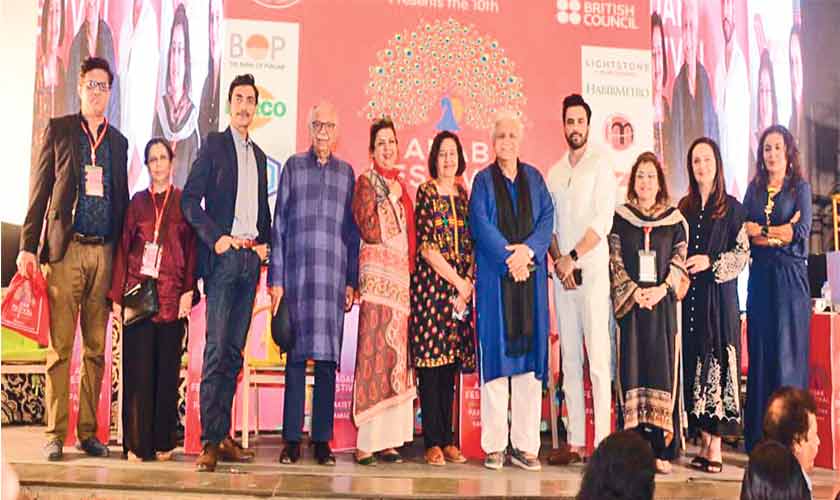
Throughout the second day, visitors continued to explore the Book & Craft Fair, sponsors’ stalls, and a bustling Children’s Literature Strand. Like the previous day, the strand featured a talent show, storytelling by Yasmin Motasim, puppet theatre by Mehreen Kamran, bookmaking sessions with Ameena Saiyid and theatre activities led by Atif Badar. A dedicated Creative Writing Workshop titled ‘The Storymakers Studio’ conducted by Taha Kehar, continued to draw teenagers on its second day as well.
The day unfolded with a range of thought-provoking sessions covering subjects ranging from technology and identity to cultural heritage, women’s leadership, education and artistic innovation. The first discussion session of the day, ‘Designing Tomorrow with Artificial Intelligence,’ featured Jehan Ara alongside Dr Salman Khatani and Sadaf Bhatti, moderated by Ahsan Siddiqui. The conversation delved into the intersection of creativity and technology, addressing how AI was reshaping industries, learning environments and future opportunities for Pakistan’s youth. Simultaneously, there was a gripping talk titled ‘Leaders of Tomorrow: A Conversation with Young Changemakers’. Featuring Arsalan Bukhari, Naael Ebrahim, Maha Hasan, and Shoaib Arshad and moderated by Ayiza Salman, it brought together emerging and established professionals who shared personal journeys and discussed the responsibilities and challenges of leadership in contemporary society.
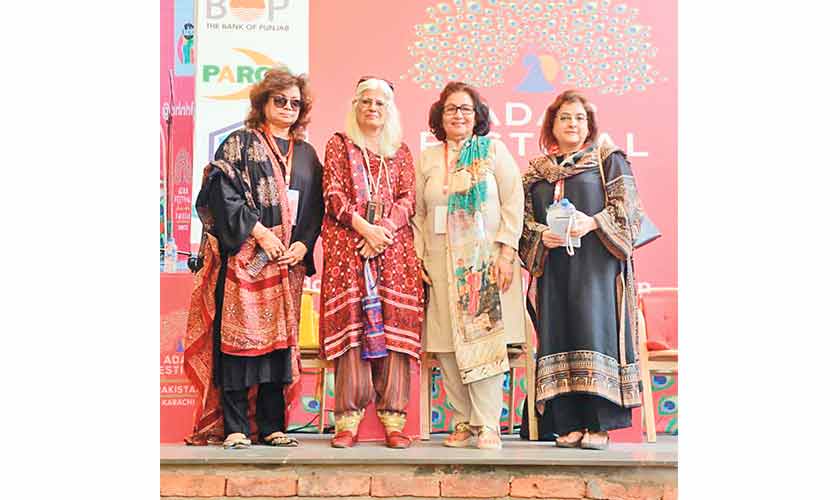
The next session of the day, titled ‘The Significance of the Musicalization of Literature’, was a talk by Arshad Mehmud with recorded music, reflecting on the intimate relationship between words and melody.
The venue hosted a few book launches that added richness to the literary atmosphere. These sessions included Peerzada Salman’s ‘Fever Log and Other Stories’ with Amber Paracha alongside the author, and Amber Romasa Nagori’s ‘Tales of Agnimitra and Tamanna’ with Athar Tahir in conversation with the author, moderated by Kamila Habib. Each author shared insights into their writing process, themes and inspirations while interacting with readers.
Another major highlight of Day 2 was the session ‘Power Women of Pakistan: Her Story, Our Future,’ bringing together wonder women such as Mahtab Rashdi, Saira Awan Malik, Dr Sharmila Faruqi, and Sheema Kermani from diverse fields, moderated by Zarrar Khuhro. They reflected on their professional journeys, the challenges they overcame and the wider social impact of women’s leadership. The conversation resonated strongly with the audience and underscored the evolving role of women in shaping Pakistan’s narrative.
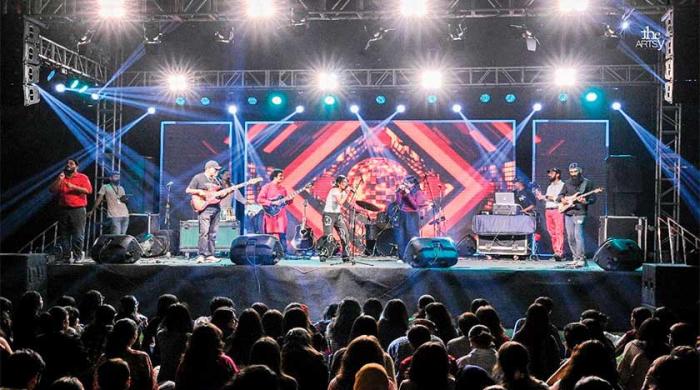
A parallel music showcase by Zahra Madani, added vibrancy and artistic texture to the festival ambience and catered to those who wanted a break from literary sessions.
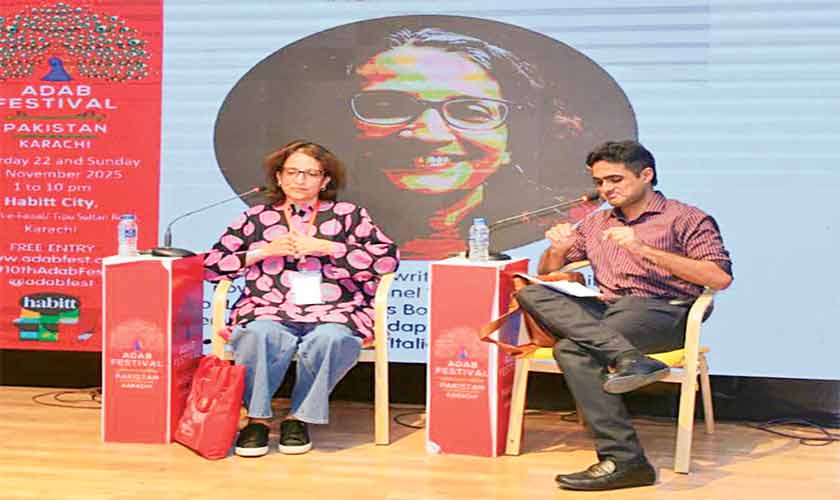
The evening started with a book talk session titled ‘Urdu Adab Mein Takhleeq Ki Nai Lehr.’ The next session was titled ‘Yasmeen Lari: Ending Poverty in Post-Flood Communities - One Million Families At a Time,’ featuring Syed Rafi Ahmed and Shayma Saiyid with Yasmeen Lari. Arguably the most popular session of Day 2 was ‘Mirror To Society: The Journey Of Pakistani Film & TV Drama,’ featuring celebrities Hina Bayat, Arshad Mahmud, Alyy Khan, Ayesha Toor, Junaid Khan and Misbah Khalid, moderated by Khaled Anam.
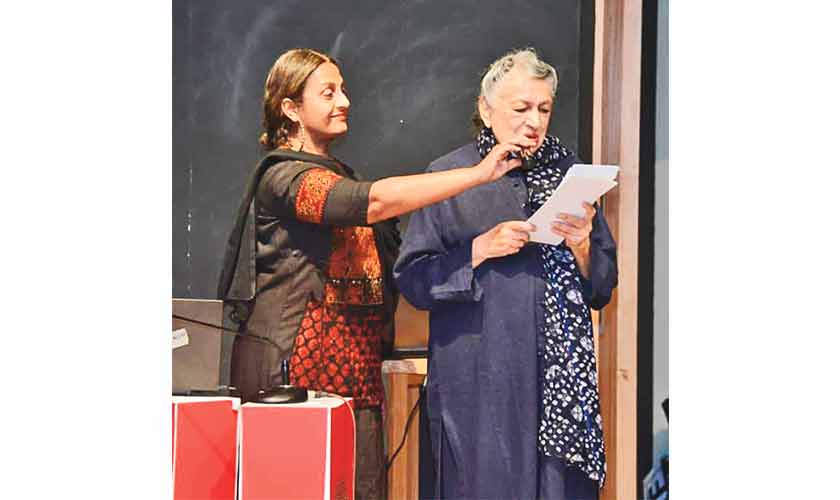
Day Two also featured a unique session titled ‘Tidings from the Trees: A session in English, Urdu, and Punjabi’ with Sarwat Mohiuddin, introduced by Raheela Baqai, celebrating multilingual expression through poetry, storytelling and dialogue. This session stood out for its collaborative spirit and emphasis on linguistic diversity.
Simultaneously, the launch of ‘The Gulgee Museum - The Handbook’, edited by John McCarry, featured Nusrat Khawaja, Niilofur Farrukh, Bina Shah, Adam Fahy-Majeed, Tara Uzra-Dawood, and John McCarry. The discussion focused on the importance of preserving Gulgee’s artistic legacy and was moderated by Amin Gulgee himself.
A spirited music concert by Saif Samejo brought together visitors, artists and participants in a celebratory finale to the two-day event.
-You! desk