This week You! is in conversation with Dr Maheen Noorani, founder of ‘Funclusion’ - Pakistan’s first recreational space for children with autism. Read on…
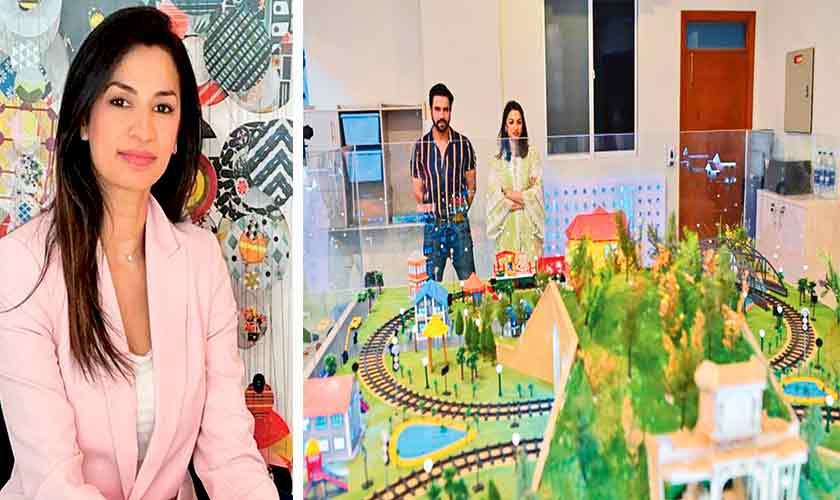
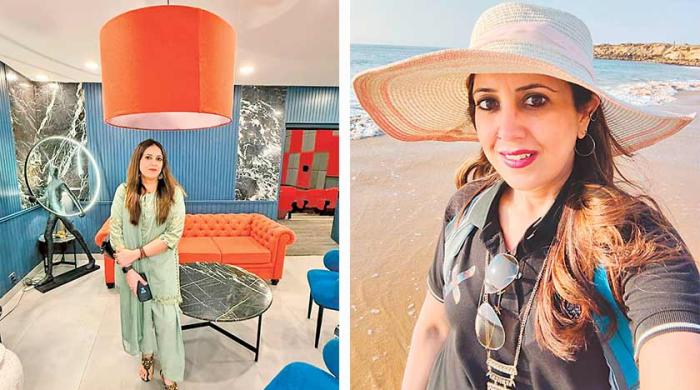
At heart I am a teacher - someone who thrives in the role of helping people gain insight into the crux of the matter. A Feynman disciple, I prioritise simplicity of concept and aim to reveal the wisdom that hides within any learner. I continuously seek individuals who are game changers in the field of learning. I reached out to Dr Maheen Noorani for the unique space that she has created, ‘Funclusion’, (in Karachi) and for her vision of making it a go-to place for all parents who feel their child deserves a no-pressure zone to truly explore their potential and become a hand-raising, curious, confident learner.
In every Pakistani classroom of 30-plus students, statistical probability suggests that at least one child sits quietly, struggling - often more than one - frequently mischaracterised as lazy or defiant. What is rarely understood is that it is but a neurological difference that makes the child unable to blend in.
The World Health Organization estimates that 1 in 100 children globally have autism spectrum disorder. Yet in Pakistan, where diagnosis remains stigmatised and expertise scarce, countless children remain invisible - their potential untapped and their struggles misunderstood as behavioural problems or cognitive deficits.
The torchbearer
I know a few champions addressing this concern, but for me, Dr Maheen stood out not just for her impressive credentials as a Columbia University graduate, but for the profound personal pain she has endured, which she calls her ‘true mentor’. She envisions the ‘Green Light Space’ - an unobstructed, trigger-less realm for these brilliant neurons to relax, clean up the grey matter and get ready for substantial alignment with the demands of the world around them. She wishes to see all children gain a level of confidence to break through the barriers that may be holding them back. She would like their learning styles recognised and incorporated in learning schema.
“It is perfectly alright for the child to be a kinesthetic learner and move around in the classroom or wish to sit in the dark corner for the bright light prompts his or her mind to react strongly, or find a seat by the open window or door because confines push him towards the scary unknown, or even turn around and focus on the teacher’s voice only to appease his auditory learning strength,” says Maheen.
Maheen began as a business/advertising executive in the cutthroat world of media and marketing, (a field she cherishes to this day but refuses to use that skill set). With the arrival of her first born, she realised the struggles the child was facing while navigating a world that was not built for him. Eventually understanding how the child was indeed different, probably aged her beyond her years. She decided to transform the disruption into expertise, desperation into methodology and isolation into advocacy. Today, with dual master’s degrees in early childhood and special education and doctoral training in specialised interventions, she stands at the intersection of lived experience and academic rigor, asking the question that challenges our entire educational paradigm: What if the problem is not the child, but the traditional and rather hackneyed environment that we have created?
Autism and Pakistan:
Reality check
Pakistan’s silence around autism is deafening. While Western countries have spent decades refining diagnostic criteria and intervention models, Pakistan’s special education infrastructure remains nascent. Conservative estimates suggest that over 350,000 children in Pakistan may be on the autism spectrum, yet the country has fewer than 50 specialised centers equipped to provide evidence-based interventions. The diagnostic gap is even more troubling: research indicates that only 5-10 per cent of children with autism in developing countries receive formal diagnosis and intervention.
The crisis extends far beyond one field of autism; it stretches to learning differences, dyslexia, ADHD, sensory processing disorders, developmental delays etc, which affect 15-20 per cent of children globally. On a positive note, the outlook for many individuals with autism spectrum disorder today is brighter than it was 50 years ago; more people with the condition are able to speak, read and live in the community rather than in institutions and some will be largely free from symptoms of the disorder by adulthood. But here in Pakistani classrooms, where teacher-to-student ratios often exceed 1:40 and special education training is virtually absent from standard teacher preparation programs, these children become the ones labelled as ‘slow learners’, ‘troublemakers’ or simply unreachable.
Having moved back to Pakistan, “The materials were better overseas,” Maheen recalls, but she finds the therapeutic approach here in Pakistan, more holistic. The experience gap is not as vast as she had feared. “Pakistan definitely needs better equipment and tools, but the compassion levels are higher,” she elucidates.
Therapies at work:
Maheen, in her journey to help her children, has explored every possible avenue - from stem cell research and experimentation, to therapies, counselling and specially equipped schools - and continues to do so even today. Open to untapped possibilities, she is now developing an eclectic model that allows for bespoke solutions tailored to each child. Her approach draws from multiple evidence-based frameworks, each addressing different dimensions of child development. It is an approach that supports both the learning child and the mother. Maheen believes the mother is the most neglected entity in this paradigm. As the primary mentor, caregiver and friend, the mother plays countless roles, yet none of these therapies adequately address her mental well-being. Her restructured approach aims to help mothers cope more effectively and productively.
Maheen gave me a rundown of various therapies at work:
ABA – The dominant intervention model for autism. It focuses on breaking down skills into discrete components and using reinforcement to shape behaviour. While effective for skill acquisition, critics - including many autistic self-advocates - argue that it can prioritise neurotypical compliance over authentic development.
DIR/Floortime – Developed by Dr Stanley Greenspan, this relationship-based approach emphasises emotional connection and child-led play. Rather than drilling specific skills, DIR focuses on building developmental capacities such as attention, engagement, two-way communication and complex problem-solving through warm, responsive interactions.
Sensory Integration Therapy – This approach recognises that many children on the spectrum experience sensory input differently. They may be overwhelmed by sounds others ignore or soothed by pressure others find uncomfortable. Sensory Integration Therapy helps children regulate their sensory systems, creating a foundation for learning and social engagement.
Maheen creates individualised intervention palettes that draw from multiple theoretical traditions. But above it all, she says, is the individual assessment of the person the child presents - their ecosystem, routines and inflow of information. Many a time, a simple change in routine - food, an exercise, a new person in the immediate surroundings - and the magic starts to unfold.
Is there a common thread in these approaches, I ask. “Primarily”, she says, “these approaches recognise that challenging behaviours are not willful defiance but communication. A child who melts down in a brightly lit, noisy classroom is not being difficult but overwhelmed by sensory input their nervous system cannot filter.”
The green light environment
Maheen’s vision centers on a radical concept: the ‘Green Light Environment’. In traditional settings, children face constant demands - sit still, make eye contact, answer questions, conform. For neurodivergent children, this barrage of expectations creates a perpetual state of stress, shutting down the very cognitive systems needed for learning.
“When there are no commands or demands, their brain gets time to process and then make their own decisions. They realise a sense of calmness and gain a bespoke arena in which to structure their thought process,” explains Maheen.
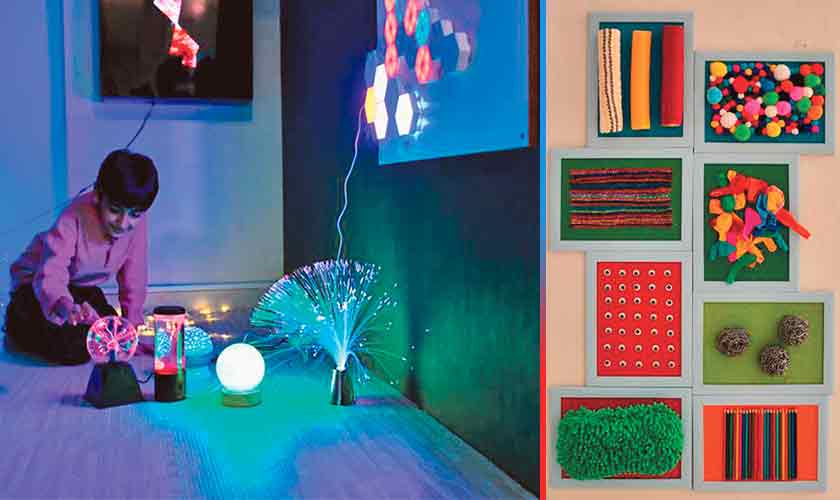
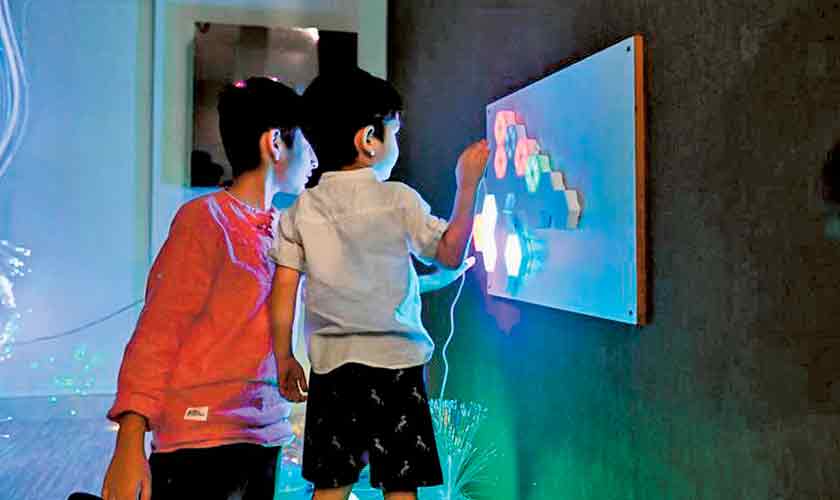
Neutral, muted colours replace overstimulation by creating openness and a sense of peace. Soft, diffused lighting and open space allow for movement and free thinking. Sound-dampened areas create auditory relief and sensory stations invite regulated input.
But the philosophy goes deeper than design. In a Green Light Environment, stimming - those repetitive behaviours others find odd - is encouraged as a healthy coping mechanism. Children become decision-makers rather than order-followers, creating conditions in which authentic learning can emerge.
Barriers and stigmas
Talking of barriers, Maheen elaborates how the systemic challenges are immense in terms of teacher training deficit, lack of understanding of neurodevelopmental disorders or differences and even ignorance of simple classroom modifications to support the diversity of learners. Individualised Education Plans (IEPs), which are the cornerstone of special education in developed countries, remain unknown in most Pakistani schools. Most importantly, the cultural stigma surrounding any kind of learning (dis)ability leads many parents to resist diagnosis and treatment. Follow-through on therapeutic recommendations is also inconsistent.
One significant reason is, of course, lack of inclusion in mainstream schools. They rarely accommodate neurodivergent children, forcing families to choose between inadequate special programmes and rather fast paced mainstream environments.
Maheen praises C-ARTS (Centre of Autism and Rehabilitation Training Sindh) in Gulistan-e-Jauhar, Karachi, with its 4:1 student-teacher ratio and US-informed methodology but desires this blueprint to become a standardised model across the country.
Deplorable state of education
Why I sought her and why I continuously take up the pen on serious educational concerns, is simply to create a voice for the fifth-largest nation in the world that perpetually ignores its children. Beyond birthing them, there seems to be no interest in their development. The state education system is compromised to a great extent and private education is too expensive for the majority. Rough estimates put 55 million children in schools and around 25 million out of school. While those out of school are another challenge for the economy, those inside are also not too well supported with a significant number being tagged with ‘behavioural problems’ or ‘academic weaknesses’. What we need to collectively endorse is that if a child fails again and again, it’s not the child, it’s the system.
Research consistently shows that early intervention, ideally before age five, dramatically improves outcomes for children with developmental differences. Every year without support represents lost neuroplasticity, compounding difficulties that could have been addressed.
I requested Maheen to continuously raise her voice in the parent circles, school groups etc. - her response left me lost for words: “For all my social standing, my children do not fit the mold. They talk, type, read, excel at jigsaw puzzles and understand two languages but they do not match the school system and hence I have no presence with those schools’ clubs or parent associations,” laments Maheen.
We need more green light environments
Maheen’s consultancy now serves families, schools and communities, offering solutions grounded in both academic research and hard-won personal insight. She provides parent training, teacher training, IEP development (Individualised Education Programme), curriculum modifications and home programming customised to each family’s reality. Her work forces us to confront an uncomfortable truth: our educational system was designed for standardisation, not individual flourishing. We measure success by grade-level benchmarks, test scores and behavioural compliance - metrics that, by definition, pathologise difference.
Human development is multidimensional and neurodivergent children often demonstrate brilliance in domains our rigid systems do not value. The country’s future depends on unlocking every child’s potential. The children Maheen serves are perfectly normal, just differently wired, with unique strengths our conventional systems fail to recognise or cultivate.
Temple Grandin, one of the world’s most accomplished autism advocates, said, “The world needs all kinds of minds.” Pakistan’s differently equipped children, with learning differences, represent untapped creativity, alternative problem-solving and perspectives our homogeneous systems desperately need.
Pakistan’s educational landscape definitely needs more green light environments - spaces where children can regulate themselves, make their own decisions and learn at their own pace until such a time that they are strong enough to come shoulder to shoulder with the rest. “We do not just create conditions for neurodivergent children to thrive; we create better learning environments for all children,” comments Maheen. For thousands of Pakistani children sitting in classrooms right now, overwhelmed and misunderstood, that green signal is not just about learning - it is about being seen.
Dr Maheen is available for consultations, teacher training, parent workshops and IEP development. She can be reached at [email protected]
The author is a content strategist, educationist and researcher. She can be reached at [email protected]