The latest national and international assessments of Pakistan’s social development present a deeply troubling picture. In June 2025, the World Bank indicated that poverty in Pakistan, when recalculated using updated global poverty lines, could be as high as 44.7 per cent. Meanwhile, the UNDP places Pakistan among the countries with the largest populations living in multidimensional poverty. A domestic research organisation, the Social Policy and Development Centre (SPDC), estimated in March 2026 that poverty incidence stands at 43.5 per cent, significantly higher than the official figure of around 28.9 per cent.
INCLUSIVE GROWTH
The latest national and international assessments of Pakistan’s social development present a deeply troubling picture. In June 2025, the World Bank indicated that poverty in Pakistan, when recalculated using updated global poverty lines, could be as high as 44.7 per cent. Meanwhile, the UNDP places Pakistan among the countries with the largest populations living in multidimensional poverty. A domestic research organisation, the Social Policy and Development Centre (SPDC), estimated in March 2026 that poverty incidence stands at 43.5 per cent, significantly higher than the official figure of around 28.9 per cent.
According to the World Bank’s June 2025 Update to Global Poverty Lines, the revision -- raising the lower-middle-income poverty threshold to approximately $4.20 per person per day -- has substantially increased the estimated number of poor in Pakistan. Under this benchmark, roughly 108 million people fall below the poverty line, while about 40 million are classified as extremely poor (around $3 per-day threshold). These figures are broadly consistent with the impact expected when international benchmarks are revised upward, though these are not strictly comparable with earlier national poverty estimates.
The UNDP’s Human Development Report 2025 further highlights that about 38.3 per cent of Pakistan’s population lives in multidimensional poverty, with an additional 12.9 per cent vulnerable to slipping into it. This measure captures deprivation not only in income but also in education, health, and living standards. In absolute terms, over 90 million Pakistanis face multidimensional deprivation, while roughly one-fifth of the population is classified as severely poor. These figures align with earlier Multidimensional Poverty Index (MPI) trends, though the exact numbers depend on survey years and methodology.
The report also underscores that over half of the population suffers from deprivation of essential services such as clean water, sanitation, healthcare and electricity. Human development progress has slowed markedly in recent years, reflecting the cumulative effects of economic instability, high inflation, climate shocks and population growth. While some macroeconomic indicators showed tentative stabilisation towards late 2025, the benefits have yet to translate into meaningful relief at the household level.
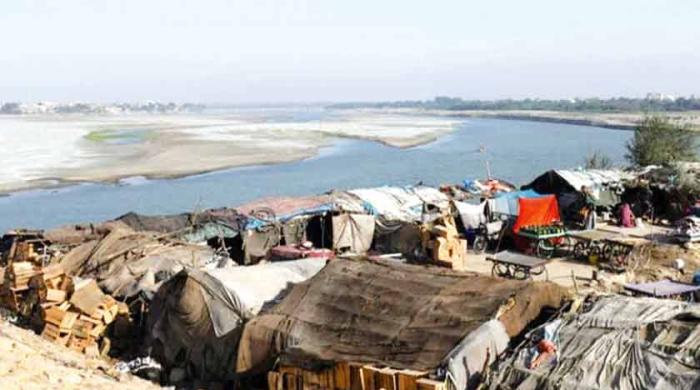
The SPDC’s findings reinforce this deteriorating trend, showing that poverty increased from about 36.6 per cent in 2018–19 to 43.5 per cent in 2024–25. Notably, the rise appears sharper in urban areas, where inflation, housing costs, and stagnating incomes have eroded living standards. This shift challenges the traditional perception of poverty as primarily a rural phenomenon.
An especially distressing dimension of this crisis is its impact on mental health. Economic hardship, unemployment and indebtedness are increasingly linked with rising suicide cases. According to the WHO, Pakistan’s suicide rate is estimated in the range of roughly 9 per 100,000 people, although data reliability remains a serious concern due to underreporting and social stigma. Independent studies, including those by the Pakistan Institute of Living and Learning (PILL), suggest that suicide is among the leading causes of death among young people in the country.
Media reports frequently attribute many suicide cases to financial stress, unemployment and domestic pressures linked to economic hardship. There is little doubt that prolonged economic distress -- particularly during the high-inflation period of 2023–2025 and again in 2026 -- has exacerbated psychological vulnerabilities, especially among youth. With nearly 60 per cent of Pakistan’s population under the age of 30, the shortage of employment opportunities compounds this risk.
Regional disparities further aggravate the situation. Underdeveloped areas, including parts of Sindh and Balochistan, continue to exhibit higher poverty and vulnerability indicators. Districts such as Tharparkar in Sindh are often cited in local reporting for extreme deprivation, though precise attribution of suicide causes remains methodologically challenging.
The broader picture that emerges is one of structural vulnerability. Poverty in Pakistan is no longer confined to traditional areas but is increasingly urban, multidimensional, and intertwined with human development deficits. Temporary macroeconomic stabilisation, while necessary, is insufficient to reverse these deeper trends.
The World Bank, in its September 2025 assessment of Pakistan’s poverty trajectory, Pakistan’s poverty trajectory: Progress, peril, and the path forward', aptly observes that the current reversal is not inevitable. With timely and coordinated reforms, the country can still regain lost ground. However, this will require a shift from short-term stabilisation to long-term structural transformation. Investments in education, healthcare and skills development must become central pillars of policy. Equally critical is the need to expand social protection systems that can shield vulnerable populations from economic shocks.
Looking ahead, the World Bank’s long-term vision outlined in 'Pakistan at 100: Shaping the Future 2047' suggests that Pakistan has the potential to transition into an upper-middle-income country, provided it undertakes sustained reforms in governance, human capital and economic management. Without such reforms, however, the risk of a low-growth, high-poverty equilibrium remains real.
Ultimately, the challenge of poverty in Pakistan is institutional and societal as much as economic. Addressing it demands political will, policy continuity and a commitment to inclusive growth. The present moment should serve as a turning point: a recognition that economic recovery without social uplift is neither durable nor meaningful. Only by placing human development at the centre of its strategy can Pakistan hope to build a more equitable and resilient future.
The writer is a retired chairman of the State Engineering Corporation.