When the Strait of Hormuz became a flashpoint once again, energy ministries across Asia braced for the worst. Pakistan should have been among the most exposed. Yet it was not, and the reason can be found on the rooftops of millions of mundane households.
SOLAR BOOM
When the Strait of Hormuz became a flashpoint once again, energy ministries across Asia braced for the worst. Pakistan should have been among the most exposed. Yet it was not, and the reason can be found on the rooftops of millions of mundane households.
By February 2026, Pakistan had quietly avoided over $12 billion in oil and gas imports that would otherwise have been needed to meet domestic demand, with a further $6.3 billion in projected savings by year's end. This is the cumulative result of citizens taking matters into their own hands: buying cheap Chinese solar panels, wiring up their rooftops and stepping off a grid that had failed them for decades.
From under 1 GW of solar imports in 2018 to over 51 GW by early 2026, Pakistan achieved one of the fastest consumer-led energy transitions on record. While the government is credited with maintaining a zero-rated tax regime on solar PV imports from 2013 until mid-2025, the real architects were households priced out of grid electricity, businesses protecting themselves from crippling loadshedding, and a dramatic fall in Chinese manufacturing costs that made rooftop solar cheaper per unit than grid power.
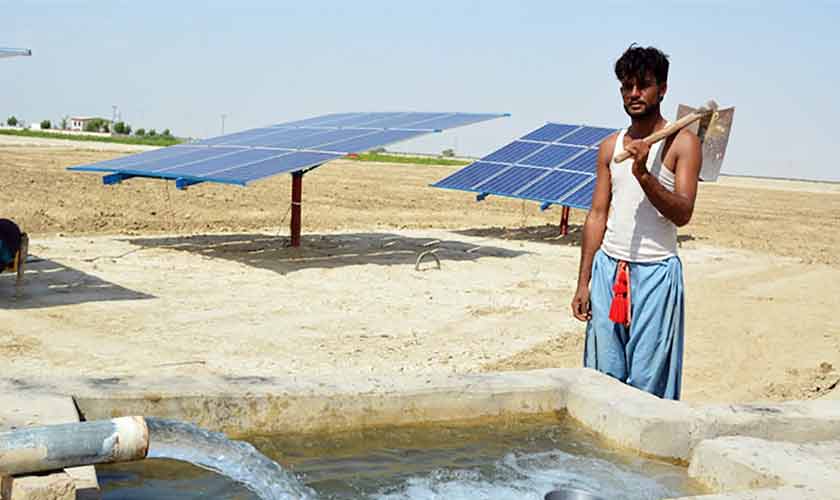
All of these factors came together to drive this change. In villages across lower Punjab and upper Sindh, studies found that nearly 50 per cent of households have already solarised -- sharing panels across families, charging fans and lights at the end of a long farming day.
The geopolitical implications remain stark. In 2024, Pakistan ranked third globally in LNG dependence on Hormuz-transiting cargoes as a share of total consumption, and fifth for oil. Solar has quietly changed that calculus. As rooftop panels spread, demand for LNG has fallen, long-term import contracts have been renegotiated and some shipments diverted. Pakistan is less exposed today, not because of any energy security doctrine, but as a result of distributed energy sovereignty, built panel by panel.
No province stands to benefit more from this revolution than Sindh and at the same time, no province has more at stake if it is reversed.
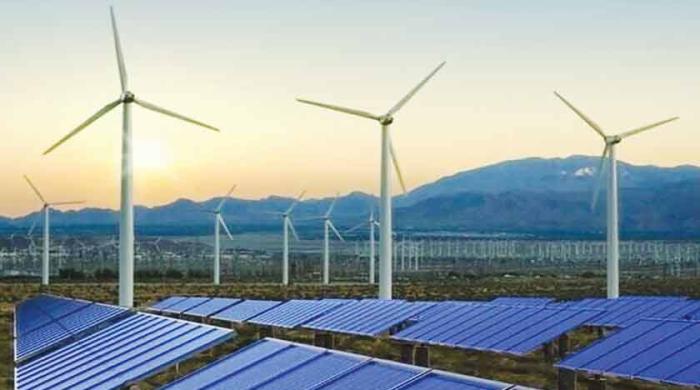
Sindh is not merely a passive beneficiary of Pakistan's solar boom; it is the country's renewable energy heartland. The Jhimpir-Gharo wind corridor in southern Sindh alone carries an economically viable wind potential of 11 GW, with theoretical estimates exceeding 50,000 MW. Wind speeds averaging above seven meters per second have already attracted over 36 independent wind farms, contributing 1,845 MW to the national grid and yet the corridor remains underutilised, held back by transmission bottlenecks.
Every unit of clean energy produced in Jhimpir or Thatta is a unit that doesn't require burning imported LNG through a chokepoint that geopolitics can close at any moment
On solar, the picture is equally promising. The World Bank has channeled USD 100 million into the Sindh Solar Energy Project, covering utility-scale generation, rooftop systems on public buildings, and solar home systems for off-grid communities. The Sindh government announced plans in 2024 to distribute 200,000 subsidized solar systems to low-income households. A 100 MW hybrid wind-solar project in Jhimpir - the first under Sindh's own provincial regulator, SEPRA - is in active financing discussions, while Oracle Power's 1.3 GW renewable complex in the same corridor received environmental approval in 2024. Such examples indicate projects in motion.
The significance for Sindh runs deeper. The province bore close to 70 per cent of Pakistan's total damage and losses from the 2022 super floods, with 2.8 million hectares of cropland inundated. Sindh contributes less than one per cent to global emissions yet absorbs a wildly disproportionate share of climate consequences. Unlocking this potential at scale -- solar, wind and the storage infrastructure to back them -- is also a climate finance imperative for Sindh.
Every unit of clean energy produced in Jhimpir or Thatta is a unit that doesn't require burning imported LNG through a chokepoint that geopolitics can close at any moment. And every megawatt of renewable capacity Sindh adds strengthens its case for a fair share of international climate finance, from the Green Climate Fund to the IMF's Resilience and Sustainability Facility (RSF), resources the province urgently needs to rebuild and future-proof.
Pakistan's solar boom has been a quiet climate finance success, driven by millions of households, farmers and businesses investing their own capital in distributed renewable energy. This bottom-up transition made rooftop solar both accessible and transformative. This is also why Nepra's February 2026 Prosumer Regulations are cause for concern. By shifting all solar users from net metering to net billing -- and slashing the buyback rate for surplus electricity from Rs25.32 to Rs8.13 per unit -- the regulator has fundamentally altered the economics of rooftop solar.
In Sindh, where the grid has historically been weakest, the climate impacts most severe and the renewable potential most abundant, this grassroots energy transition is more than a national story. It is Sindh's most credible path towards energy security and climate resilience. It therefore warrants a policy framework that protects and sustains its growth.
The writer is a research associate at Partners in Development and Consultancy (PIDC).