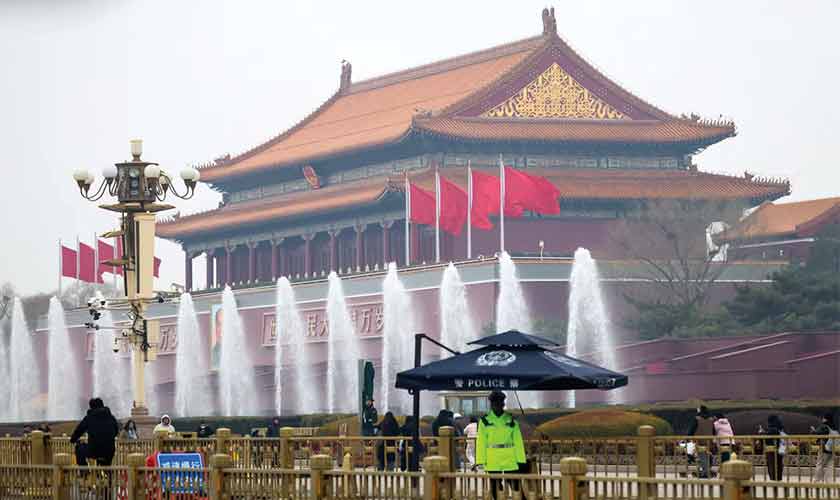
China’s 2026–2030 Five-Year Plan is not merely an economic roadmap; it is a strategic doctrine for operating in a world where globalisation is no longer frictionless, supply chains are politicised,and technological capability has become the primary currency of power.
FIVE-YEAR PLAN
China’s 2026–2030 Five-Year Plan is not merely an economic roadmap; it is a strategic doctrine for operating in a world where globalisation is no longer frictionless, supply chains are politicised,and technological capability has become the primary currency of power.
At a time when many economies are struggling to reconcile growth with resilience, China has made a decisive choice: it will trade speed for control, scale for sophistication and openness for strategic selectivity. The implications of this pivot are profound, both for China’s own trajectory and for the future architecture of global trade and investment.
To understand the significance of this plan, one must begin with the context. China enters this five-year cycle as a $20 trillion economy, having crossed 140 trillion yuan in GDP in 2025, while still maintaining roughly 5.0 per cent annual growth despite a volatile external environment. Yet beneath this headline resilience lies a recognition in Beijing that the old growth model anchored in property, infrastructure and export manufacturing has reached its limits. The new plan reflects a structural transition towards what policymakers describe as ‘high-quality development’, even if that means accepting a slower growth range of 4.5–5 per cent, the lowest in decades.
This recalibration is strategic. It acknowledges that in a fragmented global economy, control over technology, supply chains and energy systems matters more than headline GDP expansion.
The most consequential pillar of the plan is its aggressive push toward technological self-reliance. China is targeting annual R&D spending growth of over 7.0 per cent, while aiming to expand the value of core digital industries to 12.5 per cent of GDP by 2030. These are not incremental targets; they represent a systemic attempt to rewire the economy around innovation. Artificial intelligence, quantum computing, biomanufacturing and robotics are now central to national strategy.
This shift is best understood as a response to external constraints. Export controls, particularly in semiconductors and advanced technologies, have exposed vulnerabilities in China’s integration into global value chains. The response, as reflected in the plan, is to build endogenous capability across the entire innovation stack from basic research to industrial deployment.
For global trade, this marks a fundamental shift. Comparative advantage is no longer determined solely by labour costs or resource endowments. Instead, it is increasingly shaped by who controls the underlying technologies and production ecosystems. As China moves deeper into high-tech manufacturing and digital industries, it will compete not just with emerging economies, but directly with advanced industrial nations. The result is likely to be a more contested and politicised trade environment.
Closely tied to this technological push is the plan’s emphasis on advanced manufacturing and industrial upgrading. China is investing heavily in high-end machine tools, smart manufacturing systems and next-generation robotics -- not simply to move up the value chain, but to secure control over critical nodes of production. This is a strategic response to the disruptions of recent years, from pandemic-induced supply chain breakdowns to geopolitical restrictions on key components.
The objective is clear: reduce external dependencies while increasing control over strategic supply chains. For countries that have historically exported intermediate goods to China, this raises the risk of displacement as China internalises more stages of production. At the same time, Chinese firms are likely to become more competitive in high-value exports, intensifying competition in sectors such as advanced machinery, electronics and industrial systems.
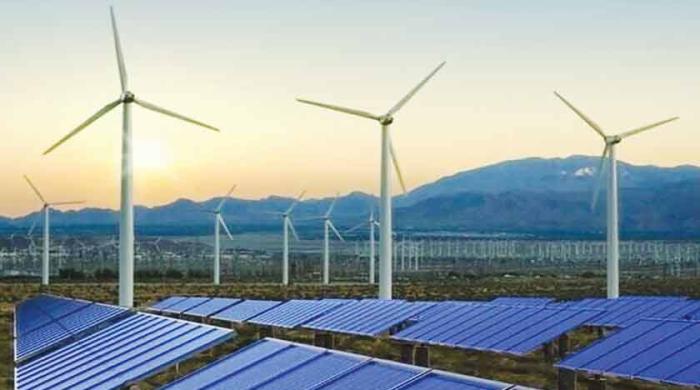
In parallel, the plan embeds green development at the heart of China’s economic transformation. Targets include a 17 per cent reduction in carbon intensity and a significant expansion of non-fossil energy sources, which are expected to account for around 25 per cent of total energy consumption by 2030. These goals are deeply industrial.
The countries that control the production of green technologies will not only capture economic value but also shape the standards and supply chains that define the global transition
China already dominates key segments of the global green economy, from solar panels to electric vehicle batteries. By doubling down on renewable energy, hydrogen, and advanced nuclear technologies, it is positioning itself to lead the next generation of energy systems. This has direct implications for global trade flows. As countries accelerate their own energy transitions, demand for green technologies will surge and China is ensuring that it remains a central supplier.
In effect, climate policy becomes an extension of industrial policy. The countries that control the production of green technologies will not only capture economic value but also shape the standards and supply chains that define the global transition. China’s strategy suggests a clear intent to occupy that position.
Yet, despite this strong emphasis on self-reliance, the plan does not signal a retreat from globalisation. On the contrary, it reaffirms China’s commitment to international trade, albeit on recalibrated terms. The plan explicitly supports the multilateral trading system and positions China as a defender of global trade norms, even as it navigates an increasingly protectionist environment.
However, the nature of China’s global engagement is evolving. Rather than relying predominantly on traditional markets in the West, China is deepening its economic ties with the Global South. Through initiatives such as the Belt and Road Initiative, it is building new trade corridors, investing in infrastructure and strengthening supply chain linkages across Asia, Africa and Latin America.
For many developing countries, this presents both opportunities and risks. On the one hand, increased investment and connectivity can drive economic growth and integration. On the other, it may create new forms of dependency, particularly if local industries struggle to compete with Chinese firms. The long-term impact will depend on how these partnerships are structured and managed.
The new foreign investment policy further illustrates China’s evolving approach. While the country continues to signal openness to foreign capital, particularly in high-tech and service sectors, this openness is increasingly selective. The focus is on attracting investment that aligns with national priorities, rather than broad-based liberalisation. In sectors such as telecommunications, healthcare and education, foreign participation is welcomed but within a framework that ensures alignment with China’s strategic objectives.
This reflects a broader shift towards what might be described as ‘conditional globalisation’. Access to China’s market remains a significant opportunity, but it comes with expectations regarding technology transfer, local partnerships, and alignment with regulatory frameworks. For multinational companies, this requires a more nuanced strategy that balances the opportunities of the Chinese market with the complexities of operating there.
The broader implication of the plan is the emergence of a new model of globalisation, one that is more fragmented, more strategic and more state-driven. In this model, economic interdependence is no longer an unquestioned good. Instead, it is something to be managed, optimised and, where necessary, limited.
For the world, the message is clear. The global economy is entering a new phase, one in which strategy matters as much as efficiency and resilience matters as much as growth. Countries that continue to rely solely on market forces may find themselves at a disadvantage in a system increasingly shaped by coordinated policy frameworks and geopolitical considerations.
Ultimately, China’s 2026–2030 Five-Year Plan is not just about China. It is about the future of the global economy. It reflects a world in transition from one defined by seamless globalisation to one characterised by strategic competition and selective integration. Whether this transition leads to greater resilience or deeper fragmentation will depend on how countries navigate the choices ahead.
What is certain is that the rules of the game are changing. And China, through this plan, is not waiting to see how the game unfolds it is actively rewriting it.
The writer is a trade facilitation expert, working with the federal government of Pakistan.