Print Story
X




Rizwan Aftab Ahmed’s work signals a shift toward holistic athlete care in Pakistan
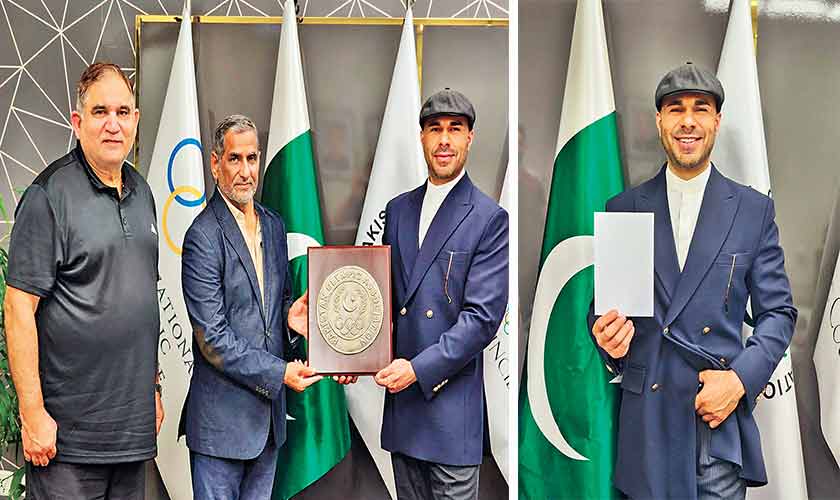
The recent decision by the Pakistan Olympic Association (POA) to honour Rd (Registerd Dietititian) Rizwan Aftab Ahmed is more than a ceremonial gesture, it is a telling commentary on the evolving dynamics of sports development in Pakistan.
While awards and shields often celebrate individual contributions, this particular recognition highlights a deeper truth: Pakistan’s sporting progress increasingly depends on individuals who step in where systems fall short.
Rizwan Aftab Ahmed’s journey as a supporter of athletes reflects a model that Pakistan has long needed but seldom institutionalised. His contributions, ranging from financial backing to medical and nutritional support, highlight a comprehensive understanding of what modern athletes require to compete at the highest level. In an era where sports science, recovery, and global exposure define success, such holistic involvement is no longer optional; it is essential.
His support for Pakistan’s lone individual Olympic javelin gold medallist Arshad Nadeem, particularly during critical phases of training and rehabilitation in England, is perhaps the most visible example of this approach. But focusing solely on one success story would miss the larger point. The real value lies in the system he is helping to shape, one where athletes are not left to navigate financial uncertainty or medical challenges alone.
This is precisely why the acknowledgment by Pakistan Olympic Association, headed by Arif Saeed with Secretary General Muhammad Khalid Mahmood carries weight. Their remarks were not merely appreciative; they reflected an institutional recognition that partnerships between governing bodies and private contributors are indispensable. The awarding of the POA’s honorary shield to Rizwan, therefore, should be seen not just as a reward, but as an endorsement of a model that deserves replication.
However, this moment also invites a critical question: why are such efforts still the exception rather than the norm? Pakistan has no shortage of talent, yet its athletes often struggle due to inconsistent support structures. The state alone cannot shoulder this responsibility, and Rizwan’s example demonstrates how private initiative can bridge crucial gaps. But for this to translate into lasting impact, it must move beyond individual goodwill and evolve into a coordinated national framework.
Rizwan’s own reflections reveal an understanding of this broader responsibility. Rooted in a family legacy connected to figures like Raja Ghazanfar Ali Khan, his sense of service appears less about recognition and more about continuity. His acknowledgment of others, coaches, medical professionals like Dr. Ali Bajwa, and the athlete’s own determination, further reinforces a key principle: sporting success is always a collective effort.
Equally significant is his commitment to institutional support through facilities such as the National Hospital in DHA Lahore. By offering access to medical infrastructure, he is addressing one of the most neglected aspects of athlete development in Pakistan. Injuries have prematurely ended many promising careers; ensuring proper treatment and rehabilitation could be transformative.
Yet, perhaps the most compelling aspect of this recognition lies in its forward-looking implications. Rizwan’s vision, that Pakistan should achieve in the Olympics what it has in cricket, is both ambitious and necessary. Cricket’s success did not come overnight; it was the result of sustained investment, infrastructure, and public engagement. Replicating that model across Olympic sports will require precisely the kind of commitment he represents.
The POA’s gesture, therefore, must not remain symbolic. It should serve as a call to action, for corporate entities, healthcare institutions and individuals with the capacity to contribute. Pakistan’s athletes have repeatedly demonstrated resilience and potential; what they need is a reliable ecosystem that matches their ambition.
In honouring Rizwan Aftab Ahmed, the Pakistan Olympic Association has done more than recognise an individual, it has spotlighted a pathway. The challenge now is whether Pakistan is willing to follow it.