Print Story
X




Zulfiqar Khosa’s life offers a remarkable lens to understand the evolution of politics in southern Punjab
| T |
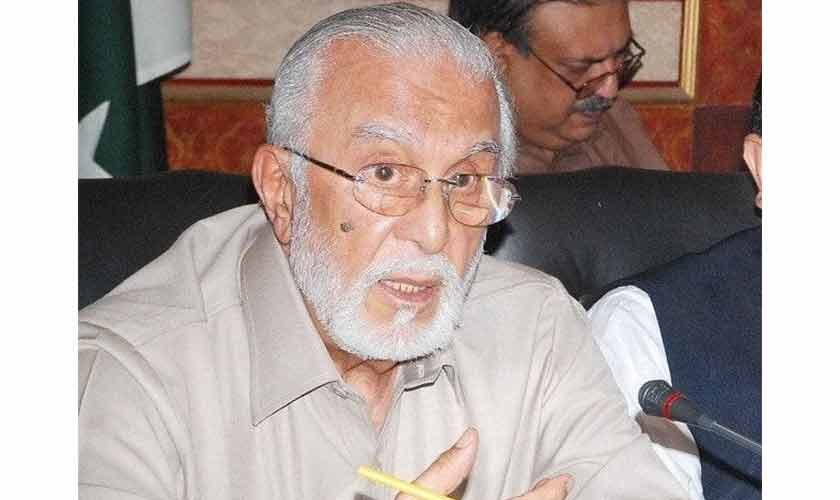
he death of Sardar Zulfiqar Ali Khan Khosa on April 9, marks the end of a chapter in Punjab’s political history. For over half a century, his was a defining presence in the province’s governance and power structure. It embodied a political order that fused tribal authority, administrative discipline and personal loyalty into a singular style of leadership.
Born in 1935 in Dera Ghazi Khan into the influential Khosa tribe, Zulfiqar Khosa inherited not just a name, but a tradition of leadership deeply embedded in the socio-political fabric of southern Punjab. His upbringing reflected the realities of a region where politics was inseparable from land, lineage and local allegiance. Khosa was not merely a beneficiary of this system—he proved one of its most astute practitioners.
Educated in law, he enjoyed a firm grasp of governance and constitutional matters that eventually translated into a measured and authoritative administrative style. Unlike some contemporaries who relied solely on charisma or populism, Khosa cultivated an image of restraint and sobriety that would define his long political career.
Formally, his political journey began in the 1970s, a period marked by ideological shifts and institutional uncertainty in Pakistan. Over time, he aligned himself with conservative political forces, emerging as a trusted ally of Nawaz Sharif. As one of the early members of the Pakistan Muslim League (Nawaz) core, he played a crucial role in extending the party’s influence in southern Punjab.
Khosa’s loyalty to Sharif was neither opportunistic nor transient. Through the political upheavals of the 1990s, the exile of party leadership and the eventual restoration of democratic order, he remained a steadfast presence in the party’s inner circle. This permanence was rooted in a broad ideological alignment centred on administrative order, provincial strength and continuity of governance.
Over decades, Zulfiqar Khosa served several terms as a member of the Provincial Assembly. He also held key ministerial portfolios in the Punjab. His administrative competence and firm handling of bureaucratic affairs earned him a reputation as a no-nonsense administrator—one who upheld hierarchy, discipline and clarity of command.
His most prominent constitutional role came when he was appointed governor of the Punjab in 1999. However, his tenure was cut short by the military coup led by Gen Pervez Musharraf. In that defining moment, Khosa chose principle over expediency. He refused to lend legitimacy to the extra-constitutional takeover, aligning himself firmly with the ousted civilian leadership. This decision, while politically costly, reinforced his image as a man of conviction rather than convenience.
He was not a rhetorician or a populist showman. He chose to be an administrator: methodical, deliberate and firmly in control.
Following the return of democratic governance, Khosa once again assumed a central role in the Punjab. As senior advisor to the chief minister during Shahbaz Sharif’s tenure, he wielded considerable behind-the-scenes influence. His counsel was particularly valued in matters of governance, law and order and bureaucratic management. Those who worked with him often described him as meticulous, disciplined and unwavering in his expectations from public officials.
In his later years, differences within the PML-N led to a gradual distancing from the party he had helped build. Generational shifts, intense media scrutiny and changing voter expectations challenged traditional power structures.
Despite these shifts, Khosa’s stature in Dera Ghazi Khan and surrounding regions remained largely unchallenged. To many, he was more than a politician: a patriarch, an arbiter and a custodian of local interests. His influence extended beyond formal office as it was rooted in decades of personal relationships and an enduring connection to his constituents.
He is survived by his sons, Dost Muhammad Khosa—who went on to serve as chief minister of Punjab—and Saif Khan Khosa.
Khosa’s career offers a remarkable lens through which to understand the evolution of politics in southern Punjab. He belonged to a generation that operated within a framework of personalised authority and informal networks, yet he navigated the transition towards a more institutionalised and scrutinised political environment.
His leadership style may appear distant in an age of populism and digital engagement, but it carried a distinct sense of gravitas and continuity. He was not a rhetorician or a populist showman. Instead, he chose to be an administrator: methodical, deliberate and firmly in control.
The passing of Sardar Zulfiqar Ali Khan Khosa leaves behind more than a political vacuum. It marks the fading of a certain leadership ethos.
The writer, an award-winning investigative journalist, is the editor-in-chief of The Scoop, a digital platform. He can be reached on X @HassanNaqvi5