Print Story
X




Dengue fever is no longer a seasonal outbreak; it is a permanent climate-linked governance crisis
| I |
n a narrow lane of Muzaffargarh, an elderly man sat beneath a slowly turning fan, watching dark bruises spread across his arms as his platelet count fell by the hour. His son moved from one overcrowded hospital to another, looking for a bed. Anxious neighbours whispered the word that had once paralysed Lahore and frightened the entire nation: dengue.
For millions of Pakistanis, dengue fever appears briefly in headlines each monsoon season before disappearing from public consciousness. For affected families, however, dengue fever is not seasonal. It is a recurring public-health catastrophe rooted in climate change, urban disorder, institutional fragility and neglect.
More than a decade after Pakistan’s worst dengue outbreaks, the country continues to treat the disease as a temporary emergency rather than a permanent and evolving public-health threat. The tragedy is not merely that dengue fever persists, but that it has persisted despite Pakistan having acquired the scientific expertise, operational experience and institutional knowledge required to manage it effectively. What is lacking is continuity, coordination, sustained investment in science and consistent political commitment.
Dengue fever has become one of the fastest-expanding mosquito-borne viral diseases in recorded history. Transmitted mainly by Aedes aegypti and Aedes albopictus mosquitos, it has spread rapidly on account of rising temperatures, catastrophic floods, irregular rainfall, uncontrolled urbanisation, poor drainage systems, stagnant water, unmanaged solid waste and growing human mobility.
According to the World Health Organisation, the global count of dengue fever cases surpassed 14.6 million in 2024, affecting more than 100 countries and causing more than 12,000 deaths. The disease has now entered regions once considered safe. This includes parts of Europe.
Pakistan is among the most vulnerable countries in the region. Repeated outbreaks across the Punjab, Sindh and Khyber Pakhtunkhwa have exposed serious weaknesses in surveillance, environmental governance and institutional preparedness. The Punjab has repeatedly been the epicentre of major outbreaks, particularly during the devastating 2011 epidemic that overwhelmed hospitals and shattered public confidence. Subsequent outbreaks in 2019, 2021, 2022 and 2024 exposed weaknesses in sanitation, surveillance and urban management.
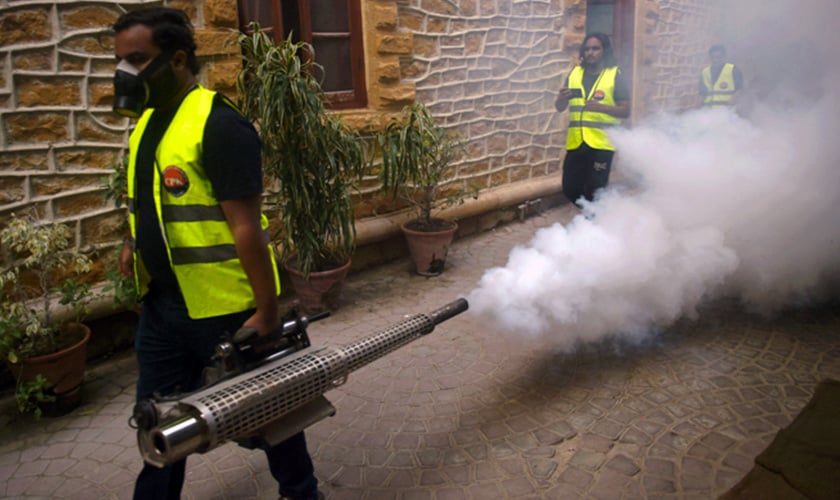
Pakistan’s greatest weakness in dengue management remains its dependence on reactive strategies. Fogging operations intensify only after hospitals begin to overflow. Emergency task forces dominate headlines for a few weeks before disappearing as case counts decline. Surveillance weakens, public-awareness campaigns fade and institutional memory is lost. Such crisis-driven responses prevent the development of durable preparedness systems capable of stopping outbreaks before they spread.
The contrast with well-performing countries is highly instructive. Singapore has developed one of the world’s strongest dengue-management systems by integrating real-time epidemiological surveillance, GIS mapping, mosquito-monitoring networks, strict legislative enforcement, artificial-intelligence forecasting and continuous community engagement into a permanent framework. Indonesia achieved a major breakthrough through the release of Wolbachia-infected mosquitoes, a biological-control strategy later expanded in Australia’s Northern Queensland, where dengue incidence declined sharply. Brazil has combined vaccination programmes with biological control and community mobilization. Malaysia, Vietnam, Mexico and Thailand have integrated climate modelling and artificial intelligence into early-warning systems capable of identifying outbreak risks weeks in advance.
One of the most important recent developments is dengue vaccination. The latest vaccine QDENGA (TAK-003) has demonstrated meaningful protection against severe dengue and hospitalisation. However, evidence suggests that vaccination alone cannot eliminate dengue. Combined with surveillance and environmental management, it becomes an important additional layer of protection for high-risk populations.
The Punjab has previously demonstrated that science-based dengue management can produce measurable success. Following the catastrophic 2011 outbreak, the provincial government launched one of Pakistan’s most organised dengue-management programmes, supported by coordinated surveillance, field monitoring, awareness campaigns and structured vector-control operations.
From 2012 to 2018, as professor and head of the Department of Entomology at the University of Agriculture, Faisalabad, the author remained involved in Punjab’s dengue surveillance and management activities in close coordination with the Health Department and divisional administrations. Entomological surveillance became central to operational decision-making. Field teams carried out continuous mosquito surveillance, larval habitat identification, insecticide-resistance monitoring, vector-species identification and insecticide-efficacy evaluation under demanding field conditions.
During this period, Professor Dr Waseem Akram played a key role in linking entomological research with operational dengue-control activities. As head of the Research and Development Wing of the Punjab Dengue Surveillance and Management Programme, he strengthened the programme’s evidence-based approach and coordinated critical scientific activities. Dr Waseem Akram continues to lead the Department of Entomology at the University of Agriculture, Faisalabad.
Dr Shahid Majeed contributed significantly through eco-friendly mosquito-management research and systematic insecticide-evaluation studies that informed field operations. Dr Shahid Majeed completed his PhD at the Swedish University of Agricultural Sciences, Sweden, with research titled Odour-mediated Host Preference in Mosquitoes. His work explored how dengue mosquitoes identify human hosts through odour and carbon dioxide cues, contributing to eco-friendly mosquito surveillance, trapping technologies and integrated vector-management strategies.
Dr Muhammad Tayyab, provided outstanding institutional service as focal person for the University of Agriculture, Faisalabad, in close coordination with divisional administrations and health authorities during the programme’s most demanding operational phases.
The leadership of Dr Iqrar Ahmad Khan, then vice chancellor of the University of Agriculture Faisalabad, strengthened institutional coordination and scientific mobilisation by encouraging applied research and inter-departmental collaboration during critical periods requiring both academic rigor and administrative resolve.
Today, the threat landscape is far more dangerous. Climate change, rising temperatures, rapid urban expansion, chronic water shortages, deteriorating drainage systems, construction sites, tyre markets and unmanaged waste have created ideal mosquito-breeding conditions across many Pakistani cities. Decades of excessive and indiscriminate insecticide use have led to accelerated resistance among mosquito populations, reducing the effectiveness of traditional chemical-control methods.
The Punjab government has recently introduced major healthcare reforms aimed at strengthening medical services throughout the province. Health Minister Khawaja Salman Rafique has been actively engaged in improving healthcare delivery through hospital restructuring, emergency preparednes, and performance-monitoring systems. The same sustained focus should now be directed towards year-round dengue surveillance, precision vector management, vaccination evaluation and scientific preparedness systems capable of functioning continuously rather than seasonally.
The Punjab urgently requires a permanent Dengue Command and Control Centre integrating epidemiological, entomological, environmental and climate-related data into a unified digital-surveillance system. Continuous larval surveillance, GIS-based hotspot mapping and climate-linked early-warning systems must become permanent institutional mechanisms instead of temporary emergency measures.
The provincial government should evaluate the introduction of Wolbachia-based biological vector-control programmes in high-burden urban centres alongside systematic insecticide-resistance monitoring in all major cities. Integrated vector management - incorporating biological larvicides, environmental sanitation and source reduction - must replace reactive fogging-centred approaches.
The Punjab should also evaluate the introduction of the QDENGA dengue vaccine for high-risk urban populations through carefully designed pilot programmes in select districts.
Deputy commissioners across all districts must be equipped with real-time monitoring systems and accountability mechanisms to ensure uninterrupted action against mosquito-breeding sites. Sustained public-awareness campaigns should remain active throughout the year at schools, colleges, universities, hospitals and mosques.
The Department of Entomology at the University of Agriculture Faisalabad should be further strengthened and formally designated as a national centre for vector-borne disease research and climate-linked dengue modelling.
Countries that have successfully controlled dengue fever had invested continuously in surveillance, scientific innovation, environmental governance and institutional continuity. Pakistan has already paid a heavy price for delayed and fragmented responses in repeated outbreaks, preventable deaths, overwhelmed hospitals and declining public confidence.
Dengue fever is no longer a seasonal mosquito problem manageable through temporary emergency operations. It is a climate-sensitive governance and urban-management challenge demanding continuity, institutional memory and political resolve.
The required scientific knowledge exists. The institutional experience has been built and tested in hospitals, laboratories and field operations. Under sustained leadership and coordinated governance, the Punjab can transform dengue management into a precise year-round public-health system capable of stopping outbreaks before they begin.
The writer is a former chairman of the Department of Entomology at University of Agriculture, Faisalabad.