Print Story
X




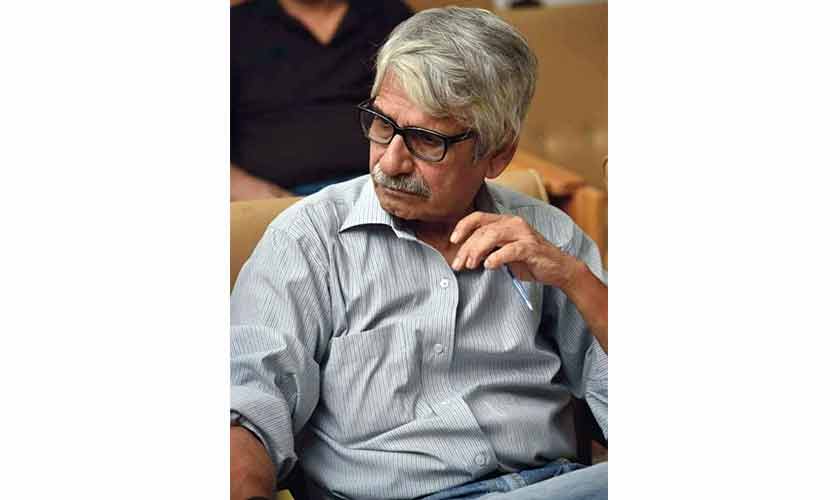
Prof Khalid Saeed urged people to think more deeply, feel more fully and act more responsibly
| T |
he passing of Professor Khalid Saeed (1947-2022) marked the end of a rare kind of intellectual presence. Today, his absence feels larger than the man himself. He was, in the truest sense, a polymath: a scholar whose curiosity rejected the confines of any single discipline. Psychology may have been his formal subject, but his mind roamed freely across literature, philosophy, mythology, politics, science fiction and the vast terrain of human experience. Those fortunate enough to sit in his company often felt that they were in the presence of a living library. Conversations with him were never ordinary; they were exciting journeys one always returned from with a sense of being sharper and awakened.
Professor Saeed belonged to the breed of thinkers who perceive patterns long before they become visible to others. His predictions were not the product of mysticism or intuition but of a disciplined intellect capable of connecting dots scattered across history, culture and human behaviour. Among his many original ideas, the one that will perhaps define his intellectual legacy was his concept of the Neo Dark Age, a notion he articulated with increasing urgency in the final decades of his life. At first, many dismissed it as overly pessimistic, even dramatic. But as the world began to shift in ways that echoed his warnings, his insight appeared less like speculation and more like foresight.
For Professor Saeed, the Neo Dark Age was not a simple reiteration of the medieval one. History, he insisted, never repeats itself in form, only in structure. The original Dark Ages were shaped by the fusion of religious authority and political power. This collaboration controlled access to knowledge, suppressed dissent and divided the society into rigid categories of the faithful and the suspect. He pointed out that the world was again drifting toward a similar architecture of control, though built from different materials. Instead of a dominant church, he saw powerful cultural, racial and social forces shaping public life. Instead of clerical elites guarding literacy, he saw new gatekeepers of information, from media conglomerates to digital platforms, determining what people believed and how they felt. Instead of heresy trials, he saw the rise of identity-based exclusion, in which belonging was increasingly defined by narrow cultural narratives rather than shared human values.
He often remarked that the tragedy of the modern world was not ignorance but the collapse of meaning. We live, he would say, in an age where information is abundant but understanding is scarce; where technology connects us, but empathy is eroded; where violence becomes normalised not because people are more cruel but because they are overwhelmed. He observed with concern that public debates were shifting from universal principles to tribal anxieties; political decisions were increasingly justified through narratives of cultural threat; and human suffering in distant places was reduced to fleeting images in an endless stream of content. This emotional desensitisation, he said, was one of the defining features of the Neo Dark Age, a darkness not of the mind but of the heart.
Yet he was never a cynic. Those who knew him will remember that his warnings were not delivered with despair but with a sense of responsibility. He believed that naming a threat was the first step toward resisting it. He also believed that history offered hope. The original Dark Ages, he reminded his students, eventually gave way to periods of renewal, rediscovery and intellectual flourish. Humanity had once emerged from darkness through the revival of knowledge and the expansion of empathy. Perhaps the Neo Dark Age, too, could lead to a new awakening. He saw in the crises of the present not only threats but also possibilities, the potential for societies to rethink their values, rebuild their institutions and rediscover a shared sense of humanity.
In an age defined by cruelty and lies, remembering him is not nostalgia; it is a necessity.
In the classroom, Professor Saeed was a force of nature. He did not teach; he provoked, challenged and inspired his students. His lectures were never mere presentations of theory but explorations of the human condition. Students often found themselves thinking about his words long after the class had ended. He had the rare ability to make complex ideas accessible without diluting their depth. He moved effortlessly from Freud to Faiz, Fanon to Fromm, Laing to Lacan, from mythology to modern politics, from ancient epics to contemporary conflicts, always weaving connections that revealed the underlying patterns of human behaviour. His articles on Erich Fromm and Wilhelm Reich, his translations of major psychological thinkers, his translation of Reich’s Listen, Little Man, and his introduction to Dr Mohammad Ajmal’s work were not merely academic contributions; they reflected his commitment to grounding theory in lived reality. Many of his students credit him not only with shaping their academic paths but also with transforming their ways of seeing the world.
Outside the classroom, he was generous with his time and intellect. He mentored young writers and founded the Arts Forum in Multan, where emerging voices could share their work. He guided researchers and encouraged anyone who showed a spark of curiosity. His home was often a gathering place for discussions that stretched late into the night, filled with laughter, debate and the kind of intellectual camaraderie that has become increasingly rare. He believed that knowledge was not a possession but a shared endeavour, something that grew richer when exchanged freely. Perhaps that belief was what kept him intellectually active even during his final battle with cancer. He completed the translation of Oriana Fallaci’s The Man while in the hospital.
His contributions to literature were as significant as his work in psychology. He wrote poetry that blended introspection with social critique, short stories that explored human complexity and translations that brought global voices into local conversations.
In his final years, as the world grew more polarised and conflicts more brutal, he returned often to the idea of the Neo Dark Age. But he also spoke of the possibility of a better ending. Perhaps, he suggested, the turbulence of the present was a necessary rupture, a moment that would force societies to confront their contradictions and rebuild on firmer moral ground. Every Dark Age, he said, carried within it the seeds of its own transformation. The question, he would say, was whether we choose to nurture those seeds or ignore them.
With his passing, we lost not only a scholar but a conscience, a voice that had urged us to think more deeply, feel more fully and act more responsibly. His ideas remain with us. So does the challenge he posed to all of us: to resist the drift toward darkness by cultivating knowledge, empathy and a shared sense of humanity. In remembering him, we honour not only his life but also his belief that even in the darkest times, the possibility of renewal endures.
In an age defined by cruelty and lies, remembering him is not nostalgia; it is a necessity. His insistence on deep thinking, inquiry and moral clarity offers a counterweight to the brutality of dark moments.
Dr Akhtar Ali Syed is a principal clinical psychologist in the Republic of Ireland. He can be contacted at [email protected]