Print Story
X




Feminism should never be a justification for war
| T |
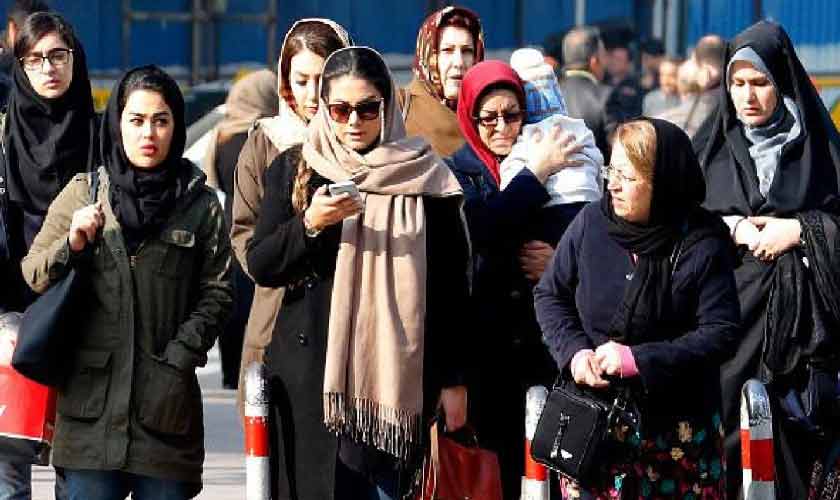
he United States and Israel frequently claim to be defending the rights of Iranian women. Yet their policies toward Iran - military threats, sanctions and the normalisation of bombing campaigns - reflect a profoundly masculinist and anti-feminist logic. Invoking women’s rights to justify militarised intervention is not feminism; it is an instrumentalisation of feminism.
In recent years, the Woman, Life, Freedom slogan has circulated widely in Western political discourse and media coverage about Iran. Iranian women have often been portrayed as victims of a brutal and oppressive regime, a framing that, while highlighting genuine struggles within the country, is also deployed to legitimise external pressure and military confrontation. This selective moral outrage allows Western governments to cast themselves as protectors of women’s rights while pursuing policies that inflict widespread harm on the very populations they claim to be defending.
This tactic of manufacturing consent for intervention through the language of women’s liberation is hardly new. The United States deployed similar rhetoric during its invasions of Afghanistan and Iraq. Feminist language was repurposed as a political instrument, used to legitimise military campaigns that were fundamentally geopolitical in nature.
Perhaps the most symbolic example came in 2001, when then First Lady Laura Bush delivered a radio address describing the war in Afghanistan as a struggle between the ‘civilised world’ and ‘terrorists’ under whom Afghan women supposedly suffered. She declared that “the fight against terrorism is also a fight for the rights and dignity of women.” Such rhetoric framed military intervention as an act of liberation.
Yet the reality of two decades of war in Afghanistan revealed the limits, and the hypocrisy, of this approach. The promise of women’s liberation served as a moral cover for a militarised project that ultimately failed to secure lasting peace, stability or gender equality. Rather, it caused further destabilisation and radicalisation through the instrumental use of militant groups for their own motives.
Underlying this discourse is a long-standing Western assumption that symbols such as the veil or the burqa represent inherent oppression. This view ignores the complex cultural, political and religious contexts in which practices like the hijab exist. It collapses diverse experiences of Muslim women into a single narrative of victimhood and frames Western cultural norms as the universal benchmark of freedom. Such thinking echoes colonial ideologies in which indigenous practices were dismissed as ‘uncivilised’ and in need of correction by supposedly enlightened powers.
Feminist scholars have long critiqued this dynamic. Gayatri Spivak famously summarised it as “white men saving brown women from brown men.” Anthropologist Lila Abu-Lughod, in her influential essay Do Muslim Women (Still) Need Saving?, similarly argues that the language of rescue often obscures the political and historical contexts that shape women’s lives. By portraying women in the Global South primarily as victims, Western narratives strip them of agency and reduce complex societies to simplistic moral binaries.
True feminism is not compatible with militarised paternalism. Its core principles - equality, equity and justice apply not only across genders but also across nations, races and classes.
This framing also reinforces a hierarchy of power. When states present themselves as protectors of vulnerable populations abroad, they simultaneously legitimise surveillance, coercion and military action. The supposed protector demands authority, while the protected are reduced to dependence and subordination. Rather than enabling local movements for change, this dynamic further marginalises them.
Since the attacks of September 11, 2001, this logic has increasingly taken institutional form through what scholars call securo-feminism and international conflict feminism. In the United States and Europe, elements of feminist discourse have been absorbed into national security frameworks. Women’s rights have become intertwined with militarised foreign policy and neoliberal governance, allowing governments to frame security interventions as humanitarian obligations.
This shift is visible in global policy frameworks as well. The United Nations’ Women, Peace and Security agenda, under Security Council Resolution 1325, has elevated issues such as gender-based violence within international politics. While this recognition is important, critics argue that it has allowed Western actors to portray violence against women in ‘other’ societies as a cause of instability and war, thereby reinforcing narratives that justify intervention.
The result is a paradox. Feminist language is mobilised to support policies that perpetuate geopolitical dominance. Violence against women is highlighted in marginalised states, while structural violence, economic sanctions, military escalation and prolonged conflict receive far less scrutiny when carried out by powerful actors.
This selective feminism also erases the voices of those most directly affected. Iranian women are not passive subjects waiting to be rescued. They are agentic political actors with their own movements, strategies and visions for change. When external powers appropriate their struggles to advance geopolitical agendas, they undermine the very principle of self-determination that feminism claims to defend.
True feminism is not compatible with militarised paternalism. Its core principles - equality, equity and justice - apply not only across genders but also across nations, races and classes. Policies that intensify economic hardship through sanctions or threaten war in the name of liberation ultimately reproduce the same hierarchies of power that feminism seeks to dismantle.
If Western governments genuinely care about Iranian women, they must abandon the arrogance of the ‘damsel in distress’ narrative. Bombs and coercive sanctions are not tools of emancipation. Supporting women’s rights means listening to local voices, respecting political agency and addressing the structural conditions, both domestic and international, that shape people’s lives.
The writer is an anchor and correspondent at PTV World. She can be reached via Twitter: @TayyabaNKhan