Print Story
X




Maryam Nawaz’s tenure illustrates the complex interplay between gender and political authority in Pakistan
| E |
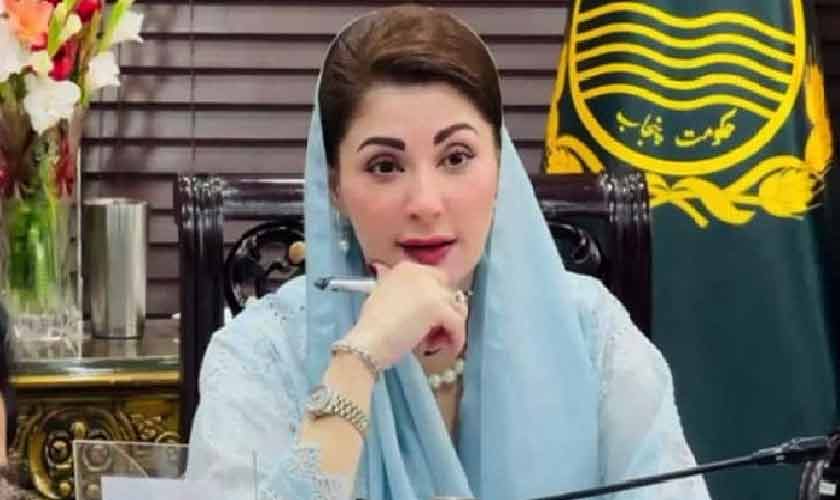
lections in the Punjab in February 2024 marked a historic milestone in Pakistan’s political and gender landscape. As the first woman to lead the country’s largest and politically most significant province, Maryam Nawaz’s two years (2024–2026) offer insights into how gendered leadership interacts with public policy, governance norms, and institutional modelling. To what degree has her leadership advanced transformative gender politics, strengthened women’s substantive representation and reconfigured entrenched structural barriers to equity in the Punjab?
The intersection of gender and political leadership remains central to democratic consolidation in South Asia, where patriarchal norms often constrain women’s political agency. Maryam Nawaz’s election as chief minister challenges the entrenched male dominance that has long characterised provincial politics. Her ascendancy invites critical inquiry into how female leadership can recalibrate policy priorities and governance practices in a traditionally conservative polity.
Maryam was elected chief minister on February 26, 2024, securing 220 votes in the Provincial Assembly. Her election raised hopes of catalyzing gendered policy innovation.
Scholars differentiate between descriptive representation, which refers to the number of women holding office, and substantive representation, which concerns the policies and actions that promote women’s rights and gender equality. Analysing politics through a gender lens involves looking not only at how many women are in leadership positions but also at how their decisions affect structural gender inequalities. In patriarchal societies, women leaders often face constraints that limit their independence, yet they are also expected to pursue gender-focused reforms. This dual expectation influences both their leadership approach and the policies they prioritise.
Beyond its symbolic significance, her leadership challenged conventional assumptions about who is deemed fit to lead and the circumstances under which leadership is possible. In her acceptance speech, she dedicated her victory to “every mother, daughter, sister, child,” signalling a conscious link between her leadership and broad aspirations for women’s participation in public life.
This articulation of her role as a woman leader underscores the performative aspect of representational identity: her position becomes a site for signalling possibility for women beyond elite political circles.
Has Maryam Nawaz’s election translated into policies that meaningfully address women’s rights, opportunities and safety.
One of the earliest and most visible gender-focused reforms was the announcement of dedicated mechanisms for women’s safety, including a helpline, workplace facilities (such as separate washrooms and daycare centres) and zero tolerance towards harassment.
Subsequently, the government inaugurated a virtual women’s police station under the Meri Awaz…Maryam Nawaz initiative. This platform allows women to report crimes through multiple channels, including phone apps and emergency panic buttons in public places—a significant adaptation of policing for women’s needs.
Educational equity also became a focus. It is closely tied to gendered development goals. At the 2025 Antalya Diplomacy Forum, Maryam Nawaz highlighted reforms designed to promote girls’ education and address obstacles to continued learning. Key measures included upgrading primary schools to elementary level and introducing digital learning infrastructure, with the aim of reducing dropout rates—particularly among girls—and improving overall learning outcomes.
Economic empowerment initiatives under her watch have demonstrated a gender-sensitive approach. Programmes like the Sawari Say Khud Mukhtari scheme, which provided female students motorcycles and e-bikes, enhanced their mobility and personal autonomy, enabling greater access to education and employment opportunities. Complementing these efforts, targeted interventions such as livestock projects for widows and divorced women in rural districts reflect an intersectional understanding of economic vulnerability, addressing both gender and socio-economic marginalisation to support women in achieving financial independence.
Under Maryam Nawaz Sharif’s leadership, healthcare in the Punjab underwent a transformative shift. A cornerstone of this reform was the deployment of community health workers across the province. They are tasked with delivering healthcare services directly to households. This proactive, community-centred approach not only made healthcare more accessible but also addressed long-standing barriers that disproportionately affect women, who are often the primary caregivers in households. By bringing medical support to the doorstep of underserved citizens, these reforms reduced the burden on women, saving them time, effort and travel while ensuring their families received timely care. Beyond improving health outcomes, this strategy highlighted the role of women in the healthcare ecosystem and advanced gender equity by recognising and responding to their unique needs. The policy reimagined healthcare delivery in the Punjab, making it both more inclusive and more responsive to the realities of everyday life for women and families.
Maryam Nawaz’s tenure illustrates a complex interplay between gender and political authority in Pakistan. While frequently assessed through the prism of her familial political lineage, a closer examination reveals her capacity to shape policy and governance independently. Her leadership style reflects strategic decision-making, administrative initiative and an engagement with issues—particularly those affecting women and marginalised communities—that signal a substantive exercise of political agency rather than mere symbolic presence. From a research perspective, this underscores the importance of examining women leaders beyond the constraints of traditional political narratives that often prioritise familial affiliations over individual merit.
Despite persistent critiques framing her as an extension of dynastic politics, Maryam Nawaz has demonstrated an ability to navigate entrenched power structures while asserting her policy vision. Her governance record indicates a blend of continuity and innovation, balancing political pragmatism with targeted reform efforts. This duality highlights a broad analytical point: women’s leadership in patriarchal contexts often requires negotiating multiple layers of legitimacy, where policy effectiveness is intertwined with social perceptions of authority. Looking analytically at her governance, her approach provides a valuable case study in how gendered expectations can shape, but not fully define, leadership trajectories in South Asian political landscapes.
The scrutiny Maryam Nawaz faces extends beyond policy critique into the public and social media spheres, where commentary on personal appearance and demeanour often eclipses substantive discussion. These dynamics reflect deeply embedded cultural biases that women leaders must negotiate. Her resilience in the face of such scrutiny reinforces the significance of her role in transforming political norms. Importantly, research on women in politics emphasises that navigating gendered visibility pressures is itself a form of political labour, demonstrating leadership strength and shaping opportunities for future women politicians. In this context, Maryam Nawaz’s experience illuminates both the challenges and the transformative potential of gendered governance in contemporary Punjab.
Overall, Maryam Nawaz Sharif’s tenure as Chief Minister of Punjab demonstrates the transformative potential of women’s leadership in a traditionally patriarchal political landscape. By occupying one of the highest political offices, she has not only broken symbolic barriers but also leveraged her position to foreground issues that disproportionately affect women. Her initiatives in education, health, economic empowerment and safety reflect a deliberate effort to integrate a gender-sensitive perspective into provincial governance, setting a benchmark for inclusive policymaking.
Beyond symbolism, her government’s policies signify substantive progress in addressing systemic gender inequities. Programmes aimed at improving girls’ education, enhancing mobility and economic opportunities for women and deploying community health initiatives illustrate a nuanced understanding of the intersection between governance and women’s lived realities. Maryam’s leadership demonstrates that when women occupy decision-making spaces, policy agendas can be reshaped to consider historically marginalised voices, thereby enriching the scope and responsiveness of public administration.
Looking ahead, Maryam Nawaz’s tenure offers an encouraging model for female political leadership in Pakistan. Her proactive engagement with gender-responsive governance not only advances immediate policy outcomes but also contributes to a broader cultural shift by inspiring women’s political participation and challenging entrenched patriarchal norms. While structural challenges remain, her two years in office exemplify how vision, political acumen and commitment to equity can translate into meaningful change.
The writer is the Chairperson Department of Pakistan StudiesAllama Iqbal Open University Samina.yasmeen@aiou.edu.pk