Print Story
X




Qalandars model set to transform grassroots football nationwide. Institutional reform, professional league and global exposure at the heart of revival plan
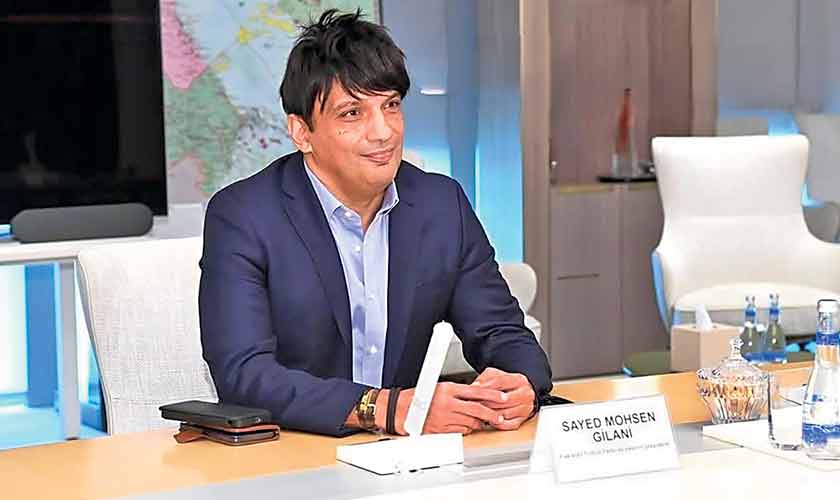
Pakistan football has long drifted between promise and paralysis. This week, however, it finally chose direction over drift. The strategic alliance between the Pakistan Football Federation (PFF) and Lahore Qalandars is more than a ceremonial Memorandum of Understanding (MoU); it is a declaration that the country’s most neglected sport is ready to rebuild itself from the ground up. If executed with sincerity and structure, this partnership could become the most consequential development in Pakistan football in decades.
At the heart of this collaboration lies a simple but powerful idea: replicate the Qalandars’ cricketing blueprint in football. The franchise that revolutionised talent discovery in the Pakistan Super League by empowering street cricketers now aims to do the same for aspiring footballers. Open trials, high-performance centres, structured pathways and a culture of meritocracy transformed unknown youngsters into national stars. Translating that model into football is not merely innovative, it is overdue.
For too long, Pakistan football has suffered from administrative turmoil, factionalism and global isolation. The election of Syed Mohsen Gilani as the PFF’s elected president after a prolonged period under a FIFA-appointed Normalisation Committee was itself a restoration of democratic legitimacy. But legitimacy alone does not score goals or build leagues. Systems do. And that is precisely where this partnership finds its strength.
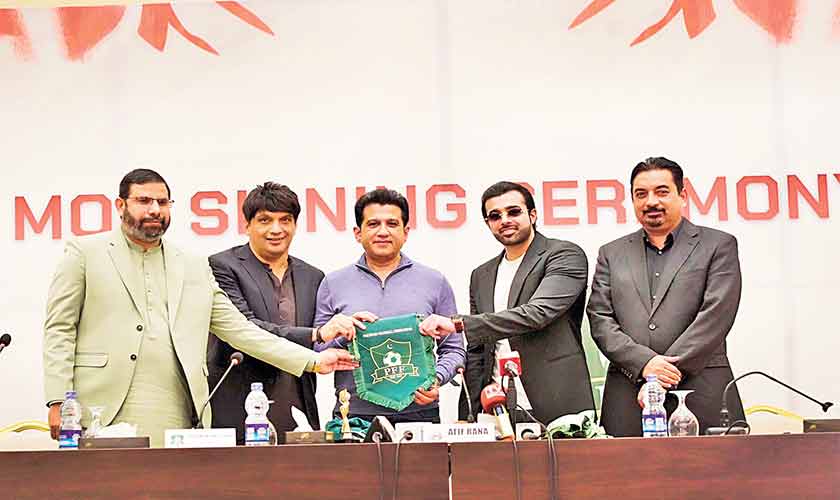
The MoU outlines an ambitious nationwide football development programme: grassroots expansion, school and district competitions, structured talent hunts, high-performance training, youth outreach and international exposure. In a country of over 240 million people, talent scarcity is a myth. The real deficit has been opportunity. By institutionalising pathways from schoolyards to national camps, the PFF and Qalandars are attempting to replace randomness with design.
Critically, this is not being presented as a symbolic handshake. Lahore Qalandars CEO Atif Rana has pledged full organisational capacity and technical expertise to the initiative. Those who witnessed the Qalandars Player Development Programme understand what that means. High Performance Centres in Lahore, Karachi and Islamabad became laboratories of aspiration. The message was clear: talent can come from anywhere, provided the door is open.
The significance of this model in football cannot be overstated. Cricket in Pakistan already had a structure; football barely has a skeleton. By embedding transparency and merit-based selection into the process, the partnership could also restore public confidence, something the sport desperately needs.
Yet domestic reform is only one half of the story. The other is global re-engagement. Under Gilani’s leadership, Pakistan is set to participate in FIFA and UEFA-linked events for the first time in its history. The men’s national futsal team’s appearance in the AFC qualifiers, the women’s team’s participation in the FIFA Series, and the U-16 side’s tour to Kazakhstan for a UEFA development tournament collectively signal a strategic pivot: exposure breeds evolution.
The women’s team competing against nations such as Turks and Caicos Islands, Mauritania and Ivory Coast may not dominate headlines internationally, but for Pakistan it marks a cultural milestone. It reflects a federation attempting to expand the sport’s social footprint while projecting a progressive global image. Football diplomacy, in this context, becomes as vital as football development.
Domestically, the recently concluded National Challenge Cup, claimed by WAPDA, served as a modest but necessary restart. Structured competitions create rhythm; rhythm creates relevance. Gilani’s confirmation that discussions are underway to revive departmental teams and launch a professional league suggests that the federation understands sustainability requires revenue. Reliance solely on FIFA and AFC funding has historically limited autonomy. A commercially viable league, supported by credible partners, would diversify income streams and anchor the sport financially.
Grassroots initiatives further strengthen this architecture. Inter-school championships and FIFA-supported mini-pitches may sound incremental, but revolutions often begin with infrastructure.
Community-level engagement ensures continuity, a pipeline that feeds academies, clubs and national teams alike.
Perhaps the most forward-looking announcement, however, is Pakistan’s confirmed participation in the FIFAe 2026 Season. By entering the eFootball Console competition and preparing national trials for esports athletes, the PFF acknowledges that modern football extends beyond physical stadiums. Engaging digital-native youth through esports is not a gimmick; it is strategic relevance. The pathway to the FIFAe World Cup in Saudi Arabia offers another arena for Pakistan’s flag to be visible, and visibility matters.
Sceptics will argue that Pakistan football has heard grand promises before. They are not wrong. The graveyard of reform in this sport is crowded.
What makes this moment different is convergence: institutional legitimacy, corporate expertise and international reintegration aligning simultaneously. Rarely has the federation enjoyed political stability, commercial partnership and FIFA goodwill at the same time.
Still, ambition must confront reality. Implementation will test resolve. Transparency in trials, fairness in selections, financial accountability and insulation from political interference will determine whether this renaissance sustains or stumbles. The Qalandars’ model succeeded because it was relentless in execution. Football demands the same discipline.
The broader implication extends beyond sport. A revitalised football ecosystem can serve as social glue in a fragmented society. It can offer youth an alternative to disillusionment, create employment in coaching and sports management, and craft a softer, more confident image of Pakistan abroad. In a region where football passion runs deep, there is no structural reason Pakistan cannot compete meaningfully, provided governance remains consistent.
This partnership, therefore, is not merely about discovering the next striker or goalkeeper. It is about redefining possibility. It is about telling every child playing barefoot in Lyari, Chaman or Hunza that their dream now has a pathway. It is about converting potential energy into organised progress.
For the first time in years, Pakistan football appears to have both a compass and a collaborator. Whether this moment becomes a footnote or a foundation depends on perseverance. But make no mistake: the reset has begun.