Print Story
X




Raja Nadir Pervez Khan will be remembered as a man who refused to be defined by defeat
| R |
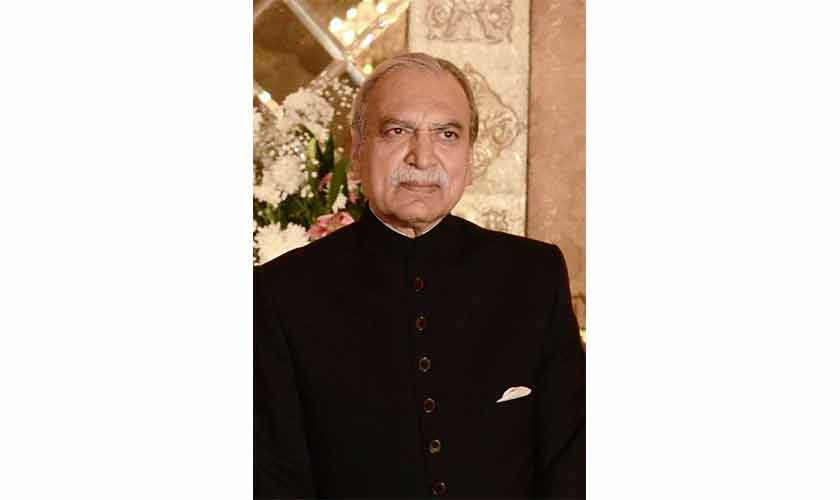
aja Nadir Pervaiz Khan, former federal minister and war hero, was a rare figure in public service. His journey spanned the rigid discipline of the battlefield as well as the unforgiving terrain of partisan politics. Decorated for extraordinary bravery yet denied a military career many believed he deserved, he rose through the ranks to be recognised as a formidable politician before an equally abrupt exit. The story of his life is one of courage, contradiction and deep personal conviction. His passing on January 21, marked the end of an era defined by defiance in the face of adversity and unwavering loyalty to his principles.
He spent his final days in Rawalpindi. Some of the people who carried his bier said they had joined the army after being inspired by stories of his courage in difficult circumstances.
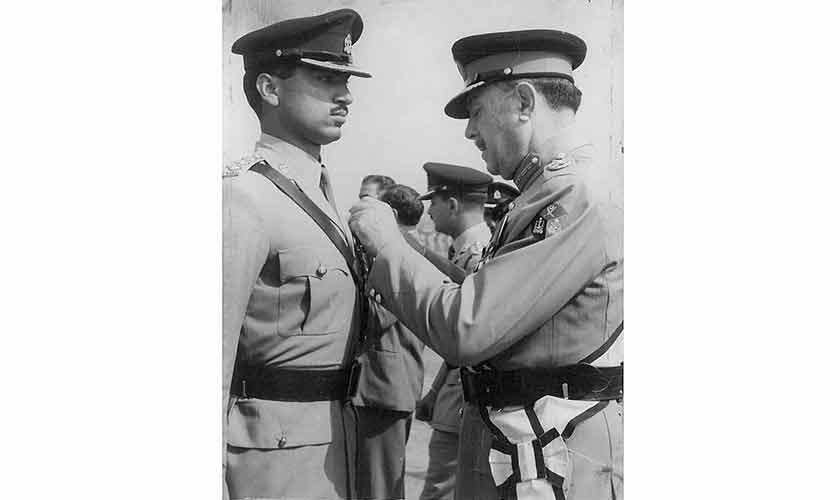
His death was also deeply mourned in Faisalabad, his political birthplace. Many admirers recalled his political achievements and his forthright style of politics as well as the unexpected end of his careers in both the military and political spheres, despite unparalleled accomplishments in each field.
From the very beginning of his military career, Raja Nadir Pervez Khan demonstrated extraordinary courage and independence of spirit. In 1965, having a fractured arm, he insisted on being sent to the Rann of Kuch, pressing his commanding officer to allow him to fight. In the 1971 war, a day after Lt Gen AAK Niazi had signed the memorandum of surrender in East Pakistan, he remained steadfast in his trench, refusing to abandon his post.
These episodes reflected his deep love for his homeland and a bravery that overrode even the strict military discipline and the systematically ingrained habit of unquestioningly obeying orders. In 1971, when he and thousands of other Pakistani soldiers became prisoners of war, he once again refused to surrender to the circumstances. Displaying remarkable audacity, he escaped from Fatehpur jail in India by digging a tunnel, along with his cousin Tariq Parvez and three other companions, and successfully made his way back to Pakistan.

He was among a handful of the Pakistan Armed Forces officers to be awarded the Sitara-i-Jurat twice for exceptional bravery. Many believed that he was destined for a highly distinguished military career. However, events took an unexpected turn. He was first accused of a massacre in the Barguna subdivision of former East Pakistan. However, he was honourably acquitted from the charge. Later, in 1974, he faced a court martial on charges of conspiring to overthrow the government of Prime Minister Zulfikar Ali Bhutto.
The military court that found him guilty was headed by then Maj Gen Zia-ul Haq. Following this conviction, Zia-ul Haq reportedly gained Bhutto’s favour and was appointed the army chief despite being ranked eighth in seniority. He later went on to overthrow the civilian government—an act Raja Nadir Pervez Khan had been accused and convicted of conspiring to undertake.
Though both his military and political careers ended prematurely, his legacy endures in stories of courage on the battlefield, electoral battles won against odds and the respect he commanded.
Khan recalled later, “throughout the court martial proceedings, Zia-ul Haq never gave the impression that he intended to convict and sentence me. A day before the conviction was announced, I was treated to pastries, sandwiches, biscuits and tea. Zia-ul Haq embraced me warmly, with apparent affection.”
After assuming power as chief martial law administrator and president, Zia-ul Haq pardoned Khan. However, this ‘favour’ did not restore his military career.
Such a turn of events might have caused many to withdraw from public life. Khan, however, chose a different course. Leaving the army, instead of returning to his native Mandrah in Gujar Khan, he settled in Faisalabad, where he had been allotted agricultural land during his military service. He cultivated that land and entered politics. He went on to achieve notable success in this endeavour as well.
In the first election he contested in 1985, from NA-69 Faisalabad, he defeated the fairly popular Mian Zahid Sarfraz by a margin of more than 17,000 votes. Subsequently, he was appointed minister of state for interior in the Muhammad Khan Junejo government. President Zia swore his in.
In 1990, running from the platform of Islami Jamhoori Ittehad, he was elected unopposed in the NA-62 by-election from the Chak Jhumra to the National Assembly seat vacated by former prime minister Muhammad Khan Junejo and became the federal minister for water and power in Nawaz Sharif’s government.
In the 1993 general elections, he was elected to the National Assembly for the third time from the same constituency, defeating Pakistan Peoples Party’s Sardar Dildar Cheema in a close contest. He won again the 1997 general election, again from the same constituency, defeating PPP’s Ghulam Mustafa Bajwa by a margin of over 35,000 votes, and served as federal minister for communications in Nawaz Sharif’s second government. His last election was during the Pervez Musharraf era. Despite the hostile atmosphere, he won from NA-85 becoming one of only 19 National Assembly members returned on the PML-N ticket.
This remarkable run of political success came to an abrupt and dramatic end. While Nawaz Sharif was living in exile in Saudi Arabia, Gen Musharraf attended the wedding ceremony of Khan’s son. This caused considerable speculation in political circles about where his political loyalties lay.
Close associates say Musharraf was invited in his capacity as president and there was no follow-up. He still chose to attend the ceremony in Faisalabad. This allowed some local PML-N leaders to campaign against Khan and openly oppose the award of a party ticket to him in the 2008 general elections. Disheartened, he withdrew from active politics.
When Imran Khan visited Faisalabad for a public gathering in 2013, Raja Nadir Pervez Khan joined the Pakistan Tehreek-i-Insaf at the insistence of some mutual friends but did not contest the elections. In the 2018 general elections, his son Raja Asad submitted nomination papers from NA-107, but after failing to secure a party ticket, he stepped down, bringing the family’s political journey to a subdued close.
Raja Nadir Pervez Khan’s illustrious career is a compelling reminder of how merit and sacrifice do not always guarantee continued success in public life. Whether in uniform or in parliament, he lived on his own terms—unafraid of consequences, loyal to friends and resilient in the face of adversity. Though both his military and political careers ended prematurely, his legacy endures in stories of courage, electoral battles won against odds and the respect he commanded. In Raja Nadir Pervez Khan, Pakistan will remember not just a decorated soldier or popular politician, but a man who refused to be defined by defeat.
The writer has been associated with journalism for the past decade. He tweets @naeemahmad876