Print Story
X




World Health Organisation marks January 30 as the World Neglected Tropical Diseases Day

| W |
hen Pakistan’s major health challenges are discussed, diabetes, heart disease, tuberculosis and hepatitis usually dominate the conversation. Yet millions—especially the poorest and most vulnerable - continue to suffer from another group of conditions that receive far less attention: the neglected tropical diseases (NTDs). These diseases may be ‘neglected’ in name, but their impact on health, livelihoods and dignity is anything but small.
Each year on January 30, the World Health Organisation marks the World Neglected Tropical Diseases Day, highlighting that more than one billion people globally live with one or more NTDs. Pakistan, the world’s fifth most populous country, carries a disproportionately heavy burden, ranking among the top ten countries worldwide for several NTDs. Every year, the day is commemorated to raise awareness, highlight progress (such as Pakistan’s recent elimination of trachoma as a public health problem) and advocate for stronger political commitment, resources and community engagement to control and eliminate other NTDs
NTDs are a diverse group of parasitic, bacterial and viral infections that primarily affect populations living in poverty. In Pakistan, factors such as unsafe water, poor sanitation, crowding, limited access to healthcare and climatic conditions favourable to vectors continue to aid transmission. Nearly 60 percent of the rural population, as well as under-served urban settlements are particularly affected, reinforcing health inequities across the country.
Amid persistent constraints recent progress indicates that meaningful change is possible. In October 2024, the WHO validated Pakistan’s elimination of trachoma as a public health problem. It had been the leading infectious cause of blindness. Pakistan became the 19th country globally to achieve this milestone through sustained implementation of the SAFE strategy: surgery; antibiotics; facial cleanliness; and environmental improvement. This success demonstrates that elimination is possible when political commitment, community engagement and primary care systems align.
Pakistan is also aligned with the WHO NTD Roadmap 2021-2030, which aims to reduce incidence, control transmission and eliminate selected NTDs through integrated approaches, mass drug administration, vector control and improved water, sanitation and hygiene (WASH). However, progress remains uneven across diseases.
Despite advances, NTDs persist due to economic instability, rural–urban disparities, climate change, low awareness, delayed care-seeking and weak access to primary care centres such as basic health units (BHUs) and secondary-level settings such as tehsil headquarters (THQ) and district headquarters (DHQ) hospitals. Health should not depend on where one lives or how much one earns - yet for many Pakistanis affected by NTDs, it still does.
Pakistan, the world’s fifth most populous country, carries a disproportionately high burden and ranks among the top ten countries worldwide for several NTDs.
Recent evidence illustrates the ongoing burden. A BMC Public Health study (2022-23) from northwest Pakistan identified Leishmania tropica and Leishmania major as the most common species causing cutaneous leishmaniasis, a disease marked by chronic skin lesions and permanent scarring. Tens of thousands of cases have been reported nationwide, particularly in Khyber Pakhtunkhwa. Soil-transmitted helminths (or worms) – remain widespread, contributing to anemia, malnutrition and poor school performance. Data published on Ascariasis (roundworm) in the Iranian Journal of Parasitology estimated Ascariasis prevalence at 13.1 percent. Over 1 percent of the population in Pakistan is affected by Trichuriasis (hookworm).
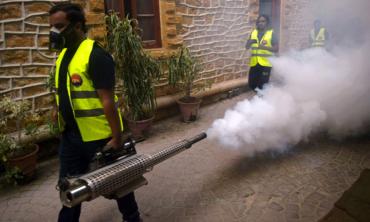
Dengue fever is perhaps Pakistan’s most visible NTD, with recurrent outbreaks overwhelming health facilities. In 2019, more than 47,000 cases and 75 deaths were reported nationwide. Thousands of cases have been recorded in more recent seasons. Rabies, though entirely preventable, continues to claim lives every year, while thousands of dog-bite victims seeking care - often too late.
Integrating skin-related NTDs such as cutaneous leishmaniasis, leprosy and scabies into national public health programmes has been promoted as a way to improve efficiency and case detection. Yet in Pakistan, implementation faces significant challenges as highlighted in a study on neglected tropical skin diseases published in September 2025 (Fastenau A; 2025). Weak surveillance, medicine stock-outs, stigma-driven under-reporting, fragmented vertical programmes, limited financing, human resource shortages, and poor coordination between federal and provincial authorities continue to undermine these efforts. Global integration models must therefore be adapted to Pakistan’s epidemiological realities and health system constraints.
Disease trends highlight this complexity. Leprosy has shown a gradual decline, reflecting stable surveillance and long-standing control efforts. In contrast, cutaneous leishmaniasis fluctuates sharply, with outbreaks linked to environmental change, population displacement and humanitarian emergencies. A one-size-fits-all approach is unlikely to succeed.
For Pakistan, tackling NTDs is not only a disease-control issue - it is a matter of health equity, child development and economic resilience. NTDs lead to disability, disfigurement, missed schooling, lost productivity, social stigma and catastrophic out-of-pocket spending, trapping families in a cycle of poverty.
Primary care and general practitioners are central to the solution. Early recognition of symptoms, patient and family education, timely referral, preventive counselling and stigma reduction can dramatically reduce disease burden. Strengthening frontline services (BHU, THQ and DHQ hospitals) ensuring reliable drug supply and embedding NTDs within routine primary care (GP clinics and Basic Health Units) are essential steps forward.
Neglected tropical diseases may not have made headlines, but they should no longer be hidden from policy priorities. With sustained political will, community engagement and a strong primary care response, Pakistan can reduce the burden of these silent diseases - and ensure that progress in health truly reaches those who need it most.
The writer is a family physician.