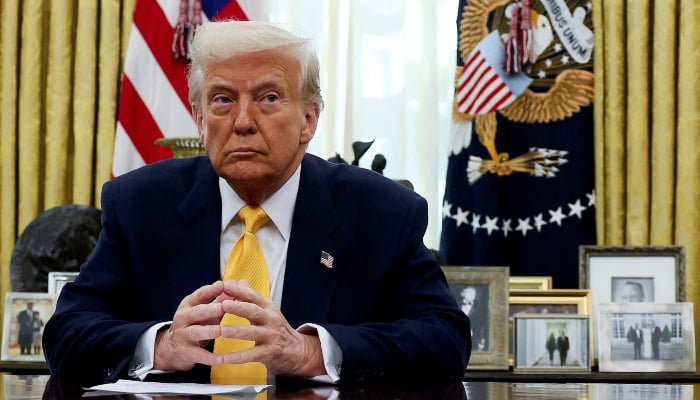
WASHINGTON: US President Donald Trump on Sunday warned Iran to move quickly towards a peace agreement, saying “there won’t be anything left of them” if it failed to do so.
The warning came as Washington struggles to break a deadlock with Tehran after US and Israeli forces launched major strikes on Iran on February 28, triggering a conflict that has shaken the Middle East and driven energy prices higher.
"For Iran, the Clock is Ticking, and they better get moving, FAST, or there won't be anything left of them," Trump wrote on his Truth Social platform. "TIME IS OF THE ESSENCE!"
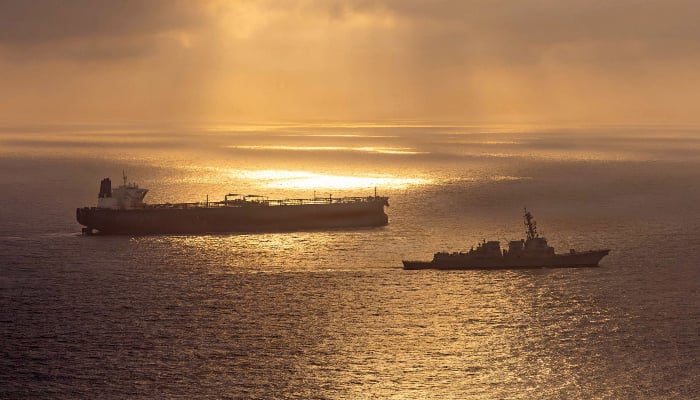
The war has led to an effective blockade of the critical Strait of Hormuz, through which some 20% of global oil exports pass in peacetime, and has drawn neighbours Israel and Lebanon into a deadly side conflict.
Iran's clerical state, Hezbollah's patron, has demanded a lasting ceasefire in Lebanon before any broader peace agreement with Trump, who has been frustrated by Tehran's refusal to accept a deal on his terms.
An Israeli military official said Sunday that Hezbollah had fired around 200 projectiles at Israel and its troops over the weekend, despite Israel and Lebanon agreeing to extend a ceasefire.
Lebanon's health ministry said new Israeli strikes Sunday on the country's south killed five people, including two children.
Israeli attacks since the start of the war have killed more than 2,900 people in Lebanon, including 400 since the truce began on April 17, according to Lebanese authorities.
Washington and Tehran agreed to a truce on April 8, but peace negotiations have stalled and sporadic attacks have continued.
On Sunday, Iranian media said the United States had failed to make any concrete concessions in its latest response to Iran's proposed agenda for negotiations to end the war.
The Fars news agency said Washington had presented a five-point list which included a demand for Iran to keep only one nuclear site in operation and transfer its stockpile of highly enriched uranium to the United States.
Washington also refused to release "even 25%" of Iran's frozen assets abroad or pay any reparations for the damage inflicted on Iran during the war, according to Fars.
The Mehr news agency, meanwhile, said: "The United States, offering no tangible concessions, wants to obtain concessions that it failed to obtain during the war, which will lead to an impasse in the negotiations."
Sunday saw more unrest in parts of the region. A drone strike triggered a fire near a nuclear power station in the emirate of Abu Dhabi, authorities said, reporting no injuries or impact on radiation levels.
Iranian-backed armed groups equipped with drones are based in Iraq, while Tehran's allies in Yemen — the Houthi rebels — also possess combat-grade UAVs.
Pakistan has been actively mediating in the peace talks between Iran and the United States, and its Interior Minister Mohsin Naqvi met Sunday in Tehran with Iran's chief negotiator and speaker of parliament, Mohammad Bagher Ghalibaf.
In a social media post following the talks, Ghalibaf said the US and Israeli war with Iran had destabilised the entire Middle East.
"Some governments in the region believed that the presence of the United States would bring them security, but recent events showed that this presence is not only incapable of providing security, but also creates the grounds for insecurity," he said.
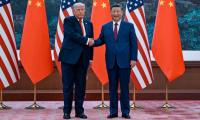
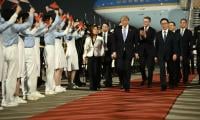
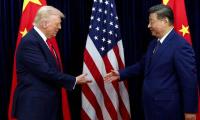
Trump and his Chinese counterpart Xi Jinping discussed Iran during their high-stakes summit earlier this week, but there appeared to be little headway on Iran.
Trump said Xi assured him that China was not preparing military aid to Iran, while the Chinese foreign ministry said Friday in a statement on Iran that "shipping lanes should be reopened as soon as possible."