KARACHI: Amid prevailing fuel shortage concerns across the globe as well as in Pakistan, two vessels carrying 100 million to 120 million litres of oil reached Karachi, the Pakistan National Shipping Corporation (PNSC) officials said on Friday.
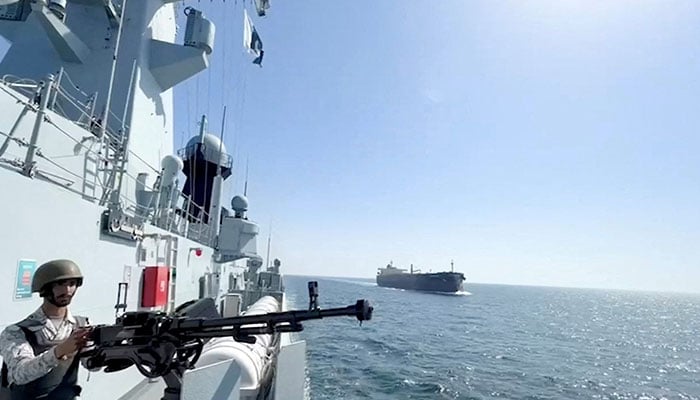
The two ships, they added, reached Karachi under the protection and escort of the Pakistan Navy in the aftermath of the recent attacks on vessels in the region.
Expressing gratitude to the PN for the safe transfer of the ships, Federal Minister for Maritime Affairs Muhammad Junaid Anwar said that they have requested the Foreign Office to reach out to Iran for the release of two vessels stuck in the Persian Gulf.
The development comes as the PN launched Operation Muhafiz-ul-Bahr to safeguard national shipping and maritime trade amid rising regional security threats and potential disruptions to critical sea lanes.
The initiative has been undertaken to ensure the uninterrupted flow of national energy supplies and the security of Sea Lines of Communication (SLOCs).
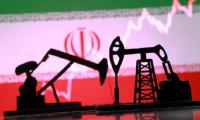
The measure is to be taken against the backdrop of ongoing war involving Iran, the United States and Israel leading to significant disruptions in the Strait of Hormuz — a vital artery for roughly one‑fifth of the world's oil shipments — has sparked widespread fears of a fuel shortage in Pakistan as global energy markets tighten.
Explosive-laden Iranian boats appear to have attacked two fuel tankers in Iraqi waters, setting them ablaze and killing one crew member.
Shipping in the Gulf and along the narrow Strait of Hormuz which carries around a fifth of the world's oil, has come to a near-standstill since the US and Israel began strikes on Iran on February 28, sending global oil prices surging to highs not seen since 2022.
Iran’s Revolutionary Guards have said that if attacks on Iran continued, they would not allow "one litre of oil" to be shipped from the Middle East to the US, Israel or their partners.
The war in the Middle East, as per the International Energy Agency, is creating the biggest oil supply disruption in history. Global supply is expected to drop by eight million barrels per day in March, the IEA said in its latest monthly oil market report — a volume equal to almost 8% of world demand — due to the blocking of the Strait of Hormuz, a narrow channel along the Iranian coast, since the US and Israel began airstrikes on Iran on February 28.
The vessels targeted in Wednesday's late-night attacks in the Gulf near Iraq were the Marshall Islands-flagged Safesea Vishnu and the Malta-flagged Zefyros, which had loaded fuel cargoes in Iraq, two Iraqi port officials said.
The outlook from the IEA, which advises industrialised countries, contrasts with its earlier warnings of a sizeable surplus on the market for the first quarter of 2026.
Middle East Gulf countries including Iraq, Qatar, Kuwait, the United Arab Emirates and Saudi Arabia have cut total oil production by at least 10 million barrels per day as a result of the conflict, the IEA said, adding that without a rapid restart of shipping flows these losses were set to increase.
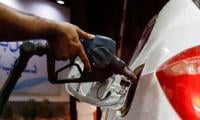
In response, Islamabad has taken emergency measures to cushion the economic impact, including a historic Rs55 per litre hike in petrol and diesel prices, regular weekly reviews of fuel rates, and a series of austerity and fuel‑conservation directives aimed at reducing non‑essential consumption as the crisis persists.
The new price of petrol was set at Rs321.17 per litre, up from Rs266.17, while the diesel rate increased to Rs335.86 per litre from Rs280.86 after the latest review.
Meanwhile, the country has also commenced import of crude oil through the Red Sea route after the closure of the Strait of Hormuz.
— With additional input from Reuters.