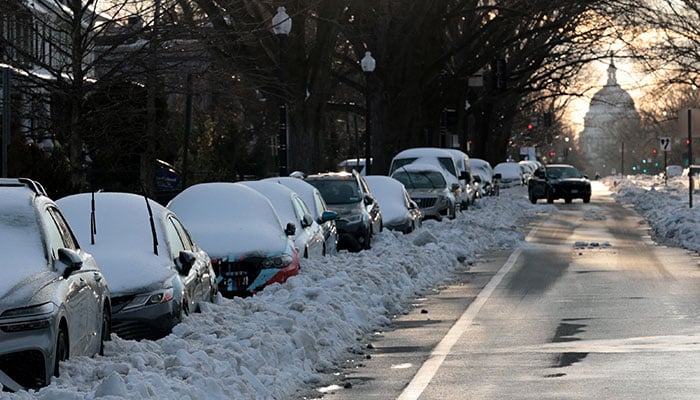
Tens of millions of Americans were digging out on a bitterly cold Monday in the aftermath of a monster winter storm that dumped a foot of snow from New Mexico to New England, paralysed much of the eastern US, caused at least 18 deaths and scuttled thousands of flights.
From New York and Massachusetts in the northeast to Texas and North Carolina in the south, roads were frozen slick with ice and buried under often more than a foot of snow. At least 25 governors declared states of emergency.
In some southern states, residents faced winter conditions unseen for decades, with inch-thick ice bringing down trees and power lines.
The storm was blamed for at least 18 deaths across multiple states.
In Frisco, Texas, a 16-year-old girl died in a sledding accident on Sunday; another youth died in Saline County, Arkansas, while being pulled by an ATV vehicle over snow and ice when it struck a tree, authorities said. In Pennsylvania, three people died while shovelling snow, local media reported.
In Austin, Texas, a person died of apparent hypothermia while trying to shelter at an abandoned gas station, authorities said. At least five people died in New York City from exposure to the cold, Mayor Zohran Mamdani said on Sunday, urging residents to call for help if they saw anyone out on the street in need.
While the storm system was drifting away from the East Coast into the Atlantic on Monday, a blast of Arctic air was rushing in from Canada behind it, prolonging sub-freezing temperatures for several more days, the National Weather Service said.
"This storm is exiting the East Coast now, with some lingering snow squalls," said Allison Santorelli, a meteorologist with the NWS's Weather Prediction Centre. "But the big picture story is the extreme cold, it's lasting into early February."
Almost 200 million Americans were under some form of extreme cold alert, from along the Canadian border to the Gulf of Mexico, forecasters said. Lubbock, Texas, had a low of minus 4 degrees Fahrenheit (-20 degrees Celsius) on Monday, and New York City, Washington DS and Boston all faced single-digit temperatures through much of the week ahead.
Nearly 800,000 customers, including both homes and businesses, across the southeastern US were facing the cold weather without power, according to the tracking site PowerOutage.us, including 246,000 in Tennessee.
The storm snarled air traffic, with more than 12,500 US flights cancelled on Sunday — the most of any day since the onset of the COVID-19 pandemic in 2020.
About 3,900 flights within, into or out of the United States had already been cancelled on Monday as of 9:15am ET (1415 GMT), according to the tracking website FlightAware.
US Transportation Secretary Sean Duffy told CNBC he hopes airports will be "back to normal" by Wednesday.
The storm's mix of snow, ice and freezing rain turned many roads and highways dangerously slick.
In Tulsa, Oklahoma, Ryan DuVal spent part of Sunday driving his vintage fire truck through the city's icy streets, looking for anyone who needed help.
"I just saw a need for getting people out of the cold," he said. "You know, just cruise the streets, see someone, offer a ride. If they take it, great. If not, I can at least warm them up in the truck and just get them a water, meal, something."
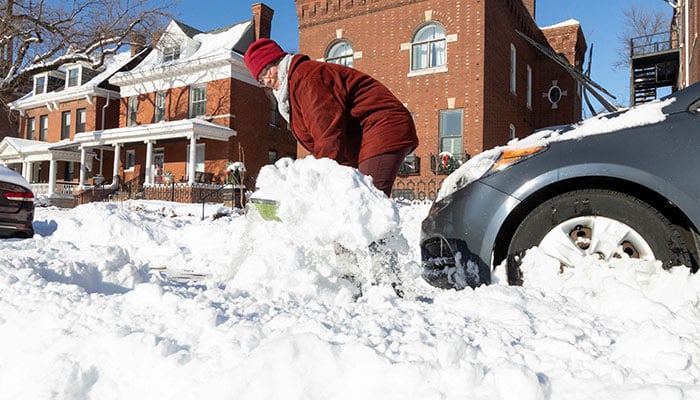
In Bonito Lake, New Mexico, residents were shovelling out after 31 inches of snow. New York City's Central Park received 11.4 inches, while Logan Airport in Boston saw 18.6 inches, Santorelli said.
New York Governor Kathy Hochul said she had mobilised National Guard troops in New York City, Long Island and the Hudson Valley to assist with the state's emergency storm response.
Announcing that schools would be shut for a remote school day, Mamdani quipped: "I know that this may disappoint some students, so if you do see me, feel free to throw a snowball at me."
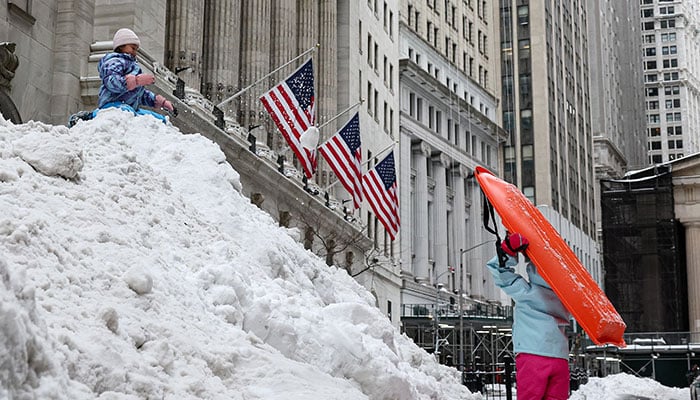
Still, despite the disruptions, the winter conditions were fun for many, including in Washington DC, where a huge crowd gathered on Sunday for a raucous impromptu snowball fight in Meridian Hill Park.
Families brought sleds to Capitol Hill, where children zoomed down the steep slope below the white-domed seat of the US Congress.
The state of Texas is currently under the grip of a severe cold wave, with Arctic winds, plunging temperatures and freezing precipitation continuing to disrupt daily life across major cities including Dallas, Austin and Houston. Economic and routine activities have largely slowed to a halt as winter conditions tighten their hold.
In North Texas, particularly across the Dallas–Fort Worth metroplex, the cold remains intense despite clear skies. Ice lingers on roads and surfaces, temperatures hover around the freezing mark, and the presence of black ice has made travel hazardous.
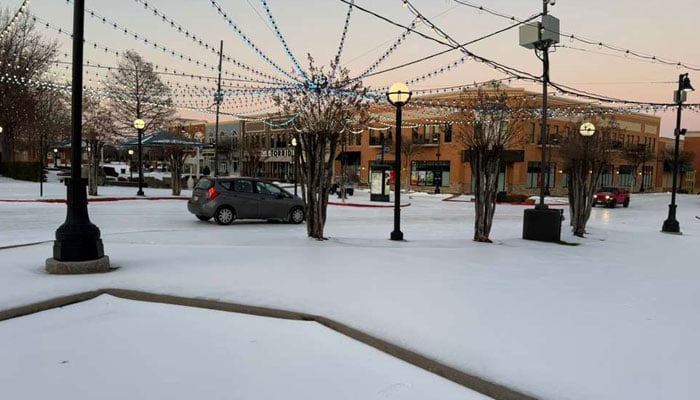
Authorities continue to warn motorists of dangerous driving conditions, especially during early morning and nighttime hours.
Central Texas, including the Austin area, is also experiencing persistent cold winds. While daytime temperatures show slight improvement, nights bring a sharp drop, creating conditions favourable for refreezing and icy surfaces. Residents have been advised to remain cautious as temperatures fluctuate near freezing levels.
In Houston and across Southeast Texas, the cold is comparatively less severe, but high humidity has amplified the chill. Rainfall followed by falling temperatures has raised concerns about ice formation, particularly overnight and during the early morning hours, adding to the region’s weather-related risks.
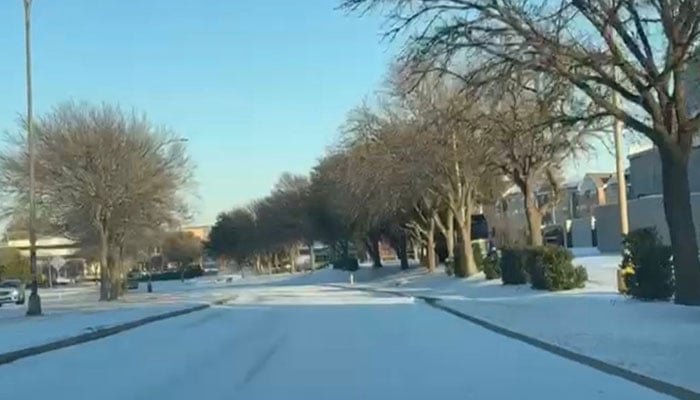
Meteorologists say the weather across Texas is likely to remain unstable in the coming days. Of particular concern is the period from Friday night into Saturday morning, when North and Central Texas could again see freezing rain and ice accumulation. Such conditions could further worsen road safety and disrupt travel.
In Dallas, forecasters warn of the possibility of ice returning after rainfall on Friday, while Austin faces a similar risk of freezing rain during the same timeframe. In Houston, although the threat is lower, light icing toward the weekend cannot be ruled out as colder air moves south.
State weather officials have urged residents to exercise caution, avoid non-essential travel, and closely monitor weather updates over the next several days.
Meanwhile, due to deteriorating weather conditions that began on Friday, education authorities have announced school closures through Tuesday. Given the ongoing state of the roads and the forecast for renewed icing, further extensions of these closures are increasingly likely.
— With additional input by Raja Zahid Akhtar Khanzada