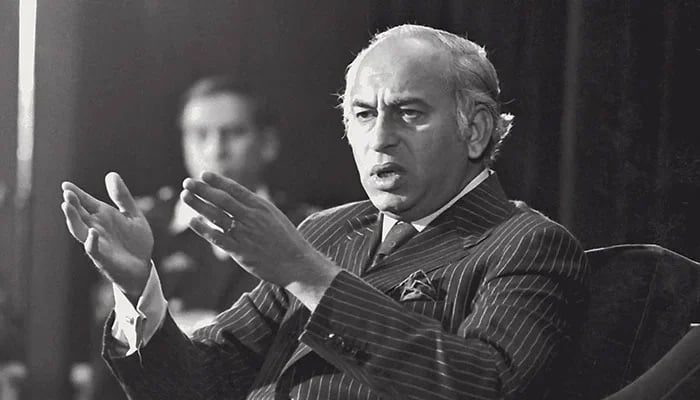
On the birth anniversary of Shaheed Zulfiqar Ali Bhutto, we remember a vision that continues to inspire Pakistan’s democratic journey. In Pakistan’s political history, few figures have shaped the nation’s democratic consciousness as profoundly as Bhutto. His legacy endures not merely in memory, but through the institutions, ideas, and political vocabulary that continue to define our national discourse.
Bhutto entered politics at a time when governance in Pakistan largely reflected elite priorities rather than public need. His most enduring contribution was to re-centre politics around the citizen. The principle of Roti, Kapra aur Makaan was not a populist slogan, but a moral assertion: that food security, dignity of labour, and shelter are foundational rights of citizenship, not charitable concessions. Through this vision, Bhutto transformed democracy from a procedural exercise into a social responsibility.
This approach laid the foundations of social democracy in Pakistan. By recognising workers, peasants, and salaried classes as legitimate political stakeholders, Bhutto sought to address structural inequality through state responsibility rather than indifference. The Pakistan Peoples Party (PPP) emerged from this conviction, committed to labour rights, social protection, and the belief that the state must serve the many, not the few.
Equally central to Bhutto’s legacy was his understanding of the federation. He believed Pakistan’s diversity required constitutional accommodation and mutual respect among provinces, rather than administrative centralisation. This philosophy found lasting expression in the 1973 Constitution, a document that balanced parliamentary sovereignty with provincial autonomy, fundamental rights with institutional continuity. That it remains the constitutional anchor of Pakistan’s democratic aspirations is a testament to its foresight and resilience.
Bhutto also recognised that national dignity depends on institutional strength. In a challenging regional environment, he worked to ensure Pakistan possessed the capacity to safeguard its sovereignty and security. His approach was rooted not in aggression, but in the belief that stability and independence require credible state capability alongside responsible diplomacy.
Yet Bhutto’s politics were never transactional. He believed national strength flows from internal cohesion, public confidence in institutions, and social justice. This worldview shaped Pakistan’s independent foreign outlook and its commitment to principled engagement internationally, guided by balance, restraint, and self-respect.
This political inheritance was carried forward by Shaheed Mohtarma Benazir Bhutto, who confronted far more complex political circumstances. Her most significant contribution was the principle of reconciliation, grounded in the understanding that durable democracy requires dialogue, institutional balance, and inclusion rather than perpetual confrontation. That ethos remains vital to Pakistan’s political stability today.
Since its inception, the Pakistan Peoples Party has continued to pursue this legacy through governance, public infrastructure development, and an emphasis on constitutional continuity, particularly in Sindh, where sustained investment in urban development, social protection, and public services reflects the party’s longstanding commitment to serving the public.
For me, this tradition is deeply personal. I witnessed my late father, Senator A. Rehman Malik, devote his life to public service under the banner of the Pakistan Peoples Party. His work embodied a core principle of the Shaheed Bhutto legacy: that politics is not a route to privilege, but a responsibility, often demanding patience, resilience, and sacrifice without expectation of recognition.
The Shaheed Bhutto legacy is therefore not ceremonial. It is ethical and institutional. It calls for fidelity to democracy, respect for labour, harmony within the federation, and an enduring commitment to reforming state institutions so they serve the public with dignity and fairness.
On the birth anniversary of Shaheed Zulfiqar Ali Bhutto, the most meaningful tribute is not reverence alone, but renewed commitment to the values he articulated, values that remain urgently relevant as Pakistan continues the unfinished work of institutional reform, national cohesion, and democratic consolidation.
The writer is son of Late Senator A Rehman Malik and Head of PPP Digital Media Islamabad. He posts on X @UmarRehmanMalik