Rs120 billion a day. That’s the number given by the Minister of Finance. Who will bear this loss?
Who is calling the shots within the PTI? My guess is that the party’s chairperson, secretary-general or the chief minister of Khyber Pakhtunkhwa must have -- jointly or severally -- decided to protest.
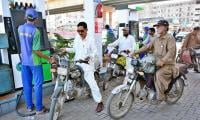
Of the Rs120 billion loss, how much will these leaders lose? Yes, the PTI’s leadership bears political risk -- but no fiscal risk.Who bears the financial loss then? Start with the daily-wage worker. The loader. The rickshaw driver. The construction labourer paid by the day, not the month.
Take transport and logistics -- loss is concentrated among daily-wage drivers and loaders, the ones whose routes run straight through Islamabad’s entry points this week.Who else bears the financial loss? The small trader. The shopkeeper on a market that shuts because the road is blocked, not because he chose to close. The shopkeeper has fixed costs -- rent, electricity, staff salaries. The costs keep running -- the revenue stops. The Rs120 billion is an aggregate loss -- not a shared loss.
Red alert: The cost concentrates at the bottom. The decision sits at the top. The men who decide have cushions. The men who pay have none.The finance ministry’s number answers one question: how much output is lost. It does not answer the harder question: who cannot afford to lose it. That is the number nobody is publishing.
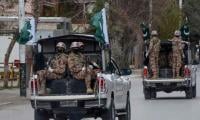
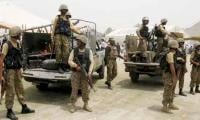
Over 22,000 security personnel are being deployed in the federal capital, and more than 30,000 in Attock district alone. That’s the second bill. So who pays for this? Pakistani taxpayers -- all drawn from provincial and federal budgets. Current estimate: Rs5 billion.
Who doesn’t pay directly? Neither the government ordering the deployment nor the party leaders. Rs120 billion plus Rs5 billion is to be absorbed by the state apparatus and passed silently to taxpayers – and the poorest within the society pay.The comfortable call the march. The poor pay for it.
The writer is an Islamabad-based columnist.