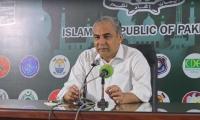
Information Minister Attaullah Tarar said on Thursday that Pakistan carried out precision air and drone strikes against 10 sites in Afghanistan following attempted drone attacks launched by the Taliban regime earlier this week.
“In exercise of its sovereign right to self-defence, Pakistan conducted precision aerial and drone strikes against 10 locations in Afghanistan used for launching and storing these drones,” the minister wrote on his official X handle.
The development comes a day after Pakistan shot down eight drones after they entered the country's airspace from Afghanistan, security sources said.
The sources said the armed forces' air defence system detected all eight drones in time and intercepted them, foiling the attempted intrusion.
Four drones were brought down in areas adjacent to the Torkham border, while the remaining four were shot down in mountainous areas near Kohat.
In the statement today, Tarar said the strikes were "deliberate, precise, calibrated and proportionate and strictly limited to identified military objectives directly linked to the attempted attacks against Pakistan".
Tarar said Pakistan condemned in the strongest possible terms the deliberate and unlawful incursion into Pakistan by drones on September 23 launched from Afghan territory.
“This constitutes a blatant violation of Pakistan’s sovereignty and territorial integrity and is a grave and unacceptable act of aggression.”
For years, Pakistan has repeatedly conveyed its grave concerns to the Afghan Taliban regime and its interlocutors regarding the continued presence of terrorist sanctuaries and their support networks on Afghan soil, he added.
Instead of dismantling these networks and taking credible and verifiable action against those using Afghan territory to perpetrate terrorism against Pakistan, the minister said the Taliban regime has chosen to escalate the situation through hostile drone operations against Pakistan.
Pakistan’s air defence systems detected, tracked and neutralised all intruding platforms before they could reach any of their intended targets, comprehensively thwarting the attempted attack, he added.
The minister went on to say that Pakistan will neither accept nor tolerate attacks launched from Afghan territory, whether by terrorist groups or by the Afghan Taliban regime itself.
Any violation of Pakistan’s sovereignty will be met with an immediate and decisive response, the minister warned adding threats, denials or attempts to deflect responsibility by Afghan Taliban will neither alter the facts nor constrain Pakistan’s inherent right to defend its territory, its people and its national security.
“Pakistan calls upon the Afghan Taliban regime to immediately cease all hostile activity against Pakistan and fulfil its international obligations by taking effective, concrete, verifiable and sustained action against terrorist entities operating from Afghan soil. Afghan territory must not be used to launch attacks or conduct hostile operations against Pakistan.”
Pakistan does not seek escalation and remains committed to regional peace, dialogue and constructive engagement, said Tarar.
However, the minister said this commitment must not be mistaken for weakness or an unlimited tolerance of hostile actions.
“Pakistan will defend its sovereignty, territorial integrity and the lives of its citizens with full resolve and will take all necessary measures to protect them. Any further provocative act by Afghan Taliban will be responded with firm and resolute response.”
Pakistan has witnessed a sharp rise in cross-border terrorist incidents, particularly in Khyber Pakhtunkhwa and Balochistan, since the Afghan Taliban returned to power in 2021.
Islamabad has repeatedly urged Kabul to prevent its territory from being used by militant organisations to carry out attacks inside Pakistan. Pakistan maintains that the Afghan Taliban authorities have failed to take effective action against groups responsible for attacks on Pakistani security forces and civilians, a position Kabul has disputed.
Pakistan launched Operation Ghazab lil-Haq in February 2026, months after the two countries agreed to a ceasefire in October 2025 following clashes along several border points.
Despite multiple rounds of talks, Islamabad and Kabul have yet to resolve their differences, with the issue of militant groups operating from Afghan soil remaining a major point of contention between the two sides.