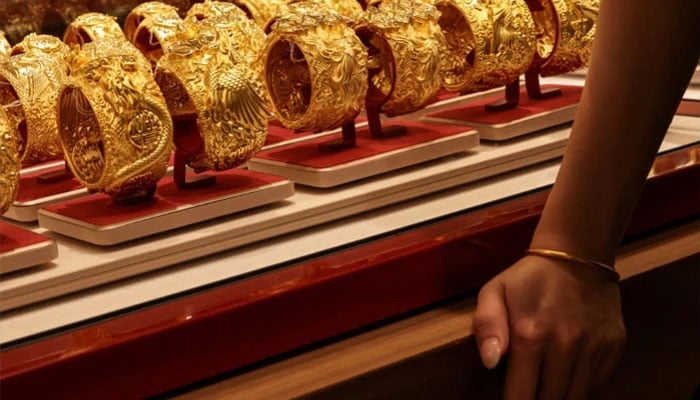
KARACHI: Gold prices in Pakistan lost momentum towards the end of fiscal year 2025-26 after an extraordinary rally earlier in the year, with analysts attributing the decline to easing safe haven demand, persistently high global interest rates and changing investor sentiment despite continued geopolitical uncertainty.
In the local bullion market, the price of 24-karat gold settled at Rs424,836 per tola on June 30, 2026, down sharply from the record high of more than Rs580,000 per tola reached during the fiscal year. A year earlier, at the end of June 2025, gold was trading at around Rs358,000 to Rs360,000 per tola, reflecting a substantial year-on-year increase despite the recent correction.
Analysts said the retreat in prices marked a normal correction following one of the strongest rallies in recent years rather than the beginning of a prolonged downturn.
The rally during the first half of FY26 was driven by heightened conflict in the Middle East, including tensions involving Iran, Israel and the US. Investors also sought protection against inflationary risks stemming from higher energy prices and concerns over global economic growth. Gold traditionally benefits during periods of geopolitical instability as investors shift funds away from riskier assets.
As the fiscal year pro gressed, however, markets began adjusting to the prospect of US interest rates remaining elevated for longer than previously expected. Higher interest rates increase the opportunity cost of holding gold, which does not generate any yield, making fixed-income investments relatively more attractive.
Market participants said that while geopolitical risks remained unresolved, investors became less reactive to every development in the Middle East, reducing the intensity of safe haven buying that had fuelled the earlier surge.
Unlike previous episodes of rising gold prices in Pakistan, the latest movement was driven almost entirely by international markets rather than weakness in the domestic currency. The Pakistani rupee remained broadly stable against the US dollar throughout much of FY26, recording only modest day-to-day fluctuations in the interbank market.
As a result, domestic bullion prices largely mirrored movements in international markets instead of reflecting currency depreciation. The correction in gold prices has also influenced consumer behaviour. Jewellery demand remained subdued as high prices discouraged discretionary purchases, particularly ahead of the wedding season. Many households opted to exchange old jewellery rather than make fresh purchases, while investment demand remained comparatively resilient among individuals seeking to diversify their savings.
Bullion dealers said retail buyers have become increasingly price-sensitive after witnessing sharp swings during the fiscal year. Rather than chasing rising prices, many are now waiting for corrections before entering the market.
Looking ahead to fiscal year 2026-27, analysts expect gold prices to remain volatile but within a broader trading range instead of repeating the extreme gains recorded during FY26. They believe global developments will continue to determine the direction of the market. Gold prices decreased by Rs5,200 per tola in the local market on Wednesday (the first day of FY27) following a decline in the international market.
The All Pakistan Sarafa Gems and Jewellers Association stated that 24-karat gold rates reached Rs419,636 per tola. Similarly, the price of 10-gram gold dropped by Rs4,458 to Rs359,770.
Gold rates decreased by $52 to $3,972 per ounce in the international market. Prices in the local market are adjusted by a premium of $20 against rates in the international market. Silver rates decreased by 107 to Rs6,242 per tola. Similarly, 10-gram silver rates also dropped by Rs92 to Rs5,351.
For Pakistan, analysts expect the rupee to play a relatively limited role in determining bullion prices as long as exchange rate stability continues. Instead, domestic investors are likely to keep a close watch on international markets, where geopolitical developments and central bank policies remain the dominant forces shaping gold prices. gressed, however, markets began adjusting to the prospect of US interest rates remaining elevated for longer than previously expected. Higher interest rates increase the opportunity cost of holding gold, which does not generate any yield, making fixed-income investments relatively more attractive.
Market participants said that while geopolitical risks remained unresolved, investors became less reactive to every development in the Middle East, reducing the intensity of safe haven buying that had fuelled the earlier surge.
Unlike previous episodes of rising gold prices in Pakistan, the latest movement was driven almost entirely by international markets rather than weakness in the domestic currency. The Pakistani rupee remained broadly stable against the US dollar throughout much of FY26, recording only modest day-to-day fluctuations in the interbank market.
As a result, domestic bullion prices largely mirrored movements in international markets instead of reflecting currency depreciation. The correction in gold prices has also influenced consumer behaviour. Jewellery demand remained subdued as high prices discouraged discretionary purchases, particularly ahead of the wedding season. Many households opted to exchange old jewellery rather than make fresh purchases, while investment demand remained comparatively resilient among individuals seeking to diversify their savings.
Bullion dealers said retail buyers have become increasingly price-sensitive after witnessing sharp swings during the fiscal year. Rather than chasing rising prices, many are now waiting for corrections before entering the market.
Looking ahead to fiscal year 2026-27, analysts expect gold prices to remain volatile but within a broader trading range instead of repeating the extreme gains recorded during FY26. They believe global developments will continue to determine the direction of the market.
Gold prices decreased by Rs5,200 per tola in the local market on Wednesday (the first day of FY27) following a decline in the international market. The All Pakistan Sarafa Gems and Jewellers Association stated that 24-karat gold rates reached Rs419,636 per tola. Similarly, the price of 10-gram gold dropped by Rs4,458 to Rs359,770. Gold rates decreased by $52 to $3,972 per ounce in the international market. Prices in the local market are adjusted by a premium of $20 against rates in the international market.
Silver rates decreased by 107 to Rs6,242 per tola. Similarly, 10-gram silver rates also dropped by Rs92 to Rs5,351. For Pakistan, analysts expect the rupee to play a relatively limited role in determining bullion prices as long as exchange rate stability continues. Instead, domestic investors are likely to keep a close watch on international markets, where geopolitical developments and central bank policies remain the dominant forces shaping gold prices.