LAHORE: Leaving economic outcomes entirely to an unregulated free market does not yield collective prosperity. Even when an economy manages to show surface-level growth, an unguided market reliably generates gross inequalities that place the lives of the majority in peril.
A true free market requires a baseline level of structural equality where every citizen has access to equal opportunities. As Pakistan positions itself to attract foreign direct investment, our planners’ primary task will be negotiating with global investors. While state planners frequently boast that Pakistan operates as an open, free-market economy, the reality on the ground is starkly different. The market is open only to a dominant corporate and political elite. The rest of the population is forced to survive in a mismanaged economy where free-market rules exist strictly on paper but are completely bypassed in practice.
Adam Smith, the father of modern classical economics, warned long time back that an open-market economy operating without robust regulatory guardrails quickly becomes barbarous. By ignoring fair rules and accountability, Pakistan has allowed its economy to slip into exactly this kind of predatory state.
True structural balance is only achieved when the bottom strata of society are guaranteed basic amenities: quality education, healthcare and reliable legal justice. If these fundamentals are met, societal inequalities become far more tolerable because social mobility remains possible. Pakistan’s overall picture is depicted by the UNDP Human Development Report. Growth policies must ensure that the poorest segments of society get an adequate share of the pie as the GDP expands. Successful economic development relies heavily on getting fiscal, monetary, and taxation policies right, but it is equally rooted in human psychology, sociology and local culture.
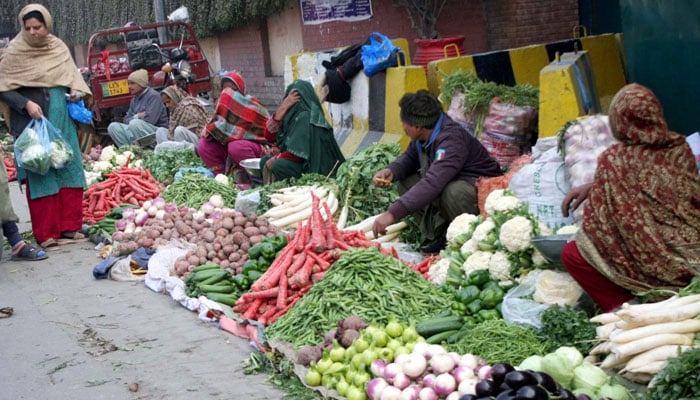
While a fragile majority of Pakistanis have basic access to calories, the nutritional quality of the food consumed by the lower strata of society is devastatingly poor. Food security cannot just be measured by volume; it must be measured by nutritional value. Instead of copying the policies of affluent Western countries to mitigate early childhood inequality, Pakistan should look to successes in emerging economies.
According to Unicef and the World Bank, over 40 per cent of children under five in Pakistan suffer from chronic malnutrition and stunting, compared to the South Asian average of 31 per cent. This massive cognitive and physical deficit inflicts a $7.6 billion annual burden on Pakistan’s economy due to future productivity losses. When resources are tightly constrained, economic prudence demands investing in long-term infrastructure and human development projects that yield compounding benefits over a 5-to-10-year horizon. However, this long-term view directly clashes with the incentives of a political elite focused entirely on 3-to-4-year election cycles.
This structural short-termism has left Pakistan with a massive, growth-strangling infrastructure gap. Ultimately, Pakistan’s crisis is not a lack of capable economic planners; the state fundamentally lacks implementation capacity. Even the most highly skilled human resources cannot deliver results when the executing institutions are fragile and heavily politicised. This capacity deficit cripplingly extends to the state’s inability to draft airtight commercial contracts, manage public service delivery, or ensure equitable government provisions. Until our underlying institutional frameworks are modernized and insulated from elite capture, Pakistan will remain severely hamstrung — perpetually unable to convert incoming foreign investments into shared national wealth.