LAHORE: The Punjab government in a significant shift from conventional vocational training towards an internationally integrated workforce development model has unveiled a comprehensive strategy aimed at positioning the province as a structured source of globally certified skilled labour, targeting 100,000 overseas placements over the next three years through internationally recognised qualifications, digital verification systems and managed labour mobility.
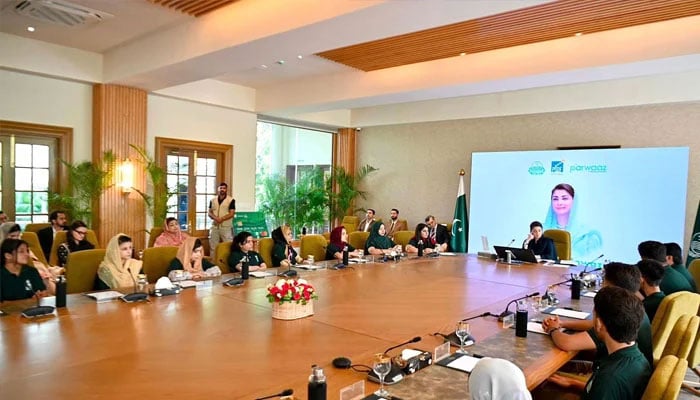
The roadmap, prepared by the Skills Development and Entrepreneurship Department (SDED) and presented to Chief Minister Maryam Nawaz during a briefing on the department’s ongoing reforms, outlines an institutional framework designed to connect technical education with overseas employment through competency-based certification, verified digital talent profiles, artificial intelligence-assisted employer matching and coordinated migration support.
The strategy marks a departure from the traditional emphasis on training completion by placing employability, international recognition of qualifications and employer confidence at the centre of Punjab’s technical education policy. Officials described the initiative as an attempt to establish an end-to-end skills ecosystem capable of producing internationally verifiable, work-ready professionals for labour-short markets abroad.
Central to the proposed framework is the development of a Verified Global Talent Mobility model under which candidates will move through a structured sequence beginning with quality technical and vocational training, followed by internationally benchmarked competency assessments, creation of verified digital profiles containing authenticated skills and documentation, AI-enabled matching with overseas employers and managed visa, mobility and placement processes.
According to the official documents obtained by Daily Jang, the programme is expected to commence with up to 60,000 candidates in Pakistan, while the government has set a target of facilitating 100,000 overseas placements over a three-year period in collaboration with international partners operating across 17 countries. The initiative is primarily aimed at meeting labour demand in the Gulf Cooperation Council (GCC) states, Europe and other economies facing persistent shortages of skilled technical workers.
Officials maintained that the proposed system would enable Punjab to move beyond isolated overseas recruitment drives towards an institutionalised labour mobility framework in which skills, qualifications, documentation and employability are verified before candidates enter international labour markets.
The presentation argues that global recruitment practices are increasingly shifting from evaluating qualifications alone to assessing the authenticity of skills, training quality, identity verification and workforce readiness. The proposed framework is therefore intended to provide employers with trusted evidence of candidates’ competencies while enabling Pakistani workers to compete more effectively in international labour markets.
As part of this transition, the Skills Development and Entrepreneurship Department signed a collaboration agreement on June 2, 2026, at Basingstoke College in the United Kingdom with the UK Qualifications Alliance (UKQA) and Certif-ID to establish internationally recognised vocational pathways for learners in Punjab.
Performance data shows that between February 2024 and June 2026, Punjab’s public vocational training institutions collectively trained 410,848 individuals, of whom 261,428 graduated from TEVTA, 111,655 from PVTC and 37,765 through PSDF programmes.
During the same period, the three organisations facilitated 139,510 employment outcomes, including domestic placements, overseas employment and self-employment. TEVTA accounted for 56,723 placements, PVTC for 64,787, while PSDF facilitated 18,000 placements, reflecting what officials described as a gradual transition from training-led interventions towards employment-oriented skills development.