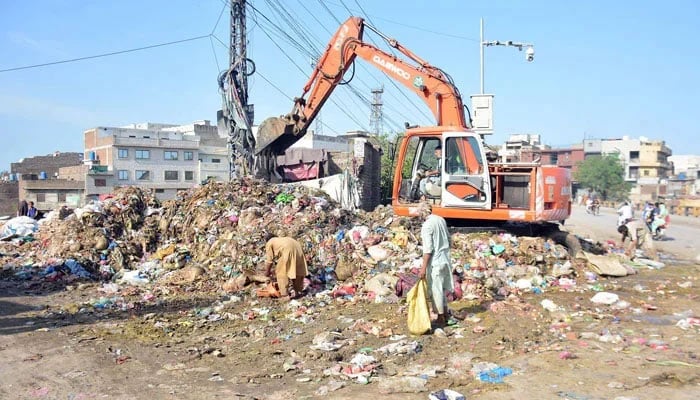
Waste is only waste if we waste it. This quote defines the true narrative of a sustainable ecosystem. The world is turning waste into useful resources, building infrastructure, and even offering cash in return to citizens. In Pakistan, however, this is often viewed as a secondary approach to development; the focus remains on collecting waste or having enough dumpsites. It is considered a test of governance to manage solid and water waste, and this becomes one of the biggest challenges during festivals.
Every year, Eid festivals create challenging situations for the government, which must act efficiently with limited logistical support. Eid ul Azha generates millions of tonnes of animal waste, placing immense pressure on municipal systems. Animal waste is not the only challenge to deal with on such occasions; it is also linked to multiple airborne diseases and intensifies environmental, health, and various other challenges.
But this year, and in the recent past, one initiative of the Government of Punjab has not only targeted environmental hazards, it has also prepared Punjab before the dengue season to curb the rapid replication of dengue in the coming peak season.
Suthra Punjab is an amalgamation of administrative planning, technology, community engagement, resource mobilisation, and awareness to address the issues affecting millions.
During the Eid days alone, the government efficiently mobilised its resources across the province. More than 184,000 sanitation workers were deployed across Punjab to clean 6 million kilometres of area.
A fleet of over 60,000 vehicles was dedicated not only to collecting the waste but also to maintaining hygiene standards and making spaces clean and fragrant after the operation through the use of rose water and phenyl.
Thousands of litres of lime, rose water, and phenyl were used in this process. It may seem utopian or a luxury rather than a basic cleanliness effort, but in reality, it is much needed after cleaning blood and sacrificial animal waste in order to avoid air and land borne diseases.
In Islam, cleanliness is considered half of faith, so in the true spirit of Islam, it is important to realise the importance of cleanliness, especially on such occasions.The pertinent question is: how do we turn this trash into treasure? Because that is the only sustainable solution to environmental hazards. Sweden is a perfect benchmark for turning trash into treasure. Only 1% of Sweden’s trash is sent to landfills. By burning trash, 52% is converted into energy, and the remaining 47% is recycled.
Many countries are importing waste from others; surprisingly, Pakistan is also an importer of household waste despite producing enough waste of its own. Punjab alone produced 376,544 tonnes of waste in just four days of Eid ul Azha.
The initial phase of Suthra Punjab is gaining momentum, but the next phase could be a game changer if designed well. It should go beyond collection and disposal. The waste generated in just four days can be turned into a significant organic resource, which can be processed into multiple useful products like biogas, fertiliser, and other forms of renewable energy.
Pakistan, being an exporter of fertilisers, can further strengthen its economy through this valuable yet ignored source.
For that, the government has to work through public private partnerships to promote a cleaner and greener environment. The first phase of collection and disposal should be effective and well presented enough to attract international organisations and investors to come and invest in Pakistan, using our trash and turning it into energy, on the same model under which the Punjab government worked with Denmark to establish Punjab’s first wastewater treatment plant.
It is time to redesign a sustainable environmental economy. In the age of climate change, the future belongs not only to those who collect trash, but to those who learn how to transform that trash and waste into opportunity and treasure.