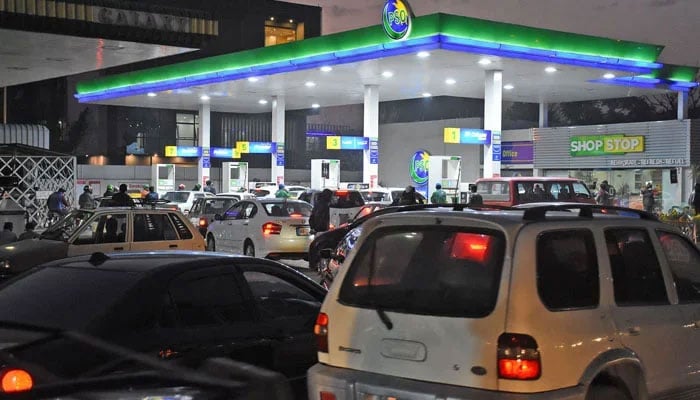
LAHORE: Petrol and diesel prices in Pakistan are lower than in Bangladesh and India, which is in line with industry demand for regionally competitive fuel prices. Gas prices are also under review and the government will announce industrial policies afterwards.
This time around, the cuts would provide a level playing field for all industrial sectors, though some sectors, like textiles, might receive additional concessions. After the budget announcement, the prime minister seemed in no rush to unveil long-overdue textile and auto policies.
Industrialists were demanding concessions the government was in no position to give. The planners were waiting for some global developments after which they expected to be in a better position to accede to the demand of industries. That position has come nearer with the lowering of petroleum rates. But some economists expect further decline in petroleum rates. They also expect downward adjustments in gas rates. The power rates would automatically decline after a reduction in fuel rates, which is the most expensive input in power production.
Will these adjustments restore the economy’s competitiveness? It will partially restore order in business processes, as input prices would match those prevailing in neighbouring economies. But the questions of workers’ productivity, bureaucratic red tape, and state credibility will continue to haunt both local and international investors and operating firms.
The textile sector, our mainstay, is unlikely to be the star performer if policies favour the sector as a whole equally. The basic textile sector, comprising yarn and fabric, has already lost its hold on the global market. Players such as China, Bangladesh, Indonesia and Cambodia that used to buy Pakistani yarn have strengthened their own production capacities. Some are now net exporters of yarn and fabric in Europe and Africa.
If our spinners sell Pakistani yarn at a discount relative to global rates, it will be counterproductive for our value-added sectors, particularly the apparel export sector. Cheaper yarn would benefit our competitors producing the same products abroad.
The government will have to choose between voiceless apparel exporters that mainly operate as SMEs. They procure as much yarn as possible locally and do not have the capacity to consume more. The spinners were labelled as tax evaders by the FBR chairman, and they have strongly protested his assertion. These spinners have been claiming for the last eight years that they would establish 1000 small knitting units to consume the entire yarn produced in Pakistan. But nothing visible has practically happened. In fact, the spinners want the government to give or arrange loans for such units. The government has remained silent on this issue because SMEs already operating in the apparel sector are adding 10 per cent of their capacity using their own resources. The larger mills with substantial reserves should do so from their own resources.
The spinners probably do not want to invest their resources because establishing and operating a stitching exporting unit is a technical job -an expertise they lack, so they want banks or the government to loan them. Private banks are reluctant in this regard; now it is up to the government to take on the risk, ignoring the requests of established and credible SMEs for similar loans.