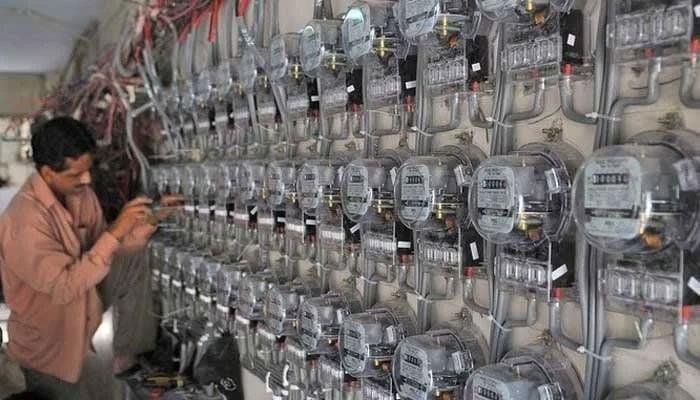
ISLAMABAD: The National Assembly’s Standing Committee on Finance and Revenue was informed on Wednesday that the government was collecting a substantial Rs620 billion from consumers through electricity bills.
The Federal Board of Revenue (FBR) collects 18 percent General Sales Tax (GST) and withholding tax on electricity bills. Withholding tax is applied when the monthly bill exceeds Rs100,000. The FBR informed the NA panel that total collections from GST and withholding taxes amount to approximately Rs620 billion.
During the meeting, Pakistan Peoples Party (PPP) MNA Sharmila Sahiba Faruqui labeled the Retailers Fixed Scheme a tax amnesty, citing the absence of audit provisions for those opting into it. However, the NA panel cleared the scheme, with committee chairman Syed Naveed Qamar stating that the government must start somewhere to bring 3.5 million retailers into the tax net.
Faruqui strongly opposed the scheme, questioning why retailers should be exempt from audits when other sectors, such as the salaried class, are not offered similar incentives. She called the scheme discriminatory and a form of tax amnesty, adding that while a similar scheme was introduced in Brazil, it was made mandatory, whereas Pakistan’s optional approach was bound to fail.
Minister of State for Finance Bilal Azhar Kiani and FBR Member Dr Hamid Ateeq Sarwar strongly defended the scheme, insisting it was not an amnesty. Kiani clarified that under the IMF and Financial Action Task Force (FATF) frameworks, amnesty cannot be granted. He noted that efforts to bring retailers into the tax net have failed since independence, and enforcement alone cannot achieve this, so the government opted for a voluntary scheme to encourage compliance.
Dr Sarwar explained that amnesty typically involves three aspects: not questioning the source of income, allowing whitening of income or assets and exempting audits. He said the retailers’ scheme does not offer the first two incentives. On audits, he stated that if the FBR identifies a major discrepancy inconsistent with declared income or assets, an audit will be conducted.
He added that the Compliance Risk Management (CRM) system is in place, and the FBR receives data from 57 countries, enabling it to track overseas investments. He acknowledged that the FBR received over 7.5 million returns but lacked the capacity to audit more than one percent of them. The FBR aims to bring two million retailers into the tax net through this fixed scheme. The FBR also briefed the committee on its New Operating Model. The panel raised concerns about the credibility of the model, which involves transitioning from audit to taxpayer assessment using Artificial Intelligence, with the National Faceless System to be implemented in phases starting October 1, 2026.
FBR Chairman Rashid Mahmood Langrial presented the “Pakistan New Tax Operating Model,” emphasising that AI will interact with taxpayers, replacing tax officials during audits.
Committee Chairman Naveed Qamar asked the FBR to explain the trigger points the AI system would use to initiate audits and investigations.
MNA Faruqui remarked that the government was creating a surveillance state by centralising citizen data under the guise of tax reforms. Tax authorities informed the panel that over 450 factors could serve as trigger points, varying by individual.
Finance Minister Muhammad Aurangzeb told the committee that revenue theft, leakages and pilferages would be detected through the National Faceless System (Inland Revenue), set for phased implementation from October 1, 2026.
In his presentation, the FBR chairman highlighted the need for the new model, citing alarming data: 80 percent of high-value property transactions are not disclosed in tax returns, nearly 9,000 individuals with Rs750 billion in deposits reported zero income and 98.9 percent of high-deposit individuals under-reported on returns.
He stressed that the system aims not to enhance revenue but to end taxpayer harassment. A key feature is that assessment functions are being handed over to taxpayers, who will not know which tax official is handling their case. Phase-I, starting October 2026, will cover salaried individuals. Phases 2 and 3 are scheduled for 2027 for other taxpayer categories.
Langrial said the faceless system will eliminate the concentration of power in a single tax official. Currently, one official with territorial jurisdiction handles all taxpayer functions. Under the new system, Inland Revenue officials will not be able to issue notices and the powers of Regional and Corporate Tax Offices to conduct audits and assessments will be removed.
Under Pillar I, the Faceless Audit Unit/National Faceless Audit Wing (NFAW) will be a centralised, digital and anonymous wing that conducts risk-based audits and monitors withholding tax and advance tax through the Central Data Hub (CDH), with algorithmic case allocation and no powers for recovery or demand issuance.
Pillar II is the National Assessment Wing (NAW)/ Faceless Assessment Unit, which will handle quasi-judicial functions, including assessment orders, show-cause notices, refund approvals and exemption processing, all centralised and anonymous, with no audit or field enforcement mandate.
Pillar III is the Field Operations Wing (FOW), which will serve as the field enforcement arm for recovery, prosecution, taxpayer registration, field verification and tax base expansion, without powers to assess, adjudicate or modify demands.
Taxpayers will have access to three green channels. Under Stage 1, based on an AI-generated discrepancy report, a taxpayer can rectify mistakes to resolve discrepancies. If they do not opt for Stage 1, they get another opportunity through an audit report in Stage 2. If neither is availed, a final show-cause notice will be issued, with full appeal options available.
On the Customs side, Langrial said the faceless system has increased revenue per goods declaration by 19 percent. He further noted that taxpayers will have the option of e-hearings with faceless tax officials whose identities are concealed. The board may independently extend faceless proceedings to appeals, with discretion over scope, taxpayer categories and phased implementation. He added that faceless processing will be driven by system-based risk identification, with flagged cases handled in two modes: Single Blind, where the tax officer’s identity is hidden from the taxpayer, and Double Blind, where both the taxpayer’s and officer’s identities are concealed.