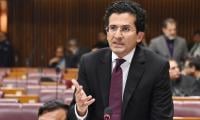
LAHORE: Punjab Finance Minister Mujtaba Shuja-ur-Rehman on Monday presented a Rs5.903 trillion budget for fiscal year 2026-27 in the Punjab Assembly, emphasising education, healthcare, economic transformation, social protection and governance reforms while maintaining fiscal discipline.
Punjab Chief Minister Maryam Nawaz Sharif, provincial ministers and members of the provincial assembly attended the budget session. Opposition lawmakers staged a protest during the proceedings, moving towards the speaker’s dais and gathering in front of it, which caused a commotion in the House.
The provincial finance minister said the budget outlay of Rs5.903 trillion is around 10.7 percent higher than the outgoing year’s budget and includes an Annual Development Programme (ADP) of Rs752 billion to accelerate development activities across the province.
The development budget for the 2026-27 fiscal year has been reduced to Rs752 billion from Rs1,450 billion in the current fiscal. Out of the proposed Rs752 billion development budget, Rs493.25 billion has been allocated for ongoing projects and Rs258.75 billion for new development schemes.
In the provincial budget, a 7 percent increase in salaries of government employees and a 3.5 percent increase in pensions has been proposed.
According to budget documents, Punjab expects to receive Rs4.39 trillion under the National Finance Commission (NFC) Award in FY2026-27, an increase of 8.1 percent compared to the previous year. While the government has projected provincial own-source revenues of over Rs1.2 trillion with an estimated surplus of about Rs91 billion. The Punjab Revenue Authority has been assigned a revenue collection target of Rs528.5 billion, representing a 55 percent increase, while the Excise Taxation and Narcotics Control Department has been given a target of Rs124 billion, up 77 percent. While Rs461 billion will be collected in in non-tax revenues.
From this amount, Rs546 billion will be given to the federal government as a grant under national strategic requirements.
Current expenditure has been estimated at Rs1.963 trillion, representing a 3.2 percent reduction compared with the current fiscal year. Allocations include Rs824 billion for Provincial Finance Commission transfers, Rs638 billion for salaries and Rs500 billion for pensions. A further Rs783 billion has been earmarked for service delivery. Under the PFC Award, local governments are proposed to receive Rs803 billion.
The budget also prioritised social sectors, with more than 10 percent of total spending, Rs500 billion, allocated to health to ensure improved and free healthcare services across the province.
In the health sector, substantial allocations have been made for the Nawaz Sharif Institute of Cancer Treatment and Research, expansion of healthcare facilities and improvement of medical services throughout Punjab.
For the education sector, Rs750 billion has been proposed for fiscal year 2026–27, including Rs63.3 billion for development expenditure and Rs686.8 billion for non-development spending, accounting for over 15 percent of the total budget.
Major education initiatives include the CM Punjab Laptop Programme, Honhaar Scholarship Programme and School Meal Programme, along with funding for new classrooms, missing facilities, autism schools and IT laboratories. As much as Rs27 billion have been allocated for the Laptop Scheme, and Rs15 billion for the Honhaar Scholarship Programme.
The budget also includes allocations of Rs2.47 billion for the Kisan Card Programme, Rs6.75 billion for Kisan Card Phase Two, Rs1 billion for Livestock Card Phase Two and Rs300 million for the Chief Minister Parwaz Card International Placement Programme.
The government has allocated Rs252.1 billion for public safety and law and order.
Under the proposed spending plan, Rs2.2 billion will be used for the construction of police stations and posts in riverine areas, while Rs14 billion has been earmarked for establishing crime scene units in 28 districts.
The police department has separately been allocated Rs12.88 billion, while the judiciary will receive Rs3 billion.
Infrastructure development has been allocated Rs272.8 billion, while the transport sector will receive Rs78.5 billion.
The government plans to spend Rs26.6 billion on mass transit projects in Gujranwala and Faisalabad, Rs16.8 billion on an electric bus programme and Rs10 billion on regional railway projects.
The province has also earmarked Rs221.9 billion for investment-related initiatives aimed at supporting economic activity and job creation.
The budget also focuses on economic growth through the Punjab Innovation for Value, Opportunity and Transformation (PIVOT) initiative, promotion of investment, industrial development and job creation.
Other key areas include, digital governance reforms, climate resilience projects, infrastructure development and youth empowerment initiatives aimed at promoting sustainable and inclusive growth.
The provincial government proposed a three-year development plan worth Rs1,995 billion aimed at strengthening economic growth, boosting exports, and creating large-scale employment opportunities across multiple sectors.
The plan is expected to generate an additional $6.8 billion in exports and create millions of jobs through broad-based investment and sectoral development initiatives across the province.
Under the framework, Rs1,188 billion has been allocated to industry, Rs586 billion to agriculture, Rs230 billion to livestock, and Rs642 billion to tourism, while Rs190 billion has been earmarked for aqua farming development.
In addition, Rs186 billion has been set aside for the skills development sector, while Rs64 billion has been allocated for the technology sector, reflecting the government’s focus on diversified and modernised economic growth.
The government also allocated a total of Rs507 billion for development and non-development expenditures for the water, sanitation, urban and local development sectors.
Of this amount, Rs187.1 billion has been earmarked for development projects aimed at improving infrastructure and expanding essential public services across urban and rural areas of the province.
A major portion of the development budget will support the provision of safe drinking water and sanitation facilities.
Under the Saaf Pani Programme, projects worth Rs45 billion are currently being implemented in 18 districts across the province to ensure the supply of clean and safe drinking water.
As part of the initiative, more than 5,600 water filtration plants will be installed throughout the province.
The government is also digitally geo-tagging all filtration plants to enhance monitoring and transparency. In addition, a dedicated public helpline, 1336, has been established to address complaints and ensure efficient service delivery. The provincial government is also pursuing rural development through the Model Village Programme, which carries an estimated cost of Rs59 billion. Under the programme, 48 villages in 10 divisions are being transformed into model villages equipped with modern civic amenities and improved infrastructure. The Punjab government has proposed increase in the token tax, Abyana, and Agriculture Income Tax to expand the provincial tax base without introducing any of the new tax. The new proposed amendment through the Punjab Finance Bill 2026 will create an own resource fiscal space to the province. The government has proposed to increase tax on the commercial loader vehicles by three times. The Finance Bill 2026 proposed increased the tax on vehicles with maximum laden capacity exceeding 4,060 kg, but not exceeding 8,120 kg from Rs2,200 to Rs6,600. The vehicles with maximum laden capacity exceeding 8,120 kg but not exceeding 12,000 kg having tax of Rs4,000 to increase Rs12,000, the vehicles with long trailers or other vehicles with maximum laden capacity exceeding 12,000 kg but not exceeding 16,000 kg having tax of Rs6,000 to increase Rs18,000, and the vehicles with long trailers or other vehicles with maximum laden capacity exceeding 16,000 Kg having tax of Rs8,000 to increase Rs24,000.
Similarly, the government has proposed to increase the tax on vehicle having capacity of more than 1000CC. According to proposed plan, with engine power exceeding 1,000 cc but not exceeding 2,000 cc has been proposed to increase by 0.1 percent of the invoice value from existing 0.2 percent of invoice value. Furthermore, with engine power exceeding 2,000 cc to 0.4 percent of invoice value from the existing 0.3 percent of invoice value.
The government has proposed a ‘flat rate’ system instead of charging water based on the crop, Kharif season: Rs1,650 per acre, Rabi season: Rs850 per acre. Furthermore, for approved orchards: Additional irrigation of Rs2,000 per acre per year has been proposed on water supply for orchards. For lift irrigation: A rate of Rs2,250 per acre per year has been proposed on water use through government or private lift irrigation.
The Punjab government proposed to increase the agriculture income tax on the landowners with more than 12.5 acres to Rs1,000 per acre. Earlier, tax was being levied on landowners with 12.5 to 25 acres at Rs300 pe acre, on landowners with 25 to 50 acres at Rs400 per acre, and on landowners with more than 50 acres at Rs500 per acre. It is proposed to increase the tax on irrigated orchards from Rs600 to Rs1,000 per acre, while on non-irrigated orchards to be increased from Rs300 to Rs500 per acre.
The legislation makes electronic payment of property tax mandatory under the Punjab Urban Immovable Property Tax Act, 1958, ending the previous arrangement that permitted both manual and digital modes of collection. Alongside this digitisation drive, the government has offered relief to property owners by restructuring the late payment surcharge from a monthly to a quarterly cycle. Surcharges will henceforth accrue on a quarterly basis, with deadlines set at September 30, December 31, March 31, and June 30 each year, replacing the earlier monthly penalty system that had tied the first surcharge deadline to October 31.
The Bill brings relief to the cotton sector by abolishing the cotton fee levy under the Punjab Finance Act, 1973. The fee, which was a seasonal charge imposed on the arrival of raw cotton at ginning factories in South Punjab, has been eliminated in recognition of the sharp decline in cotton production and the consequent closure of a large number of ginning factories in recent years.
The most extensive reforms introduced by the Bill concern the Punjab Sales Tax on Services Act, 2012, which has been amended across multiple provisions to tighten compliance, restructure input tax arrangements, and revise applicable rates. The definition of an active taxpayer has been narrowed to exclude registered persons whose registration has been suspended or blacklisted by the Punjab Revenue Authority, as well as those who have failed to file returns for two consecutive tax periods. Input tax on capital goods, machinery, and fixed assets will now be adjusted against output tax in twelve equal monthly installments rather than as a lump sum, under the newly inserted Section 16CC. Input tax claims against invoices issued by persons not appearing on the active taxpayers list of the Authority or the Federal Board of Revenue have been explicitly disallowed.
A significant structural innovation is the introduction of a risk-based evaluation system under new Section 16CCC, which empowers the Punjab Revenue Authority to establish and maintain a risk register for profiling taxpayers, suppliers and transactions. Where an input tax claim is identified as carrying risk, the Authority may defer its admissibility, disallow the credit in whole or in part, demand additional documentation, or refer the matter for audit. The law requires that no adverse action be taken without first giving the affected person an opportunity to be heard, and provides for an appeal mechanism before the Commissioner concerned, who must decide within thirty days.
Penalties under the sales tax law have been substantially enhanced. Individuals will now face fines of up to Rs100,000 for a first default and an equal amount for each subsequent default, while companies and associations of persons will face penalties of up to Rs500,000 for both first and repeated defaults. Several other penalty entries across the penalty schedule have also been raised considerably.
On service tax rates, the Bill introduces a dual-rate structure for restaurant services, with an eight percent rate applying where payment is made through debit or credit cards, mobile wallets, or QR scanning, while a sixteen percent rate will apply to all other payment modes. The reduced rate for a broad range of other services, including IT-related, transport, and professional services, has been raised from five percent to eight percent. Two new service categories have been added to the reduced rate schedule, with foreign exchange services now taxed at three percent without input tax adjustment and event management services attracting eight percent without input tax adjustment.
The Bill further amends the Punjab Motor Vehicle Transaction Licensees Act, 2015, by declaring all motor vehicle dealers as withholding agents responsible for collecting and depositing taxes, fees, and duties at the point of sale. Under the new provision, no dealer may deliver a sold vehicle to its buyer unless the vehicle has been registered, all applicable charges have been withheld and deposited with the government, and standardised government-approved number plates have been affixed. Dealers found in violation will be liable to pay the outstanding charges along with an equal amount as a penalty. The government has said the measure is aimed at closing the window for unregistered vehicles to ply on roads, streamlining the registration process, and contributing to improved law and order conditions across Punjab.
Earlier on Tuesday, CM Maryam approved the budget for the fiscal year 2026-27 after the 35th meeting of the provincial cabinet accorded its formal approval to the budget document.
Addressing the cabinet meeting, the chief minister expressed gratitude to Allah Almighty for presenting her third provincial budget and lauded the efforts of Senior Minister Marriyum Aurangzeb, Provincial Finance Minister Mujtaba Shuja-ur-Rehman, Information Minister Azma Bokhari, Chief Secretary Zahid Akhtar Zaman, Finance Secretary Mujahid Sherdil and the entire team involved in preparing the budget. Maryam said the government had made every possible effort to provide maximum relief to the people and minimise the financial burden on them despite economic challenges and prevailing global conditions.
She added that although the province had to allocate a substantial amount as its share to the federation, the government remained committed to safeguarding public interests.
She said the budget for FY27 had been prepared without imposing any new taxes and was focused on public welfare, development and prosperity.
She described it as a “budget of hope” aimed at delivering relief to citizens through the province’s own resources.
The chief minister directed the Punjab Revenue Authority (PRA) to take effective measures to enhance revenue generation and strengthen the province’s financial capacity.
She appreciated the collective efforts of the cabinet members and officials, saying the entire team had worked as one unit to prepare a people-friendly budget.
Expressing confidence in the government’s performance, Maryam said she hoped the budget would meet the aspirations of the people as in previous years.
She also prayed for the ability to continue serving the people of Punjab with sincerity and dedication.
Later, Punjab Chief Minister Maryam Nawaz received a warm welcome from members of the Pakistan Muslim League-Nawaz (PMLN) parliamentary party upon her arrival at the Punjab Assembly on Monday.
The chief minister attended the PMLN parliamentary party meeting and actively participated in the budget session for fiscal year 2026-27.
Members of the parliamentary party paid tribute to her for presenting what they described as a people-centric budget focused on public welfare and service delivery.
Addressing the parliamentary party, Maryam Nawaz expressed gratitude for the prayers, good wishes and bouquets sent by party members. “I am delighted to meet the members of the parliamentary party. I thank you for your prayers and best wishes. I am always available to serve you,” she said. She also thanked lawmakers for the enthusiastic reception accorded to her in the assembly, adding that the provincial government was presenting its third budget and that it had been the most challenging one so far.
The chief minister said Punjab had to provide a grant of Rs546 billion to the federal government, while the provincial budget remained focused on the social sector and infrastructure development. She noted that free medicines worth Rs80 billion were being provided to the people of Punjab.
Highlighting development initiatives, she said metro bus projects were under way in Gujranwala and Faisalabad, while the Nawaz Sharif Cancer Hospital was nearing completion. She added that cardiac catheterisation laboratories (Cath Labs) were being established in 20 districts, most of which had already become operational.
Referring to the recent floods, Maryam Nawaz said the provincial administration had managed the crisis effectively without seeking external assistance. She said flood victims were rescued, accommodated for more than a month and provided with a historic rehabilitation package. Despite difficult financial conditions, she said, the government had not reduced allocations for the education and health sectors. “Public money is meant solely for the welfare of the people,” she said, adding that development projects were being implemented across Punjab without discrimination.
The chief minister stated that road construction projects covering 30,000 kilometres, along with the Green Electric Bus programme, were being executed uniformly across all districts. “For the first time, development schemes are being carried out without any discrimination, and the entire province is benefiting from the development plan,” she said. She concluded by thanking members of the parliamentary party for their continued support and expressed appreciation for the confidence they had placed in her leadership.
Meanwhile, Opposition Leader in the Punjab Assembly Moeen Riaz Qureshi rejected the provincial budget, describing it as a “web of words” and alleging that it failed to address the real issues faced by the public and key economic sectors.
Addressing a press conference at the Punjab Assembly’s media hall, Qureshi further termed the budget “anti-people” and “anti-farmers”, arguing that it did not reflect the needs or priorities of ordinary citizens and rural communities across the province.
He also criticised CM Maryam for leaving the assembly session midway through the budget proceedings.
The opposition leader stressed that political stability must be restored in the country as a first step, saying that without stability, the wheel of the economy would not move forward effectively.