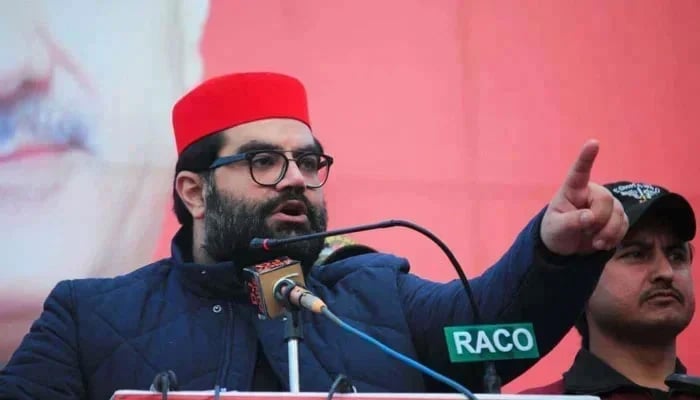
PESHAWAR: Awami National Party (ANP) President Senator Aimal Wali Khan on Saturday rejected the federal budget for fiscal year 2026-27, terming it an anti-people and imbalanced document that fails to address the ground realities facing the public.
In a statement issued here, the ANP leader alleged that the budget primarily served the interests of privileged classes, powerful institutions, and the ruling elite rather than the people of Pakistan.
Criticising the government’s economic priorities, Aimal Wali said the budget reflected the interests of those who brought the current leadership into power. He argued that if the government truly represented the public mandate, it would have presented a budget focused on public welfare instead of protecting the interests of the elite.
The ANP chief said that while defense remained an important sector, the government’s allocation priorities revealed a disregard for human development. “Millions of children remain out of school, hospitals continue to lack basic facilities, and unemployment among young people remains alarmingly high,” he pointed out.
Under such circumstances, he said, neglecting education, healthcare, clean drinking water, and employment opportunities amounts to compromising the country’s future.
According to Aimal Wali Khan, nearly 37 percent of Pakistan’s population lives below the poverty line, yet a significant portion of state resources continues to be directed toward what he termed non-productive sectors. He claimed that the budget benefited a small privileged segment of society while placing an additional financial burden on ordinary citizens.
He also criticised the government for increasing revenue targets without presenting a clear and effective strategy to improve the lives of common people. While officials speak of economic stability, he said, the budget relied heavily on indirect taxation, which would ultimately increase inflationary pressures. “Rising costs of electricity, gas, fuel, food items, and other essential commodities have already made life difficult for citizens, and the new budget is likely to worsen these challenges,” he added.
The ANP president stated that the salaried class, labourers, farmers, small traders, and the middle class have received little or no meaningful relief in the budget. He also expressed concern over the lack of substantial allocations for underdeveloped regions, particularly Khyber Pakhtunkhwa and Balochistan.
Referring to Khyber Pakhtunkhwa’s role in the fight against terrorism, Aimal Wali said the province had suffered immense losses in terms of lives, infrastructure, and economic resources. Despite these sacrifices, he noted, the federal budget contains no extraordinary package for rehabilitation, development, or improvement of law and order in the province, especially in the merged tribal districts.
He emphasised that lasting national stability requires the protection of provincial financial autonomy guaranteed under the 18th Constitutional Amendment. Any attempt to shift the federation’s financial burden onto the provinces, he warned, could further increase dissatisfaction among federating units.
Aimal Wali also highlighted the large allocation for debt servicing, describing it as evidence of an economy heavily dependent on borrowing. He questioned how long citizens would continue to bear the consequences of flawed economic policies, IMF conditions, and what he termed the government’s misplaced priorities.