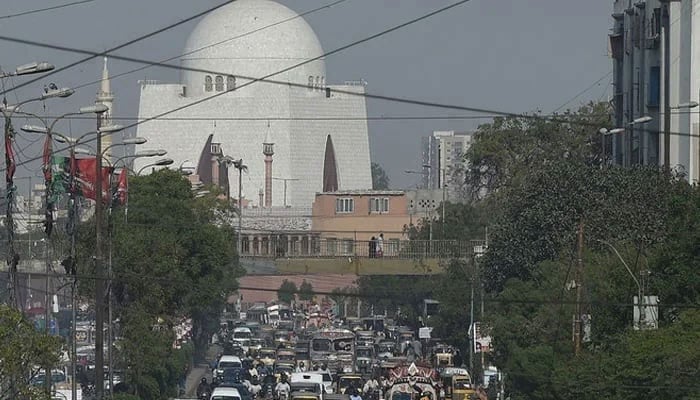
In 1913, Karachi became the City of Lights when electricity was introduced under Harchandrai Vishandas, a Sindhi Hindu municipal leader. Yes, Karachi’s first glow came from civic vision, not political slogans.
A hundred and thirteen years ago, Karachi was being built with purpose: roads, parks, footpaths, civic works and electrification. By 1920, Karachi had become what every great city aspires to be: lit, liveable, orderly and open for enterprise.
Then came our age of extreme decay. In 2008, 95 years after Harchandrai, the PPP won 91 out of 168 seats in the Sindh Assembly. Since then, the PPP has ruled Sindh continuously for 18 years. Eighteen years is not a transition.
Eighteen years is not an excuse. Eighteen years is enough time to build a city -- or break one down completely. Karachi’s report card is brutal. Water failed. Sewerage failed. Garbage collection failed. Public transport failed. Drainage failed.
Red alert: This is not administrative weakness. This is absolute political abandonment. Lo and behold, the contrast is unforgiving. A Hindu municipal leader, in 1913, helped lit Karachi. A ruling party, with 18 years of uninterrupted power, could not even keep its drains open.
Cold facts: Karachi was once lit by civic vision. Today, it is dimmed by gross political failure. Today’s Karachi cannot provide water. Today’s Karachi cannot carry sewage. Today’s Karachi cannot collect garbage. Today’s Karachi cannot move its people and cannot drain rainwater.
The World Bank’s Karachi diagnostic described the city’s water and sanitation crisis as rooted largely in ‘poor governance’. At least three million residents lack access to piped water and more than six million lack functional public sanitation services. Sewage overflows, broken lines, mixed water supply and open drains -- welcome to Karachi 2026. Karachi’s residents buy water from tankers.
Karachi’s residents walk through sewage. Karachi’s residents breathe garbage. Karachi’s residents travel in chaos and drown after rain. This is not decay by accident. This is decay by design, by neglect, by fragmentation, by patronage, by politics that has mastered control but failed delivery. Karachi did not fail. Karachi was failed.
Now take Karachi’s five failures: water, sewerage, garbage, public transport and drainage. Sindh’s annual development outlay is around Rs1,000 billion. Karachi houses roughly 40 percent of Sindh’s population. Karachi’s fair share, therefore, is around Rs400 billion a year, every year.
That means Rs80 billion each for water, sewerage, garbage collection, public transport and drainage. Enough for pipes. Enough for sewers. Enough for garbage trucks. Enough for buses. Enough for stormwater drains. Karachi does not need promises. Karachi needs delivery. The money exists. The city does not receive it.
The writer is an Islamabad-based columnist.