TAKHTBHAI: The tobacco growers and the local industry representatives in Khyber Pakhtunkhwa have urged the federal government to review the ‘unfair’ taxes imposed on the tobacco sector in the upcoming budget and take immediate steps to save the industry from collapse.
In a joint statement, the growers and industrialists stated that due to unwarranted taxes, baseless allegations and a continuous media trial, thousands of families associated with the tobacco sector in KP had been pushed into severe mental and financial distress.
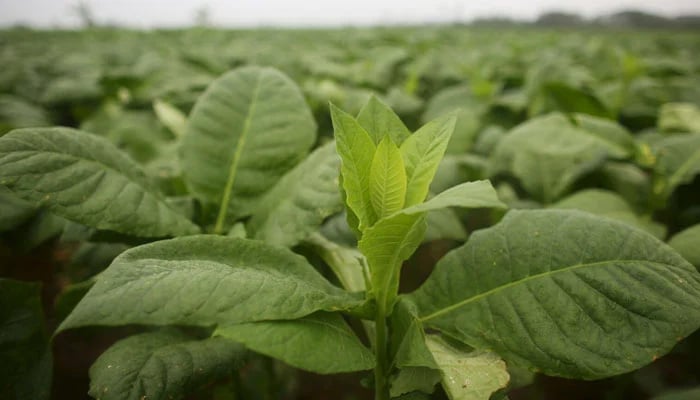
They said that tobacco was a vital cash crop for nine districts of Khyber Pakhtunkhwa, providing a livelihood to thousands of families while contributing billions of rupees annually to the national and provincial exchequers in taxes. According to growers, certain quarters were running expensive media campaigns to falsely link the local tobacco industry with ‘tax evasion’ and ‘mafias.’
They warned that this propaganda was leading to the economic exploitation of local farmers, dealers, exporters and labourers.
The representatives argued that imposing uniform taxes on multinational corporations (MNCs) and the underdeveloped local industry of KP defied all principles of justice. They alleged that multinational companies aimed to weaken the local industry to repatriate Pakistan’s capital abroad.
Detailing the tax anomalies, the growers explained that while the price of tobacco’s top and bottom leaves is only Rs40 per kg, and the central leaf ranges between Rs1,600 and Rs2,000 per kg, a uniform tax of Rs390 per kg has been unjustly levied across all categories.
Furthermore, they pointed out that the tobacco sector was currently burdened with 11 different types of taxes, which they claimed go against the spirit of the Constitution of Pakistan. They added that these choking policies prevented farmers from getting a fair price for their crop, allowing multinational monopolies to buy the produce for a meagre Rs300 per kg.