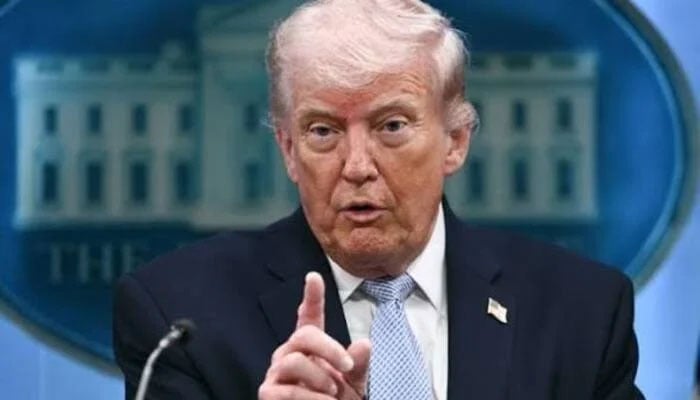
WASHINGTON/DUBAI: US President Donald Trump said on Friday he would soon decide on a proposed deal to extend the ceasefire with Iran, though the two countries still appeared to differ on significant issues that have been central to the conflict.
Trump said in a post that Iran “will complete the immediate removal” of mines in the strait and that the US naval blockade of Iranian ports “will now be lifted,” allowing oil and other tankers to start moving. But it was not clear if Iran had agreed to this or whether the US blockade had actually been lifted ahead of Trump making his decision.
Trump said on Friday morning that he would meet in a secure White House room to make a “final determination” on the proposal, which would extend an early-April truce for another 60 days, giving negotiators time to forge a permanent end to the war. Several hours later, the White House said the meeting had concluded but did not provide any more information. The New York Times reported that Trump attended a two-hour meeting in the White House Situation Room on Friday, but did not reach a decision on any new deal with Iran.
A senior Iranian source likewise told Reuters an agreement was close but had not yet been approved. However Trump also said Iran would have to end its chokehold on the Strait of Hormuz and dismantle its capacity to make a nuclear weapon -- two conditions that Tehran has not agreed to.
“Iran must agree that they will never have a Nuclear Weapon or Bomb. The Hormuz Strait must be immediately open, no tolls, for unrestricted shipping traffic, in both directions,” Trump said, adding that nuclear material would be “unearthed” by the U.S.
Iran’s semi-official Fars news agency, citing sources, said Trump’s comments were an “attempt to portray a fabricated victory.” Iranian sources said Trump’s comments on the deal were a “mixture of truth, lies.”
The senior Iranian source, speaking on condition of anonymity, said the potential deal does not include any nuclear-related issues, while Iran’s Foreign Ministry spokesperson Esmaeil Baghaei said on state TV that the management of the strait must be decided by Iran and Oman.
The semi-official Fars news agency, citing sources, said the strait would be reopened under Tehran’s conditions after the US lifts its blockade on Iranian ships. Fars said there was agreement to release $12 billion of Iran’s frozen assets.
Trump said no money would be exchanged “until further notice” -- a possible reference to Iran’s demands for toll payments in the strait, war damage reparations or a release of frozen Iranian assets.
Iran’s Foreign Ministry spokesperson Esmaeil Baghaei said no agreement has been finalised with the US so far.
“I will be meeting now, in the Situation Room, to make a final determination,” Trump said in a lengthy post on his Truth Social network, referring to the top-security bunker in the White House. Trump’s post covered a number of the key sticking points in the talks between US and Iranian negotiators, but it was not immediately clear from his message which had been agreed.
In the post, Trump said that Iran “will complete the immediate removal” of mines in the strait and that the US naval blockade of Iranian ports “will now be lifted,” allowing oil and other tankers to start moving. But it was not clear if Iran had agreed to this or whether the US blockade had actually been lifted ahead of Trump making his decision.
Trump also specified that enriched uranium stockpiles in Iran “will be unearthed by the United States... in close coordination and conjunction with the Islamic Republic of Iran, plus the International Atomic Energy Agency, and DESTROYED.”
US officials said on Thursday that negotiators from both sides had reached a deal on a 60-day extension of the ceasefire in the Middle East war but that Trump had not yet signed off on it.
Iran’s top negotiator had said earlier Tehran would only trust Washington’s actions, not its words, after US Vice President JD Vance said progress had been made on a deal to extend a ceasefire and provide a framework for peace talks.
US sources told AFP the deal was just waiting on Trump’s sign-off following weeks of halting negotiations to end a conflict that had engulfed the Middle East and shaken the global economy.
In a call with his Omani counterpart, Foreign Minister Abbas Araghchi “indicated that arriving at a final agreement depended on ending the American party’s attitude based on excessive demands and shifting and contradictory positions”, his ministry said in a statement.
Araqchi said he had discussed the Strait of Hormuz and its future administration with Omani Foreign Minister Badr Albusaidi in line with their sovereign responsibilities and international law. In a post on X, Araqchi said he also expressed Iran’s solidarity with Oman in the face of any threat.
Earlier Iran’s parliament speaker, who led its delegation at peace talks with the US in Pakistan last month, said Tehran had gained leverage not “through talks, but through missiles”, and was sceptical of US promises.
“We place no trust in guarantees or words; only actions matter. No step will be taken before the other side acts first,” Mohammad Bagher Ghalibaf wrote on X.
Hopes of an agreement had risen on Thursday after US officials were positive about the direction of diplomacy, with Vance telling reporters “a lot of progress” had been made.
Optimism around a possible US-Iran deal boosted Asian stock markets on Friday, while oil prices receded slightly.
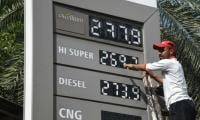
Energy markets have whipsawed this week as investors parse the chances of an agreement that could potentially resume normal shipping through the crucial Strait of Hormuz, which Tehran has blockaded since the start of the war.
But Iran has not confirmed any commitments to a deal, and sources have told Iranian media that any agreement unilaterally announced by Trump would not be recognised.
On Friday, Iran’s Tasnim news agency, citing a source, said the text had not yet been finalised and that the wording of the potential memorandum of understanding had “undergone some changes in recent days”.
Qatar’s state news agency said late Thursday Trump had called its ruler to discuss the “latest updates” on efforts to end the war. Doha hosted Iranian officials this week as regional nations push for a definitive resolution to the war, despite a fragile ceasefire largely holding since April 8.
Washington and Tehran have accused each other of violating the truce as recently as this week, with US strikes on the southern Iranian port of Bandar Abbas countered by retaliatory Iranian fire.
Iranian forces did not specify their target, but Kuwait, which hosts US troops, said its air defences responded to incoming Iranian missiles and drones.
Iran had also fired at four ships trying to transit the Strait of Hormuz without authorisation, state broadcaster IRIB reported Thursday.
Iranian state TV said on Friday that 24 ships had transited the strait in the past 24 hours, in coordination with the Revolutionary Guards and the foreign ministry. But it warned that “ships from hostile countries face a severe response” from Iran’s military.
Kazakhstan has signalled it is willing to take Tehran’s stockpile of uranium enriched close to weapons-grade levels if the US reaches a deal with Iran, the head of the UN nuclear watchdog, Rafael Grossi, told the Financial Times.
Kazakhstan hosts an internationally controlled bank of low-enriched uranium to ensure fuel supplies for power stations in International Atomic Energy Agency member states.
Stock markets were mixed while oil prices fell again on Friday on investor optimism that the United States and Iran would reach a deal to extend their ceasefire. Oil markets have been up and down this week as investors assess the chances of a breakthrough between Washington and Tehran that could potentially resume shipping through the crucial Strait of Hormuz.
Those hopes had been briefly dashed by new US military strikes on Iran on Wednesday, countered by the Revolutionary Guard’s targeting of an American airbase in the region.
By Thursday evening, negotiators had edged towards a deal to extend their fragile ceasefire for 60 days, pending approval from President Donald Trump, US sources told AFP.
The reports sent the S&P 500 index to another record high on Thursday, and Wall Street indices gained further on Friday in morning trading. Europe’s main indices were flat ahead of the weekend. A Greek man was Friday charged of spying on a London-based Persian-language journalist for a foreign intelligence service, believed to be Iran, in the latest such case in Britain.
Ioannis Aidinidis, 46, who lives in Munich in Germany, appeared in a London court after being charged under the UK’s National Security Act following an investigation by Counter Terrorism Policing (CTP) London.
Prosecutors said he was paid to travel to the UK twice in April and May 2026 to spy on the journalist at Iran International, a Persian-language media outlet which has been the target of a spate of recent attacks allegedly sponsored by Iran.
Danish intelligence said that Iran was playing a larger role when it came to the threat of terrorism against the Scandinavian country, adding that the threat assessment was mirroring global developments.
The Danish national security and intelligence service, PET, said the overall threat to Denmark remained at four on their five-point scale, but added that in recent years the threats had “changed significantly in character”.
In neighbouring Sweden, the Swedish Security Service (Sapo) has also accused Iran of using criminal gangs to commit “acts of violence” against Israeli interests and Iranian opposition figures in Sweden—a claim Iran has denied.
Spanish inflation held steady in May even as the Middle East war roiled global energy markets, preliminary data showed Friday. The annual inflation rate stood at 3.2 percent in May, unchanged from April, as a rise in transport costs was partially offset by lower clothing and footwear costs, statistics office INE said in a statement.
Israeli Prime Minister Benjamin Netanyahu said that his country’s forces had pushed deeper inside Lebanon, even as Israeli and Lebanese military delegations were holding landmark security talks in Washington.
Airlines are gradually restoring some flights to the Middle East as regional carriers rebuild schedules after war-related disruption, though the conflict continues to disrupt wider traffic flows. Middle Eastern airlines have added capacity after severe disruption linked to the Iran war, while many carriers outside the Gulf are still diverting Europe-Asia flights to avoid the region.
The heads of the International Energy Agency, International Monetary Fund, World Bank Group and the World Trade Organization met on Thursday to discuss their institutions’ response to the impacts of the war in the Middle East, they said in a joint statement on Friday.
“If shipping flows do not return to normal, continued rapid depletion of global oil inventories ahead of peak summer oil demand in the Northern Hemisphere would present increasing risks for fuel security, market conditions, and broader economic resilience,” the institutions said, referring to the blockade in the Strait of Hormuz.
The institutions also explored options to “further enhance collective support through multilateral and bilateral actions,” it added.
Iranian air defence destroyed US-Israeli enemy micro drone near Qeshm Island, Iran’s Tasnim news agency reported on Friday.
Iranian authorities are laying the groundwork for a “grand” funeral for slain supreme leader Ayatollah Ali Khamenei, official media reported Friday, following a lengthy postponement due to the Islamic republic´s war with the United States and Israel.
Though the timing was still uncertain, “a special headquarters has been formed to prepare for the funeral ceremony, and various agencies are currently planning and making arrangements”, state TV reported, citing Mohsen Mahmoudi, head of the Tehran Coordination Council for Islamic Propaganda.
US Treasury Secretary Scott Bessent said that any removal of the US financial and economic blockade on Iran would be slow. “We’ll see ... It will be - anything that’s taken off is taken off slowly,” he said.
Bessent said the US had seized $1 billion in Iranian cryptocurrency assets as part of the economic component of President Donald Trump’s war on the Islamic Republic.
The United States issued new counter-terrorism sanctions on Friday targeting Iranian individuals and entities, among others, a notice on the Treasury Department website showed.