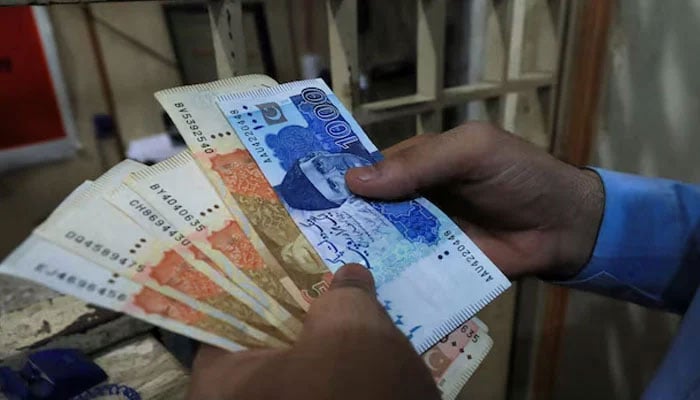
KARACHI: The Pakistani rupee has remained relatively stable, contrary to the dip in regional currencies, triggered by a three-month war in the Middle East, according to a brokerage firm.
“Since the start of the US-Iran conflict, the Pakistani rupee has appreciated by 0.6 per cent against the US dollar, showing relative stability amid regional uncertainty,” said Topline Securities in a post on a social media platform, X, on Thursday.
“In contrast, the Indian rupee and Sri Lankan rupee weakened by around 5.6 per cent and 5.1 per cent, respectively, while the Bangladeshi taka declined by nearly 0.5 per cent. The trend highlights the Pakistani rupee’s relative resilience amid heightened regional and global volatility,” it added.
Regional currencies faced pressure, with the Indian rupee recently hitting a record low against the dollar. This decline is primarily driven by concerns over a widening current account deficit and supply chain disruptions resulting from the US-Iran war. Since the conflict began on February 28, energy prices have surged, largely due to seaborne crude shipments being restricted from passing through the Strait of Hormuz, a crucial shipping lane between Iran and Oman that previously accounted for about 20 per cent of global energy supply.
However, the Pakistani rupee has held up reasonably well, trading at 278 against the dollar, buoyed by a stable current account, growing foreign exchange reserves, and financial support from the International Monetary Fund (IMF).
The forex reserves held by the State Bank of Pakistan increased by $1.214 billion to $17.08 billion as of May 15, following $1.3 billion disbursements from the International Monetary Fund under the Extended Fund Facility and Resilience and Sustainability Facility, along with $250 million from the issuance of panda bonds.
The rupee was flat in the interbank market on Friday. It closed at 278.5 per dollar, compared with 278.51 on Monday. The financial markets were closed from Tuesday to Thursday for the Eidul Azha holidays.
Now, global oil prices have tumbled by around 20 per cent from their 2026 highs, as investors have grown increasingly optimistic on prospects for a long-lasting ceasefire deal between the US and Iran, which would unlock shipping through the Strait of Hormuz.
With easing tensions, international oil prices remained under pressure and traded below the $100-a-barrel mark, supporting risk appetite in emerging markets, including Pakistan, said Chase Securities in a note.
“The decline in oil prices is particularly encouraging for Pakistan’s macroeconomic outlook as it eases concerns regarding the country’s import bill, inflation trajectory, and external account pressures,” it added.