TEHRAN: Iran accused the United States of breaching their ceasefire Tuesday and warned it was ready to retaliate after overnight US strikes targeting Iranian missile sites and mine-laying boats threatened a deal to end the war.
The Brent benchmark oil price rebounded back to $100 after US Central Command announced the new wave of bombings, and China urged both sides to respect the truce and to resolve their dispute peacefully.
According to the maritime safety monitor UKMTO, a blast damaged a tanker on the waterline off Oman—although the crew and vessel were reportedly safe after what was described as an “external explosion”.
Iranian state media reported overnight blasts in the southern port city of Bandar Abbas, near the Strait of Hormuz, and the country´s Revolutionary Guards Corps said its forces had downed a US drone entering its airspace and had fired at an F-35 fighter jet. IRGC said it reserved the “legitimate and definite” right to retaliate against any ceasefire violations by the US.
“The US terrorist army, continuing its illegal and unjustified actions since the ceasefire ... has, in the past 48 hours, committed a gross violation of the ceasefire in the Hormozgan region,” the Iranian foreign ministry said.
It added that Tehran “will not leave any evil unanswered and will not hesitate to defend the Iranian nation,” without elaborating.
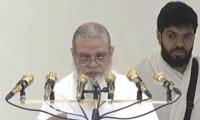
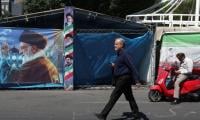
In a statement marking the start of the Eid al-Azha holiday, Tehran´s supreme leader Ayatollah Mojtaba Khamenei declared that Washington was losing its influence in the Middle East and warned countries in the region to stop hosting bases from which the US could launch attacks.
The United States, he said in a written statement, “in addition to no longer having any safe haven in the region for aggression and the establishment of military bases, is moving further and further away from its former position with each passing day”.
Khamenei invited “all Islamic countries to friendship and cooperation”. He said the clock cannot be turned back, the “shaky Zionist regime will move closer to the end of its ominous existence”.
Tim Hawkins, a spokesman for US Central Command, said: “US forces conducted self-defence strikes in southern Iran today to protect our troops from threats posed by Iranian forces.” He gave few details of the attacks and said only that the targets included missile launch sites and boats trying to “emplace mines.”
Despite the strikes, Secretary of State Marco Rubio said on Tuesday that a deal remained within reach. But he remained firm on the Strait of Hormuz, the key oil and gas shipping route which Iran is seeking to control.
“There were some talks going on in Qatar today, so we´ll see if we can make progress. I think it´s a lot of talking back and forth going on about specific language in the initial document, so it´ll take a few days,” Rubio told reporters, during a visit to India.
He said the strait was “going to be open one way or the other,” adding: “What´s happening there is unlawful, it´s illegal, it´s unsustainable for the world, it´s unacceptable.”
Tasnim news agency said Tehran´s negotiators are seeking the release of frozen assets, with half to be made available once an initial memorandum of understanding is signed.
This came as a top Iranian delegation was in Qatar and Tehran said it was finalising a 14-point framework for a deal on ending the war, which began with US-Israeli airstrikes on February 28. “Iran´s frozen assets are to be released during the course of the negotiations, and this amount is estimated at $24 billion in accordance with the 14-point memorandum of understanding,” Tasnim said.
Tasnim said Iran’s top negotiator Qalibaf’s trip that was to reach an agreement on how to implement Iran’s demand regarding its funds was “overall good” and led to progress in talks with US. Qalibaf returned to Iran after consultations with Qatari officials in Doha, Iran’s state TV reported.
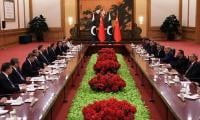
The new US strikes threaten the ceasefire that began on April 8 as the US and Iran struggle to reach an accord. China, Washington´s great power rival and a major energy importer, expressed concern.
“We urge the parties concerned to fulfil their ceasefire commitments, resolve disputes through peaceful means... and promote the early restoration of peace,” foreign ministry spokeswoman Mao Ning told reporters.
Hopes of an accord took another blow when Israeli Prime Minister Benjamin Netanyahu vowed to “crush” Hezbollah in Lebanon on Monday. Iran has demanded that any peace accord apply to the fighting in Lebanon as well.
On Tuesday, Israel warned Lebanese civilians to evacuate the southern city of Nabatieh before an AFP correspondent reported fresh strikes there and plumes of smoke rising from various locations.
In better news for Iranians, internet connectivity saw a “partial restoration” after nearly three months of blackout, monitor NetBlocks said on Tuesday, calling it the “longest nationwide internet shutdown in modern history”.
Iran´s vice president later confirmed the “first step” had been taken towards restoring the internet for Iranians, adding that the demands of Iranians “will be fulfilled”.
US President Donald Trump is set to hold a rare cabinet meeting at the Camp David presidential retreat on Wednesday (today) as Iran talks near a critical point, a White House official told AFP.
The choice of the secluded retreat in the Maryland mountains—which Trump hardly ever visits, in a break with previous presidents—reflects the sensitive nature of discussions.
The New York Post reported that Iran was set to dominate the meeting, which was expected to be attended by all cabinet members. The economy was also on the agenda, it said.
It will be only the second time that Trump has gone to Camp David in his second term. The first was just days before the United States launched strikes on Iran’s nuclear programme in June 2025. During his first term Trump said he had canceled a planned summit with Taliban leaders at the retreat following an attack on US forces.
Turkish President Tayyip Erdogan said Turkiye would continue providing support for peace talks during a phone call with Iranian President Masoud Pezeshkian, the Turkish presidency said on Tuesday.
Erdogan said the conflicts in the region had cast a shadow over the Muslim Eid holiday period, adding that he believed the Iranian people would overcome the challenges.
Oil prices rebounded back to $100 on Tuesday while stock markets were mixed and the dollar firmed after US military strikes on Iran deflated hopes of an imminent deal to reopen the Strait of Hormuz.
Stock markets had rallied Monday and crude futures dropped below $100 a barrel after reports that a deal might come within days.
Brent North Sea crude, the international benchmark, jumped almost 4.5 percent Tuesday to edge back above $100 a barrel.
Oil price increases had been modest beforehand, “underlining the market´s strong belief that the Strait of Hormuz will reopen” said Arne Lohmann Rasmussen, a commodities analyst at Global Risk Management.
Equity markets were mixed with the Dow just off but the tech-heavy Nasdaq and the S&P 500 in the green two hours into trading.
In Europe, Frankfurt and Paris closed off around one percent with London ending just 0.2 percent ahead as traders returned after a long holiday weekend in Britain.
Iranian hackers were responsible for a disruptive computer breach in March that forced Los Angeles’ transit system to shut down parts of its network, Israeli researchers claim.
The saboteurs stole at least 700 gigabytes of emails, backups, and other files from the Los Angeles County Metropolitan Transportation Authority (LACMTA), according to Gambit Security, a Tel Aviv-based cybersecurity firm that said it discovered the misappropriated data after it was inadvertently exposed online.
Iran has executed a man for alleged espionage and intelligence cooperation with Israel, the semi-official Tasnim news agency said on Tuesday. The agency identified the individual as Gholamreza Khani Shekarab.
Israeli forces have begun operating beyond its so-called “Yellow Line” in south Lebanon, which runs around 10 kilometres (six miles) deep inside Lebanese territory, a military official confirmed to AFP on Tuesday. “The IDF is operating in a targeted manner beyond the Forward Defence Line in order to remove direct threats to the citizens of the State of Israel and IDF troops, in accordance with the directives of the political echelon,” the military official said when asked about reports that the military had begun ground operations beyond its demarcation line.