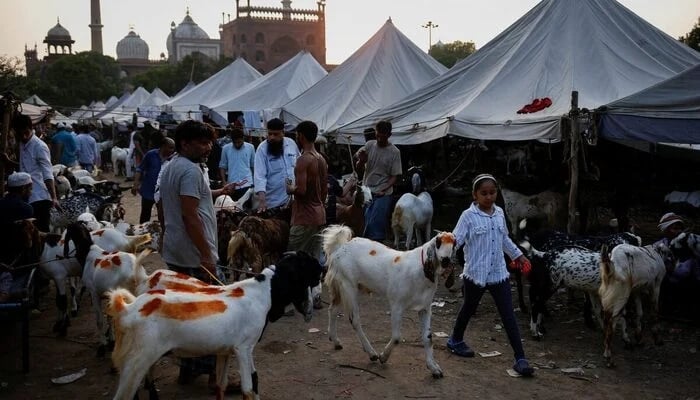
NEW DELHI: Indian authorities have imposed fresh restrictions ahead of Eidul Azha with a ban on the slaughter of cows, calves and camels, drawing attention to growing concerns over religious freedom and curbs on Muslim religious practices in different states.
As Muslims in India prepare to celebrate Eidul Azha on Wednesday, Uttar Pradesh Chief Minister Yogi Adityanath directed officials to strictly enforce measures related to the religious observances, including a ban on animal sacrifice at public places and a prohibition on road blockades for Eid prayer, Indian media reported.
Chairing a high-level law and order meeting through video conference, Adityanath instructed district administrations to permit sacrifices only at pre-designated sites and stressed that no new traditions should be allowed during the festival.
He also ordered that Eid prayer be offered only at traditional locations and said no permission should be granted for namaz on roads under any circumstances.
The Uttar Pradesh government further directed authorities to ensure strict monitoring of slaughter activities, maintain a ban on open meat sales and take action against illegal slaughterhouses. Officials were also instructed to conduct flag marches and increase patrols around religious sites during the festival period.
Meanwhile, in Delhi, minister Kapil Mishra warned of strict action ahead of Eidul Azha against what authorities described as illegal animal transportation, unauthorised slaughter and “animal cruelty”.
During a review meeting with officials, Mishra directed authorities to allow animal sacrifice only at authorised and designated locations, citing public hygiene and compliance with legal provisions.