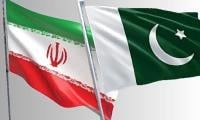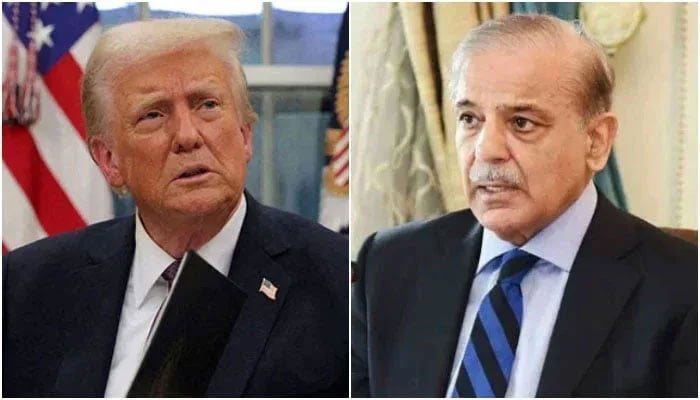
TEHRAN/WASHINGTON/ISLAMABAD: US President Donald Trump tempered expectations of a Middle East deal by saying he had told his negotiators not to “rush”, hours after his top diplomat said the US and Iran could strike a bargain to end the regional war as early as Sunday, while Prime Minister Shehbaz Sharif said Pakistan hoped to host the next round of peace talks between the US and Iran “very soon”.
Trump said both sides needed to proceed carefully to avoid repeating mistakes associated with the 2015 nuclear agreement negotiated during the administration of former president Barack Obama. “Both sides must take their time and get it right,” Trump wrote, while reiterating that Iran would not be allowed to develop or acquire a nuclear weapon.
“Our relationship with Iran is becoming a much more professional and productive one. They must understand, however, that they cannot develop or procure a Nuclear Weapon or Bomb,” he added.
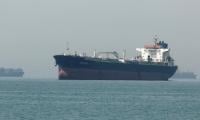
Washington and Tehran have observed a ceasefire since April 8 while mediators push for a negotiated settlement, although Iran has imposed controls on Gulf shipping and the US has blockaded Iran’s ports.
On Sunday, during a visit to India, US Secretary of State Marco Rubio told reporters: “I do think perhaps there is the possibility that in the next few hours the world will get some good news.”
Trump, however, later said in a social media post: “I have informed my representatives not to rush into a deal in that time is on our side”. “The Blockade will remain in full force and effect until an agreement is reached, certified and signed,” he added.
Rubio told The New York Times on Sunday that an agreement with Iran had garnered regional support but a nuclear deal couldn’t be achieved “in 72 hours on the back of a napkin.”
“We’re not kicking it till later. Nuclear talks are highly technical matters. You can’t do a nuclear thing in 72 hours on the back of a napkin,” Rubio told the Times in a brief interview.
“So right now, we have seven or eight countries in the region that are endorsing this approach, and we’re prepared to move forward on this approach,” he said.
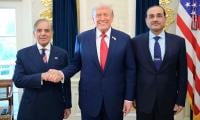
In a statement posted on X during his ongoing visit to China, PM Shehbaz Sharif said Pakistan would continue its peace efforts “with utmost sincerity” and remained committed to facilitating dialogue aimed at regional stability. “Pakistan will continue its peace efforts with utmost sincerity and we hope to host the next round of talks very soon,” he said.
The prime minister also congratulated Donald Trump for what he described as “extraordinary efforts” to pursue peace and for holding a “very useful and productive” telephonic conversation earlier in the day with the leaders of Saudi Arabia, Qatar, Turkiye, Egypt, United Arab Emirates, Jordan and Pakistan.
Shehbaz Sharif said Chief of Army Staff (COAS) and Chief of Defence Forces (CDF) Field Marshal Syed Asim Munir represented Pakistan during the telephonic discussions and appreciated his “tireless efforts” throughout the peace process.
He said the discussions provided an opportunity to exchange views on the evolving regional situation and ways to advance ongoing diplomatic efforts to achieve durable peace in the region.
Meanwhile, the White House doesn’t expect an agreement to end the war with Iran Sunday and thinks it could take several days for the deal’s approval by Iran’s leadership, including Supreme Leader Mojtaba Khamenei, a senior US official said in a briefing with reporters, the Axios reported.
While US officials are optimistic that a deal will be signed within days, they also acknowledge it has not been finalised and could still fall apart. “We are in a very good place – but there are ways in which the deal can be undermined,” a senior US official said.
President Trump on Sunday posted on Truth Social an AI-generated image showing an Iranian Navy ship being destroyed by a US drone, with the caption “Adios.”
This comes shortly after, just a day earlier, when President Trump posted that a memorandum of understanding for PEACE had been reached. President explicitly confirmed a day earlier that the vital Strait of Hormuz will be fully reopened.
Trump had posted on social media that the deal “has been largely negotiated, subject to finalisation between the United States of America, the Islamic Republic of Iran and the various other Countries”.
Rubio said the agreement would start a “process that can ultimately leave us where the president wants us to be, and that is a world that no longer has to fear or worry about an Iranian nuclear weapon”.
Israeli Prime Minister Benjamin Netanyahu said on Sunday that he and Trump had agreed that “any final agreement with Iran must eliminate the nuclear threat entirely”.
“President Trump made clear that he will remain steadfast in the negotiations regarding his longstanding demand for the dismantlement of Iran’s nuclear programme and the removal of all enriched uranium from Iranian territory, and that he will not sign a final agreement absent these conditions,” an Israeli official, speaking on condition of anonymity, told AFP.
European leaders, keen to see Hormuz open and energy prices fall, welcomed the optimism early on Sunday. European Commission President Ursula von der Leyen hailed “progress towards an agreement”, while Britain’s Prime Minister Keir Starmer vowed to work with “international partners to seize this moment”.
Iranian officials confirmed the existence of a draft agreement, but stressed that—despite the long-standing US demand for an end to its uranium enrichment—talks on the issue of Iran’s contested nuclear programme have been deferred for 60 days after any deal.
Iranian President Masoud Pezeshkian told state television Iran was “still prepared to assure the world that we are not seeking nuclear weapons”, but it was unclear if this promise would be enshrined in the text of the deal.
Pezeshkian said Iranian “negotiating team will not compromise when it comes to our country’s honor and dignity”.
According to Iran’s Fars news agency, Washington has agreed to release part of Tehran’s funds frozen abroad under international sanctions and to end its naval blockade of ships travelling to and from Iranian ports.
In exchange, “according to this draft, passage through the Strait of Hormuz would return to pre-war levels under Iranian management”. And, Fars said, “sanctions on oil, gas, petrochemicals and their derivatives would be temporarily lifted during the negotiation period so that Iran can freely sell its products”.
Prominent Iranian-American academic Vali Nasr said the deal on the table appeared like an Iranian victory, but warned that if Washington gave too much ground this would increase Tehran’s suspicions.
“The deal in play looks like a win for Iran. But Tehran is not convinced that it is not a dress rehearsal for war now or in 30 days,” he posted on social media.
“In fact, the more generous the terms for Iran the more the suspicion that the US is not serious about peace and wants to distract Iran ahead of another attack. Iran will be focused on evidence of US military backdown.”
Leaders from Saudi Arabia, the United Arab Emirates, Qatar, Egypt, Jordan and Bahrain, as well as representatives from Turkiye and Pakistan, joined a call with Trump to discuss the deal on Saturday.
Meanwhile, in a rare public appearance at the Grand Mosalla mosque in Tehran that was covered by state media, Ali Abdollahi, the head of Iran’s central military command, struck a defiant tone. “We are on a war footing and all our armed forces are fully ready, with all their resources and equipment, to confront any enemy,” he said.
Mohsen Rezaei, a military adviser to Iran’s supreme leader, said on Sunday that managing the Strait of Hormuz was Tehran’s “legal right” in order to ensure national security. “Iran’s management of Hormuz Strait ends 50 years of insecurity in the Persian Gulf,” Iranian news agencies quoted Rezaei as saying.
Iran’s Tasnim news agency reported that US obstruction of some clauses of agreement, including issue of releasing Iran’s blocked assets, still continued. Accordingly, there is still a possibility that the agreement may be cancelled, it added.
Omani and Irani officials held a meeting to discuss principles governing freedom of navigation through Hormuz strait in accordance with international law, Omani news agency reported. Iran’s Revolutionary Guards said 33 vessels had passed through the strait over the past 24 hours after getting permission from Tehran, still far short of the 140 on a typical day before the war.
The Iranian army downed an Israeli spying and surveillance drone in the Hormozgan province, Iran’s Mehr news agency reported on Sunday. The wreckage of a shattered Orbiter drone, an Israeli product, was discovered in cooperation with Iranian naval forces, the agency said.
A senior Iranian source told Reuters on Sunday that Tehran has not agreed to hand over its highly enriched uranium stockpile. The source said Iran’s nuclear issue was not part of the preliminary agreement with the United States. “The nuclear issue will be addressed in negotiations for a final agreement and are therefore not part of the current deal. There has been no agreement over Iran’s highly enriched uranium stockpile to be shipped out of the country,” said the source.
The two sides remain at odds on several difficult issues, such as Iran’s nuclear ambitions, Israel’s war in Lebanon with Hezbollah militia and Tehran’s demands for the lifting of sanctions and the release of tens of billions of dollars of Iranian oil revenues frozen in foreign banks.
Hezbollah chief Naim Qassem expressed hope on Sunday for an agreement between his group’s backer Iran and the United States and that Lebanon would be part of its terms. “God willing, this agreement will be finalised and there are signs of its completion, and accordingly that we too will be among those included in this agreement—an agreement of a full cessation of hostilities,” he said in a televised address.
Iran’s Tasnim news agency reported that “a memorandum of understanding (MOU) would first be announced, stressing an end to fighting on all fronts, including in Lebanon”, while Israeli Prime Minister Benjamin Netanyahu said US President Donald Trump had reaffirmed his support for Israel’s right to defend itself against threats, including from Hezbollah.
Trump, who has also faced criticism from hawkish conservatives over his willingness to compromise with Iran, pushed back.
“If I make a deal with Iran, it will be a good and proper one ... So don’t listen to the losers, who are critical about something they know nothing about,” Trump said in a Truth Social post on Sunday.