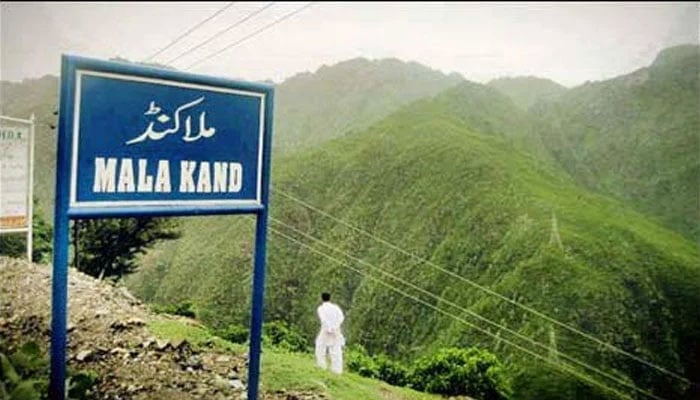
PESHAWAR: Trader and industrialist representatives from Malakand and the merged districts have urged the federal government to take steps for the economic recovery and business stability of the people of these areas by offering them tax relief.
The demand was made in a joint statement issued here by trade leaders including Noor Muhammad Khan, president of Swat Chamber of Commerce and Industry; Abdul Rahim Khan, president of Trade Union Malakand Division; Amir Muhammad Khan, president of Mohmand Chamber of Commerce and Industry; Lal Shah, group leader and president of Bajaur Chamber of Commerce; Mehboob Azam, president of Chitral Chamber of Commerce; Inamullah, president of Malakand Chamber of Commerce; and Khalid Khan Afridi.
They said that the special constitutional status of FATA and PATA had been abolished and the regions were merged into the settled districts of Khyber Pakhtunkhwa, but the promises made by the federal government at the time of the merger had remained unfulfilled to date.
As a result, economic activities in these areas are weakening day by day, and anxiety and disappointment are increasing among the people of these backward regions, the statement said.
They said Swat Valley has a unique place in the world due to its natural beauty, high snow-capped mountains, dense forests, springs, rivers, and tourist destinations, adding that the people are hospitable and hardworking and have always played an important role in trade, industry, tourism, and other sectors.
After the State of Swat voluntarily acceded to Pakistan in 1967/68, the region was granted several special privileges, including tax-free status, which boosted industry and trade, created employment opportunities, and stabilized the local economy, they said.
They said the people of the merged districts and ex-PATA had offered sacrifices in the war against terrorism, adding that thousands of people had lost their lives while the business, industry, and tourism sectors were also badly affected. They said that in 2018, the process of merging FATA and PATA into Khyber Pakhtunkhwa was completed.
In such circumstances, they said, it was promised by the government that the merged districts would be given special privileges and tax exemptions for 10 years to strengthen the local economy.
Unfortunately, they said, these promises have not been fully implemented during the past six years.
The business circles said that sales tax imposed on the import of raw materials and machinery in ex-FATA/PATA has damaged local industries.
They lamented that several factories are on the verge of closure, while investors are avoiding new investments.
There has been a significant decline in imports, and if this situation continues, not only will industry and trade be destroyed, but unemployment, poverty, and law and order problems may also become more serious. Along with this, the tourism sector will also be affected, which is the backbone of the economy of these areas, including Swat.
They said that according to Entry 89 of the Eighth Schedule of the Sales Tax Act 1990, the sales tax rate on imports of raw materials and machinery should be reduced from 10 percent to 4 percent, while a 4 percent sales tax should be imposed on supplies within the merged districts instead of 10 percent so that local industries can be supported.
Similarly, they demanded exemption from income tax under Section 145-A of Part One of the Second Schedule of the Income Tax Ordinance 2001, retention of minimum tax exemption under Section 113, and extension of the period of Sections 109A and 110.
They said that the 2025/26 budget imposed a 10 percent sales tax on PATA, which led to an 80 percent reduction in imports and a sharp increase in unemployment, negatively affecting the region’s economy as well as local transport and businesses.
The business representatives demanded that the sales tax be reduced from 10 percent to 4 percent and that the income tax exemption granted until 2029 be further extended.