KARACHI: The Parliamentary Forum on Energy and Economy on Thursday warned that steep increases in the Petroleum Development Levy (PDL) have significantly fuelled inflation, disproportionately burdened low-income households and exposed structural weaknesses in Pakistan’s energy and fiscal governance, particularly in the aftermath of the Persian Gulf crisis.
It added that the petroleum levy should not be used as a revenue-raising tool or as a mechanism for managing fiscal pressures.
According to a statement, speaking at a high-level policy briefing, the forum noted that Pakistan’s heavy reliance on imported fossil fuels has left the economy highly vulnerable to external shocks. It said disruptions in the Strait of Hormuz had underscored this fragility, with Pakistan dependent on the Gulf for nearly 70 per cent of its oil supplies and lacking meaningful strategic reserves.
Dr Nafisa Shah, member of the National Assembly and co-convenor of the Parliamentary Forum on Energy and Economy, said the current crisis was not merely the result of an external shock but the cumulative outcome of decades of policy failures.
“This moment demands a clear choice between drifting from one fossil-fuel emergency to the next, or committing to an energy transition built on sovereignty, resilience and justice,” she said, adding that Pakistan must move beyond reliance on external shocks and temporary fixes. “Building a just, resilient and sovereign energy system is now a national imperative.”
Parliamentary Secretary for Information and Broadcasting Barrister Danyal Chaudhry stressed the importance of public trust. “Citizens deserve clear and honest communication about fuel prices, reforms and IMF commitments. Opacity during economic stress only deepens anxiety and erodes confidence in institutions,” he said.
Sher Ali Arbab, member of the National Assembly and co-convenor of the forum, welcomed the input from participants and said a comprehensive report would be submitted to the government. He cautioned that the current approach risked undermining economic recovery. “Energy price increases should have tracked global prices. Instead, the crisis is being used to raise revenue through the PDL at a time when the economy can least absorb the shock,” he said, warning that reduced fuel consumption and slowing growth would ultimately undermine revenue objectives.
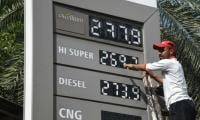
The briefing highlighted that domestic fuel prices have risen by more than 50 per cent from pre-crisis levels, at one point crossing Rs458 per litre. Experts noted that while global oil price volatility played a role, the sharp escalation was driven primarily by repeated increases in the PDL, which has climbed to around Rs117.41 per litre.
Panellists stressed that the PDL has increasingly been used as a fiscal instrument to manage the budget deficit. Economist Asad Saeed noted that, unlike the General Sales Tax (GST), whose proceeds are shared with provinces under the National Finance Commission Award, the PDL is classified as non-tax revenue, allowing the federal government to retain 100 per cent of collections. Experts argued that this undermines fiscal federalism and deprives provinces of critical resources.
Muhammad Badar Alam, CEO of the Policy Research Institute for Equitable Development (PRIED), described the levy as inherently regressive. “The PDL is applied uniformly regardless of income, meaning low-income households bear a far heavier burden than high-income consumers. It also allows the federal government to bypass principles of fiscal sharing with the federating units,” he said.
PPP MNA Khursheed Junejo highlighted the impact of higher oil and diesel prices on agriculture, particularly fertiliser costs and tractor usage, warning of reduced cultivation. “We are not cultivating our land; we are leaving it,” he said.
Ikhtiar Beg said the PDL should not be used as a revenue instrument and cautioned against further increases.
Experts also highlighted long-term structural weaknesses, including declining domestic oil production over the past decade, underutilised energy infrastructure, mounting circular debt exceeding Rs3.2 trillion, and rising import bills despite domestic resource potential.
Oil and gas consultant Sikandar Memon emphasised the need to reduce reliance on imports, optimise existing infrastructure and develop a more resilient and diversified energy mix capable of withstanding price volatility.
Dr Khaqan Hassan Najeeb, former adviser to the Ministry of Finance, said energy insecurity had become macroeconomic insecurity. He called for a shift away from an imported-energy survival model towards indigenous, integrated and resilient energy solutions, including greater reliance on rail freight for goods transport.