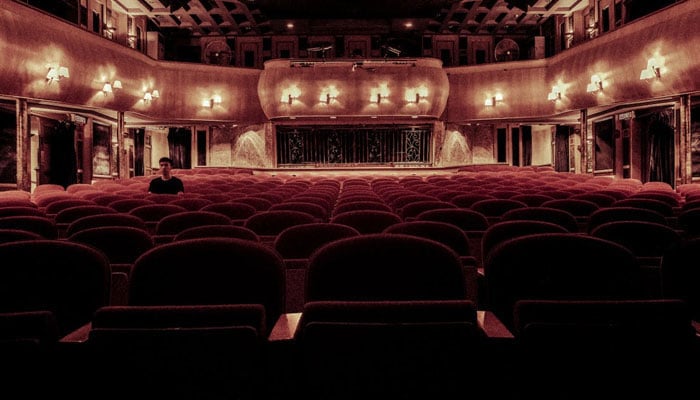
ISLAMABAD: Punjab’s cinema infrastructure has contracted by nearly 88 percent over the past five decades, shrinking from 369 cinemas at its peak in 1978 to just 45 by 2020-21, reveals Punjab Development Statistics.
The province’s cinema sector has undergone a major structural transformation, shifting from a mass public recreational system into a much smaller and geographically concentrated entertainment industry, according to the analysis by Gallup Pakistan based on official data.
The data indicate that the 1970s marked the golden era of cinema in Punjab. The number of cinemas increased from 270 in 1971 to a peak of 369 in 1978, while seating capacity expanded from 151,500 seats to 212,395 during the same period. Researchers noted that the simultaneous growth in cinema numbers and seating capacity reflected the central role cinemas once played as one of the province’s most accessible and dominant forms of public entertainment.
However, the sector entered a prolonged decline beginning in the 1980s. The number of cinemas fell from 369 in 1978 to 340 by 1990, before declining further to 322 in 1994 and 296 by 1998. Seating capacity also dropped steadily during this period, falling to 176,494 seats by the late 1990s.
The contraction accelerated during the late 1990s and early 2000s. Official figures show cinemas declining from 296 in 1998 to 274 in 2000, 263 in 2003 and 249 by 2005. Seating capacity continued to weaken, reaching 145,445 seats in 2005. The report described this phase as a more structural collapse in cinema infrastructure rather than a gradual decline.
A significant gap in official data between 2006-07 and 2013-14 suggests that the sector may have reached its weakest point during those years. The analysis noted that the absence of recorded statistics could indicate extremely limited operational cinemas, reduced institutional tracking and severe contraction in formal entertainment infrastructure.
Signs of recovery emerged after 2014, with the number of cinemas rising to 67 in 2014-15, 71 in 2015-16 and 84 in both 2016-17 and 2017-18. Despite the increase in cinema numbers, seating capacity remained far below historical levels, standing at 24,050 seats in 2016-17 and 27,857 in 2018-19. The findings suggest the revival largely consisted of smaller-format cinemas rather than a return to the large-capacity cinema systems of earlier decades.
The recovery, however, proved temporary. By 2020-21, the number of cinemas had fallen again to 45, while seating capacity declined to 20,755 seats.
Compared to the 1978 peak, the province recorded an overall decline of approximately 87.8 percent in cinema numbers and nearly 90 percent in seating capacity.
The analysis concluded that Punjab’s cinema sector has been fundamentally reshaped by broader structural changes, including evolving entertainment technologies, shifts in household media consumption, changing urban commercial patterns and the rise of digital and home-based entertainment alternatives.
Researchers noted that cinemas no longer occupy the dominant position they once held in Punjab’s recreational landscape during the 1970s and 1980s, reflecting wider transformations in how entertainment is produced, distributed and consumed across society.