Rawalpindi:Recently, in the last two months, at least four confirmed cases of Crimean-Congo Haemorrhagic Fever (CCHF) have been reported from different parts of the country including death of a 17-year-old male cattle handler in Tando Adam in Sindh on April 23 that has convinced many health experts to urge for constant vigilance against the potential threat of Congo fever.
Experts say that a possible outbreak of the deadly infection, CCHF, cannot be ruled out particularly when Eidul Azha is nearing as the mass scale sacrificial animal movements prior to Eidul Azha could serve as a source of propagation for ticks infested with CCHF increasing the risk of the disease transmission.
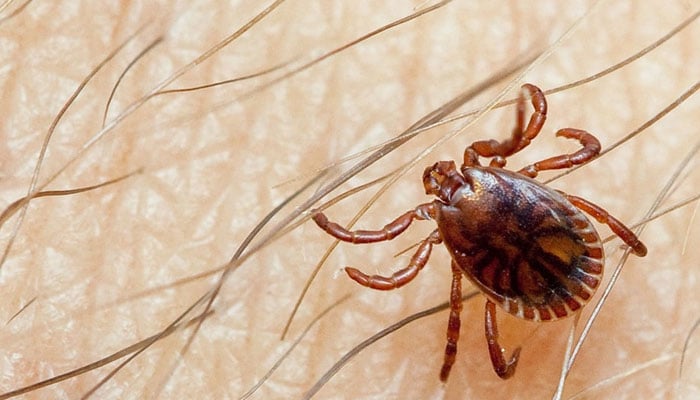
Various stakeholders including human health and livestock sectors are accordingly urged to initiate proactive health education as well as other prevention and control measures in advance to avoid transmission and outbreak of CCHF. CCHF is caused by Nairovirus of the Bunyaviridae family transmitted to humans by the bite of Hyalomma tick found on the skin of animals including cattle, goat and sheep or by direct contact with the blood of an infected animal or human and that is why its incidence is anticipated every year on or before Eidul Azha, at the time of mass handling of cattle.
It is important that in 2025, as many as 82 confirmed cases of CCHF were reported from Pakistan while 20 deaths were reported due to the infection making the case fatality ratio as 24 per cent. The CCHF outbreaks, transmission, are taken as a public health threat as the virus can lead to epidemics, having a high case fatality ratio, 10 to 40 per cent.
CCHF is a viral haemorrhagic fever transmitted to humans by the bite of ticks; usually from infected sheep, goat or cows, exposure to blood or tissue of the infected animal during or post slaughtering and direct contact with blood or secretions of infected person.
Studies reveal that the signs and symptoms of CCHF appear 1-9 days after infection which include sudden onset of illness with high grade fever over 38.5 degree Celsius for more than 72 hours and less than 10 days. The fever is usually associated with headache, muscle pains and bleeding manifestations such as petechial or purpuric rash, bleeding from nose, mouth, gum bleeding, vomiting of blood, and blood in stools. To avoid CCHF transmission and outbreaks, experts say that people should reduce tick infestation on cows, sheep and goats.