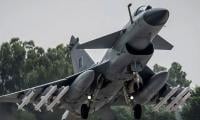
Islamabad:The May 2025 conflict fundamentally altered the regional balance of power in South Asia by reasserting Pakistan’s credible conventional and strategic deterrence against India.
This provided Pakistan with an opportunity to capitalise on this strategic momentum through economic resilience and proactive diplomacy in an increasingly polarised global order, in which two trends are emerging among nations: building national strength and collaborating with like-minded countries.
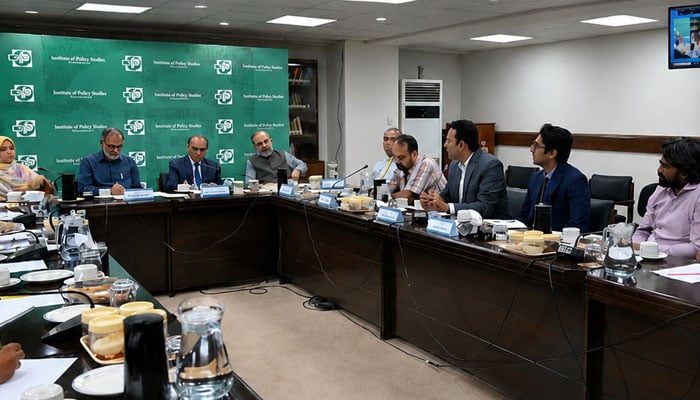
This was the crux of the thoughts shared by experts during a session titled “Reassessing Global Order Post-May 2025 Pakistan-India War” at the Institute of Policy Studies (IPS).
The speakers included former foreign secretary Aizaz Ahmad Chaudhry, IPS chairman Khalid Rahman and vice-chairman Syed Abrar Hussain, former AJK minister Farzana Yaqoob, QAU associate professor Dr. Khuram Iqbal, security analyst Brig (r) Said Nazir, CISS AJK executive director Dr. Asma Shakir Khawaja, IDDDS chief Dr. Waleed Rasool and researcher Zohaib Altaf.
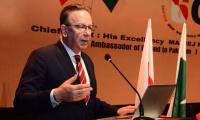
Aizaz Chaudhry observed that the events of May 2025 significantly reshaped the regional strategic calculus and enhanced Pakistan’s diplomatic and military confidence. He noted that the conflict demonstrated Pakistan’s ability to effectively employ a combination of conventional deterrence, diplomatic outreach, cyber capabilities and information warfare in response to Indian aggression.
"India attempted to establish a new normal by linking any terrorist incident in India or Illegally Occupied Jammu and Kashmir to Pakistan. However, Pakistan’s calibrated response during Operation Bunyan al-Marsoos challenged this doctrine and reinforced the credibility of Pakistan’s deterrence posture.”
He, however, warned that chances of future misadventures by the Indian government for domestic political consumption should not be ruled out. The former foreign secretary also pointed out four key arenas of competition where geopolitical rivalries are intensifying and shaping the global order. These include the US-China strategic competition, emerging Middle Eastern alliances amid US-Iran tensions, South Asian security dynamics, and growing divergence between Europe and the US.
IPS chairman Khalid Rahman noted that Pakistan’s May 2025 achievement had created a feel-good factor among the public, underscoring the need to sustain that positive momentum.
The speakers emphasised that the region had increasingly moved toward a unipolar regional order dominated by India. However, developments following the conflict indicated the emergence of a more balanced and competitive regional environment, so India’s long-standing aspiration to project itself as an uncontested regional power had encountered significant resistance, according to them.
They warned that despite the current pause in hostilities, tensions between Pakistan and India remain fragile. The speakers said that political considerations within India could lead to future provocations or escalatory behaviour. They also stressed that Pakistan should continue to maintain preparedness against conventional, cyber, and hybrid threats. The speakers said the Kashmir issue had once again brought international attention to the unresolved dispute.
They urged Pakistan to capitalise on the strategic opportunities emerging from the changing global order by strengthening its economy, pursuing structural reforms, diversifying trade partnerships and deepening regional connectivity.