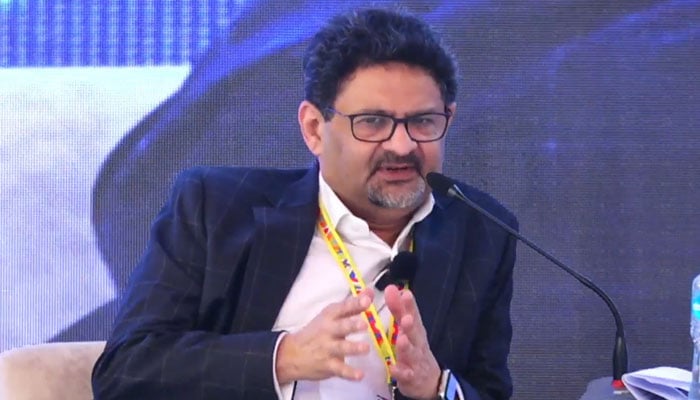
KARACHI: Pakistan has some of the most expensive electricity and gas in the region and among its peer countries, said Miftah Ismail, former federal minister for finance and revenue.
“This is not a technical failure. It is a policy failure. The rational path requires privatisation, the creation of wholesale markets for both power and gas, and a pro-consumer regulatory approach at the retail level,” he said at the launch of a new research study by the Policy Research Institute for Equitable Development (PRIED), released on Tuesday.
The study argues that the energy crisis Pakistan is facing in the wake of the US-Iran war is not a temporary disruption but the result of structural choices, including decades of over-reliance on imported fossil fuels, rigid long-term gas contracts that cannot adapt to either surplus or scarcity, and the absence of energy storage infrastructure needed to support the country’s expanding solar capacity.
The launch coincided with a public webinar, titled ‘Pakistan’s Energy Options amidst the Persian Gulf Crisis’, held on Tuesday, bringing together senior government officials, industry leaders, economists and civil society representatives to discuss evidence-based pathways out of the crisis.
Since the closure of the Strait of Hormuz, through which around 20 per cent of the world’s oil and liquefied natural gas flows, crude oil prices have surged to a peak of $126 per barrel. Pakistan’s monthly oil import bill has more than doubled, rising from $300 million to $800 million, while fuel prices have increased by as much as 55 per cent within two months. The International Energy Agency has described the disruption as the largest to global oil supply in the history of the market. For Pakistan, which is operating under two IMF assistance programmes that limit its ability to subsidise fuel or increase public spending, the shock comes at a particularly difficult time.
“The war in the Persian Gulf has laid bare Pakistan’s energy vulnerabilities in the starkest way possible. The country cannot afford a simplistic response to this crisis — it must be a layered one,” said Ammara Aslam, a researcher at PRIED. “In the short term, that means protecting essential imports without allowing prices to spiral out of control. In the medium to long term, it means resisting the temptation to lock the country into coal or expensive imported fuels, and instead accelerating investment in solar power, battery storage and grid infrastructure.”
The study highlights Pakistan’s rapid solar expansion, with 34 gigawatts of installed capacity by 2025. Of this, around 7 gigawatts is net-metered and feeds into the national grid, while the remainder operates off-grid. These systems have emerged as a strategic asset, cushioning the country from the worst of the recent shock. However, the report identifies a critical gap: without utility-scale battery storage, solar power cannot address the evening peak demand, a problem made more acute by RLNG shortfalls. It argues that bridging this gap is the most urgent investment needed to reduce Pakistan’s energy vulnerability.
One key finding concerns proposals to substitute coal for LNG in response to gas shortages — an option increasingly discussed in policymaking circles. PRIED’s analysis argues against this approach. Tharparkar’s lignite coal has a calorific value roughly half that of the imported sub-bituminous coal currently used in Pakistan’s power plants, meaning more than twice the volume is required to generate the same electricity output.
Converting existing plants would cost an estimated $250-500 million per facility in machinery alone, with an additional $480 million required for mining expansion for just two plants. Beyond the economic costs, coal extraction in Tharparkar has been linked to groundwater contamination with arsenic, mercury and lead, as well as rising respiratory illnesses in surrounding communities.
The report adds that switching from imported LNG to imported coal does not resolve the underlying issue, but merely replaces one form of import dependence with another, while locking the country into long-term infrastructure at a time when global coal prices are also rising.
“What we have learned from the Strait closure, gas cuts and energy price spikes is this: the sun shining on our land is ours,” said Waqas Haroon Moosa, chairperson of the Pakistan Solar Association and a panellist at the event. “It does not pass through Hormuz or any route we cannot control. Expanding solar, hydro and wind can strengthen energy sovereignty — and these options are increasingly cost-effective.”
He added that solar adoption in Pakistan has been driven largely by individuals and businesses, and called for tax reductions on solar panels, batteries and inverters to further accelerate uptake.
Asim Riaz, energy adviser to the All Pakistan Textile Mills Association (Aptma), said Pakistan should move towards a liberalised energy framework in which gas, electricity and renewables compete on transparent, cost-reflective terms.
“The Off-Grid Captive Power Plants Levy Act, 2025, is a structural design failure. It imposes a uniform levy on both high-efficiency combined heat and power systems and inefficient generation, introduces parallel executive pricing outside Ogra’s tariff framework, and relies on disconnection for enforcement,” he said. “It should be replaced with regulator-led, cost-reflective instruments that preserve efficiency incentives and maintain tariff integrity.”