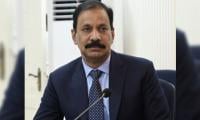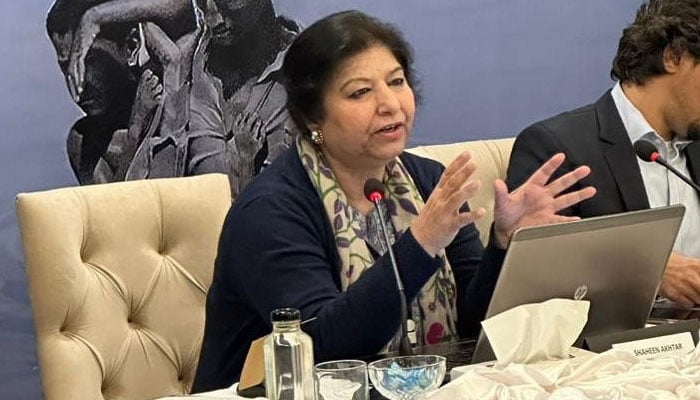
Islamabad: Dr Shaheen Akhtar, Head of Department of International Relations, National Defence University, has emphasised the role of volunteerism, commitment and passion in sustaining climate and environmental action.
Dr Shaheen was speaking at a climate future session about environmental efforts in Azad Kashmir organised here by Centre for Peace, Development and Reforms (CPDR).
Dr Shaheen highlighted the need for a baseline study on climate change in AJK and called for stronger coordination among practitioners, organisations and institutions so that climate efforts do not remain isolated.
Irtaza Muhammad, Executive Director, CPDR, noted that climate resilience in AJK cannot be built through policy discussions alone and practitioners including civil society organisations, researchers, journalists, youth representatives, advocacy groups and independent actors working on climate and environmental initiatives should share experience, future planning, institutional coordination and policy reform.
Jalal ud Din Mughal, a journalist from Azad Kashmir, discussed the importance of storytelling, documentation and strategic communication in bringing local environmental initiatives to the attention of national and international media. He stressed that many important efforts remain invisible because they are not properly documented or communicated beyond local spaces.
The participants shared initiatives related to waste management, composting, recycling, plastic waste reuse, environmental education, sustainable water management, climate-smart agriculture, youth mobilisation, advocacy and community-based climate action.
They highlighted that local climate and environmental initiatives are already taking place across AJK but many remain under-supported and face challenges related to funding, technical capacity, institutional coordination, visibility, and scaling.
The discussion also underlined the need to document local innovations and connect them with policy processes so that community-level experiences can inform climate resilience planning. The session also included reflections on communication and public visibility of climate work.